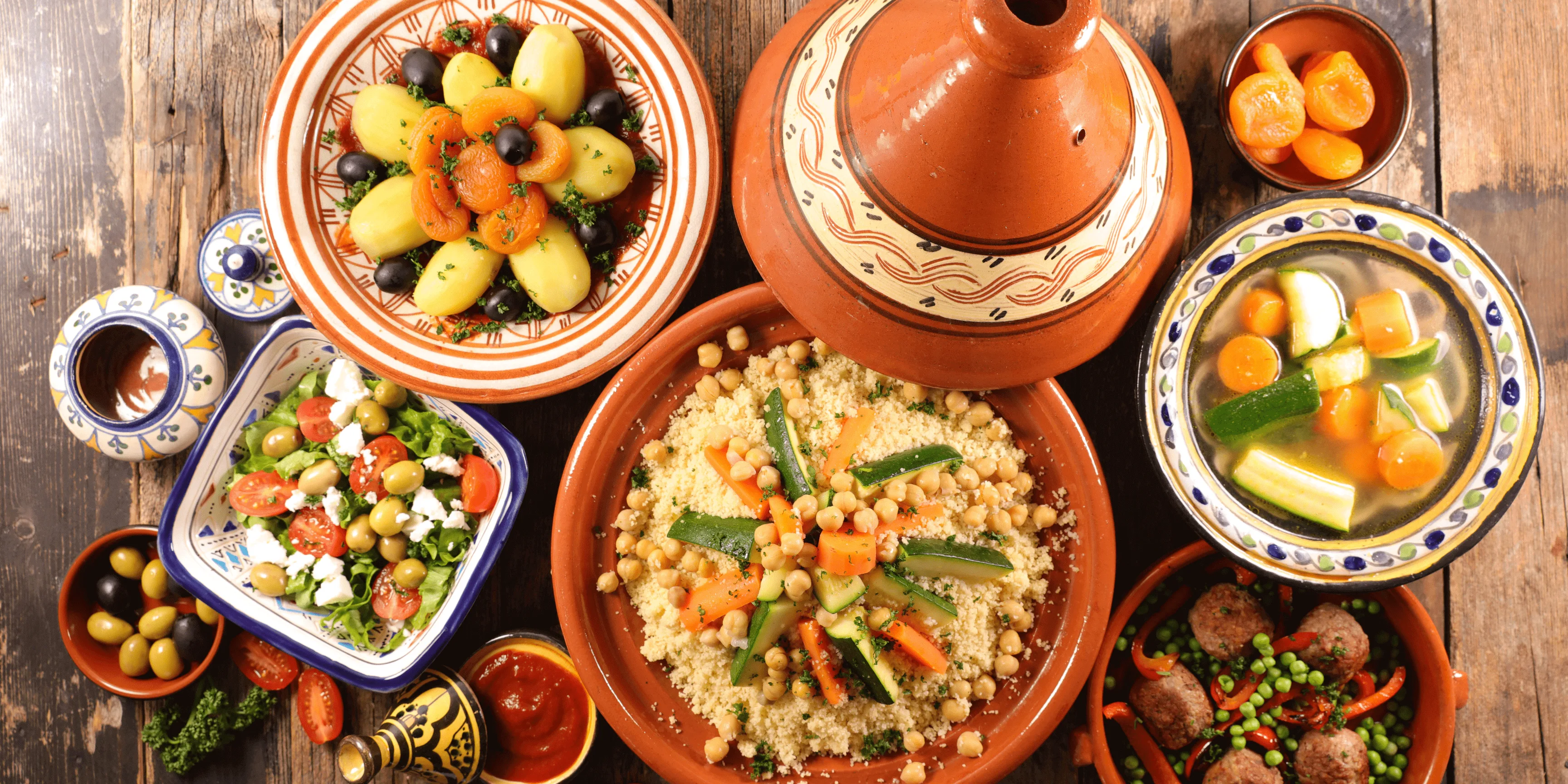
Moroccan Cuisine is one of the most memorable parts of traveling through Morocco. A single journey can move from slow-cooked tagines and Friday couscous to warm breads at breakfast, grilled seafood on the Atlantic coast and honey-coated pastries served with mint tea.
The experience is about more than a list of famous dishes. Food connects markets, neighborhood bakeries, family traditions, riad kitchens, street grills and regional specialties. What you eat in Fes may feel different from what stands out in Marrakech or Essaouira, even when familiar spices and ingredients appear throughout the journey.
This 2027 guide introduces fifteen foods worth knowing before your trip, then goes beyond the dishes to explain Moroccan breakfasts, riad dinners, vegetarian options, Ramadan food traditions, breads, spices, dining etiquette, cooking classes and the best ways to include food experiences in a private Morocco itinerary.
What to Try — and When
There is no rule saying a dish can only be eaten at a specific time, but some foods have traditional associations that help travelers understand the rhythm of Moroccan meals.
| Dish | What It Is | Best Time to Try |
|---|---|---|
| Tagine | Slow-cooked meat, fish or vegetables | Lunch / Dinner |
| Couscous | Steamed semolina with vegetables and often meat | Traditionally Friday |
| Pastilla | Sweet-savory layered pastry | Lunch / Dinner |
| Harira | Tomato, lentil and chickpea soup | Evening / Ramadan |
| Msemen | Layered Moroccan flatbread | Breakfast / Snack |
| Baghrir | Soft semolina pancakes | Breakfast |
| Tanjia | Slow-cooked Marrakech meat specialty | Lunch / Dinner |
| Chebakia | Honey-and-sesame pastry | Ramadan / Sweet |
What Makes Moroccan Cuisine Unique?
Moroccan cooking combines savory, aromatic, sweet and acidic flavors without requiring every dish to be hot or intensely spicy. Cumin, ginger, cinnamon, coriander, saffron, paprika and ras el hanout can appear alongside preserved lemon, olives, fresh herbs, dried fruit, nuts and honey.
Equally important is the cooking method. Some dishes develop slowly in clay cookware. Couscous depends on careful steaming. Bread acts as both food and a practical companion to shared dishes. Tea can mark the beginning or end of a social interaction.
Regional context matters too. Marrakech has a strong association with tanjia. Coastal cities naturally make seafood more visible. Fes has its own culinary reputation and traditions, while rural and mountain areas may present simpler dishes built around seasonal ingredients.
How a Moroccan Meal Begins Before the Cooking Starts
One of the best ways to understand Moroccan cuisine is to look beyond the finished plate. In traditional neighborhoods, the ingredients themselves are part of the experience: fresh vegetables, herbs, olives, bread, spices, meat or fish and seasonal fruit.
Tomatoes, onions, carrots, zucchini, eggplant and herbs form the base of many everyday dishes.
Chicken, lamb, beef and seafood appear in different dishes depending on region and preference.
The goal is usually layered aroma and balance rather than simply making the food hot.
Round Moroccan bread accompanies many meals and is often used to pick up food from shared dishes.
Many traditional preparations reward time, from tagines to long-cooked meat specialties.
The social setting matters: food is often experienced as a shared part of hospitality rather than an isolated plate.
Tagine — Morocco’s Famous Slow-Cooked Dish
Tagine describes both the traditional cooking vessel and the family of dishes prepared in it. The conical lid helps create a moist cooking environment while meat, vegetables, herbs and seasonings cook together.
There is no single tagine recipe. Chicken with preserved lemon and olives is very different from lamb with prunes and almonds. Vegetable tagines may use carrots, potatoes, zucchini, tomatoes, chickpeas or other seasonal produce.
Bread usually accompanies the dish, allowing diners to take pieces of food and sauce from the shared serving vessel.
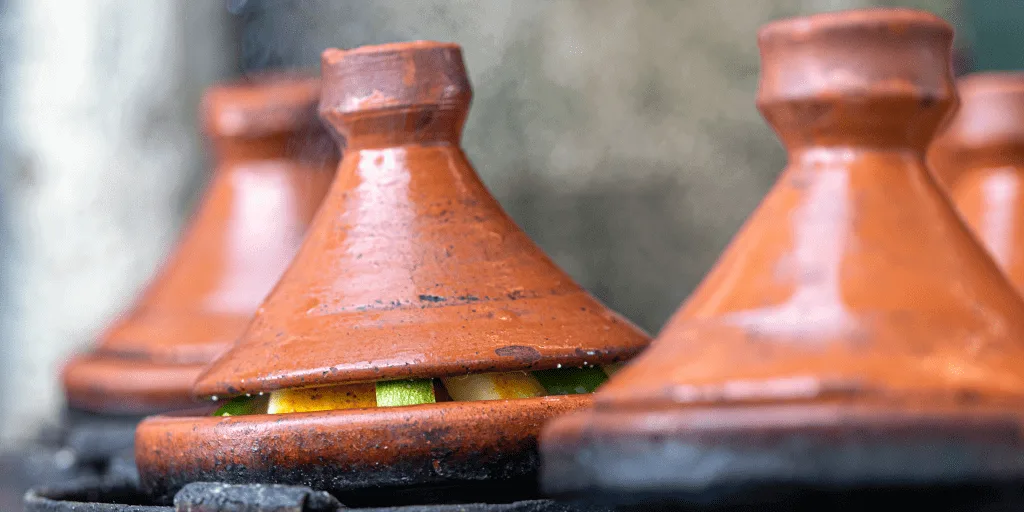
Different regions and kitchens produce very different tagines, so it is worth trying more than one during your journey.
Couscous — A Meal Built for Sharing
Moroccan couscous is based on small grains of semolina traditionally steamed until light and tender, then served with vegetables and often meat.
Friday has a particularly strong association with couscous in Morocco. For travelers, that makes a Friday meal a good opportunity to experience the dish in a setting where it has social as well as culinary significance.
The vegetables, broth and protein vary between households and restaurants. The important point is that traditional couscous is not simply a dry side dish; it is a complete meal assembled around the steamed grains.
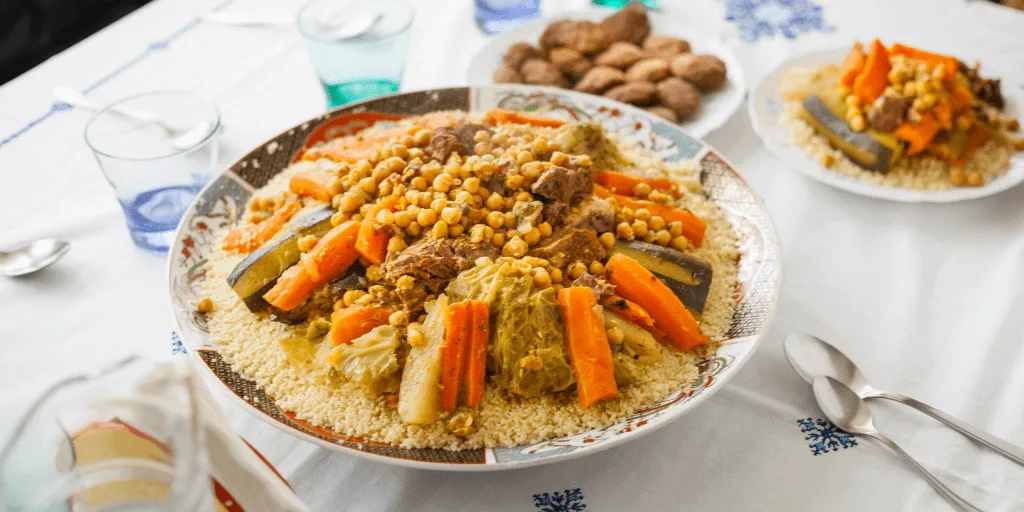
Look for a generous presentation of steamed couscous, vegetables and broth rather than thinking of couscous only as a side dish.
Pastilla — Morocco’s Sweet-Savory Pastry
Pastilla, also written bastilla, is one of the dishes that surprises first-time visitors because it deliberately combines savory and sweet elements.
Thin pastry surrounds a seasoned filling often made with chicken, egg and almonds. Cinnamon and powdered sugar may finish the top, producing a contrast that sounds unusual until you taste how the flavors work together.
Seafood versions also exist, particularly in coastal culinary settings. Pastilla may appear as a starter, celebration dish or substantial course depending on size and preparation.
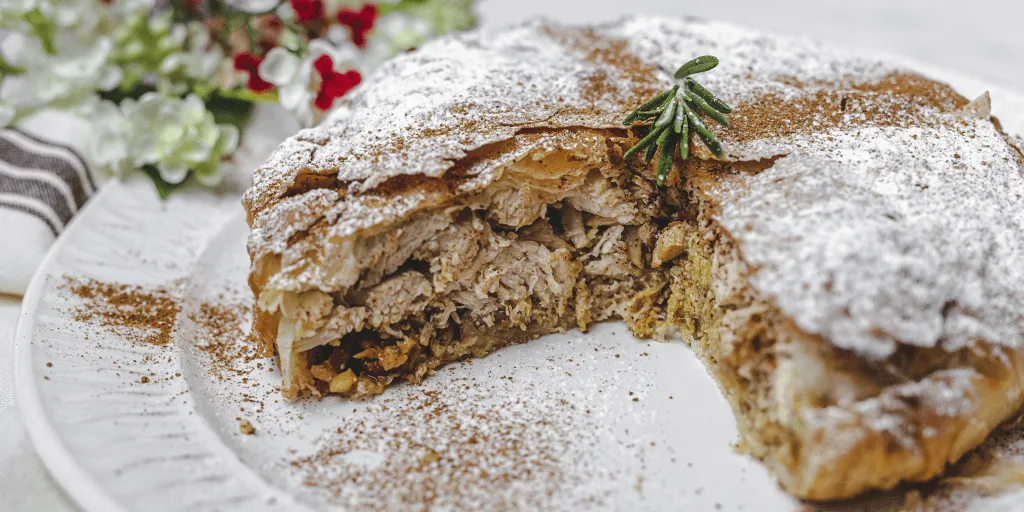
Crisp pastry, seasoned filling, nuts and sweet aromatic notes make pastilla one of Morocco’s most distinctive flavor combinations.
Harira — Comforting Moroccan Soup
Harira is a substantial soup commonly built around tomatoes, lentils, chickpeas, herbs and spices. Recipes vary between families, and some versions include meat or small noodles.
The soup has an especially important place during Ramadan, when it is commonly served as part of the meal that breaks the daily fast. Outside Ramadan, travelers can still find harira at other times of year.
It is particularly satisfying when temperatures are cooler or when you want a lighter meal after several days of richer dishes.
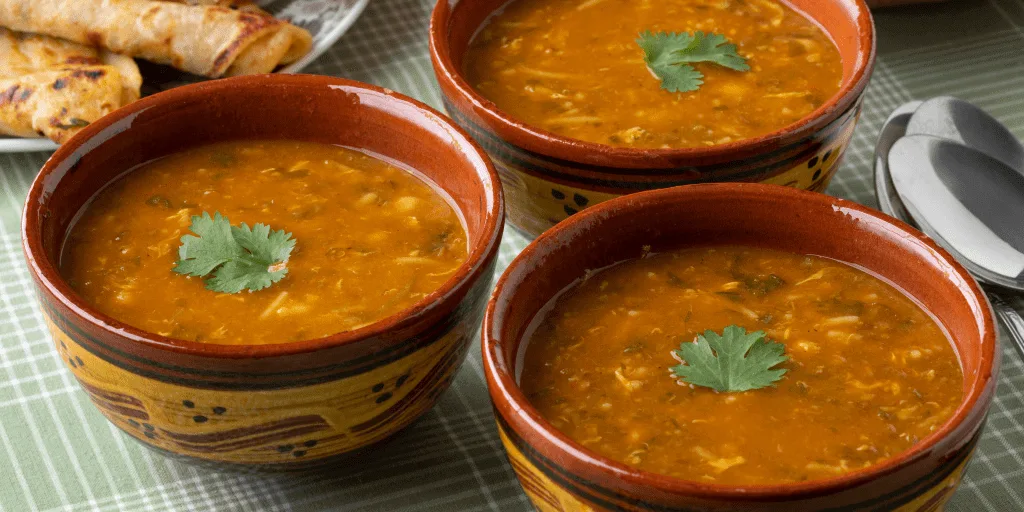
Harira combines legumes, tomatoes, herbs and warming spices in one of Morocco’s best-known soups.
Khobz — The Bread That Appears Everywhere
Khobz is round Moroccan bread with an everyday role that is easy to underestimate before visiting the country.
It accompanies tagines, salads and soups and may be used to pick up food from a communal dish. In traditional neighborhoods, bread can still move between home preparation and neighborhood or communal ovens.
Travelers should also look beyond one bread style. Moroccan breakfasts introduce different textures, including msemen, baghrir and harcha.
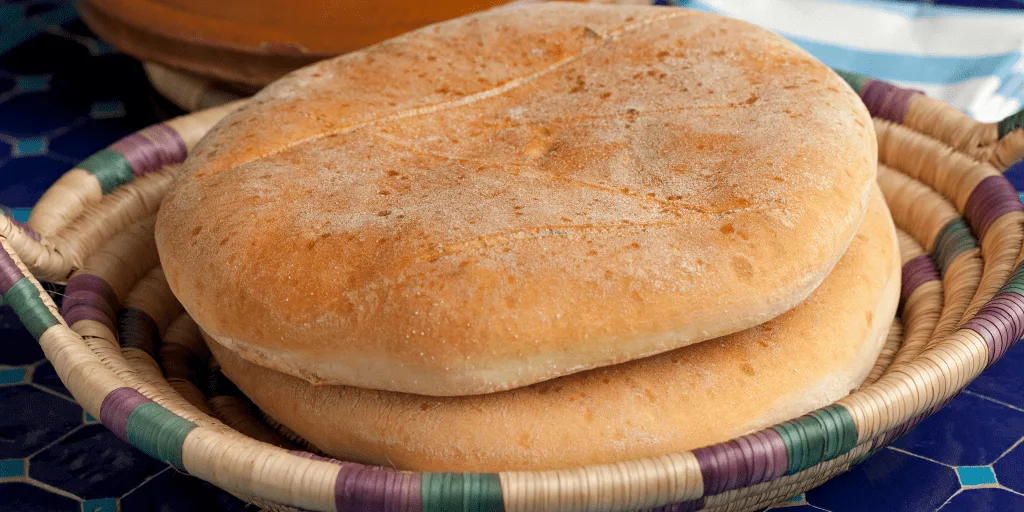
Fresh bread is not simply an accompaniment; it is part of how many Moroccan dishes are traditionally eaten.
Chebakia — Honey, Sesame & Ramadan Tradition
Chebakia is a carefully shaped pastry that is fried, coated in honey and finished with sesame. Its folded shape makes it immediately recognizable on bakery and market displays.
It has a particularly strong association with Ramadan and is often paired with harira when the fast is broken.
The flavor combines sweetness with sesame and aromatic spice, making it very different from a simple cookie or fried dough.
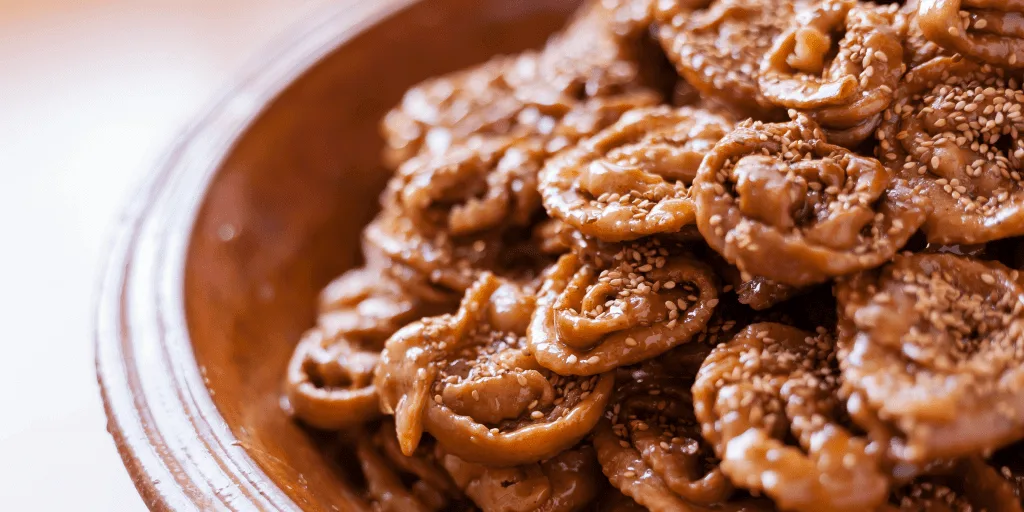
Chebakia is especially visible during Ramadan, when bakeries and homes prepare the honey-and-sesame pastry in quantity.
Msemen — Flaky Moroccan Breakfast Bread
Msemen is a square, layered flatbread prepared by folding dough with oil or butter before cooking it on a hot surface.
The result is crisp in places, soft in others and full of thin layers. At breakfast it may arrive with honey, jam, butter, cheese or amlou depending on the property and region.
It also works as a simple snack with tea. For many visitors, it becomes one of the breakfast foods they remember most clearly after returning home.
Baghrir — The Famous “Thousand-Hole” Pancake
Baghrir is a soft semolina pancake recognizable by the many tiny holes that form across its surface while it cooks.
Those holes absorb honey, butter or syrup extremely well, which is part of the reason baghrir works so naturally on a Moroccan breakfast table.
Compared with msemen, baghrir is lighter and more sponge-like. Trying both at the same breakfast is one of the easiest ways to see how varied Moroccan breads and pancakes can be.
Rfissa — Chicken, Lentils & Layered Bread
Rfissa is a deeply comforting Moroccan dish commonly combining chicken, lentils, onions and a fragrant sauce served over shredded layered bread such as msemen or trid.
Fenugreek and aromatic spices help give the dish its recognizable character. It is connected with family cooking and special occasions rather than being designed primarily as tourist restaurant food.
If you encounter it in a home-style restaurant, riad or cooking experience, it is worth trying precisely because it broadens your idea of Moroccan food beyond tagine and couscous.
Tanjia Marrakchia — A Marrakech Specialty
Tanjia has a particularly strong identity in Marrakech. Meat and seasonings are placed into an earthenware jar and cooked slowly, traditionally using residual heat associated with a hammam furnace.
The result is tender meat with concentrated flavor and a preparation style that feels entirely different from a tagine even though both rely on slow cooking.
If you want a dish tied closely to Marrakech itself, tanjia deserves a place on the list.
Continue with our Marrakech Travel Guide →
Brochettes — Moroccan Grilled Skewers
Brochettes provide a simpler contrast to slow-cooked dishes. Pieces of seasoned meat are grilled over high heat and served hot, often with bread, salads or condiments.
Depending on where you eat, choices may include chicken, lamb, beef or kefta-style minced meat.
They work especially well when you want a straightforward lunch or street-food experience rather than another multi-course meal.
For more casual foods, see our Moroccan Street Foods Guide →
Moroccan Salads — Small Plates With Big Variety
A Moroccan salad course may be much broader than a single bowl of raw vegetables.
Several small plates can arrive together, combining cooked vegetables, fresh ingredients, olives, carrots, peppers, tomatoes, eggplant or potatoes with herbs and seasonings.
This is one of the easiest ways to sample many flavors at once. At a riad dinner, the salads can become an important opening course rather than a minor side dish.
Zaalouk — Eggplant, Tomato & Moroccan Seasoning
Zaalouk is a cooked eggplant and tomato preparation flavored with herbs, garlic and Moroccan spices.
Its texture sits somewhere between a salad, dip and vegetable side dish. Bread makes an ideal accompaniment.
For vegetarian travelers, dishes such as zaalouk help demonstrate that Moroccan meals can provide satisfying plant-based choices without relying entirely on a vegetable tagine.
Sardines & Seafood — Morocco’s Atlantic Side
Morocco’s long Atlantic and Mediterranean coastlines add an entirely different dimension to the national food experience.
Sardines are especially important, while coastal restaurants may serve grilled fish, seafood tagines, prawns, calamari and other catches depending on place and season.
Essaouira is particularly enjoyable for travelers who want to combine an atmospheric old city with seafood. Instead of arriving with one specific fish in mind, ask what is available and fresh that day.
Moroccan Mint Tea & Sweets
Moroccan mint tea is more than a drink added to the end of a food list. It is closely connected with hospitality and social interaction.
Tea may appear when you arrive at a riad, enter a home, sit in a café or finish a meal. Sweetness varies, so travelers who prefer less sugar can ask when tea is being prepared specifically for them.
Pair it with chebakia, almond pastries or other Moroccan sweets and you have one of the country’s simplest food rituals.
What to Expect at a Moroccan Riad Breakfast
A riad breakfast can introduce several Moroccan foods in one sitting without requiring any special planning.
Round Moroccan bread served with butter, jam, honey or other breakfast accompaniments.
Layered flatbread with crisp edges and a rich, satisfying texture.
Soft semolina pancakes whose porous surface absorbs honey or butter.
Many properties add eggs, fruit, yogurt or other familiar breakfast foods.
A familiar part of Moroccan hospitality and an easy way to start the morning.
Usually available for travelers who prefer coffee alongside the traditional spread.
What to Expect at a Riad Dinner
A good riad dinner can feel different from eating in a large restaurant because the setting is smaller and the meal may be prepared specifically for guests staying at the property.
A dinner might begin with several Moroccan salads, followed by soup or a main dish such as tagine, couscous, pastilla or grilled meat. Tea or something sweet may finish the meal.
Not every riad serves dinner every night, and some require advance notice. If eating at your accommodation matters to you, confirm the arrangement earlier in the day.
Best Moroccan Foods for Vegetarians
Vegetarian travelers can find many Moroccan dishes built around vegetables, grains, legumes and breads, although it is still important to confirm ingredients rather than assuming a vegetable-looking dish contains no meat-based stock.
One of the most widely available vegetarian main dishes.
Eggplant and tomato with herbs, garlic and seasonings.
A varied selection of cooked and fresh vegetable preparations.
Simple local preparations can provide a satisfying alternative to meat-heavy meals.
Moroccan Food During Ramadan
Ramadan changes the daily rhythm of food in Morocco. During daylight hours, many Muslims fast, while the evening becomes a particularly important time for family meals and social activity.
Harira, dates and chebakia are strongly associated with breaking the fast. Travelers visiting during Ramadan may notice different restaurant hours and a quieter atmosphere shortly before sunset.
The useful approach is flexibility. Confirm meal times with your hotel or riad instead of assuming that normal schedules will apply everywhere.
Khobz, Msemen, Baghrir & Harcha
| Bread | Texture | How You May Eat It |
|---|---|---|
| Khobz | Round, substantial bread | Meals, soups and tagines |
| Msemen | Flaky and layered | Breakfast or snack |
| Baghrir | Soft and porous | Breakfast with honey or butter |
| Harcha | Semolina-based and crumbly | Breakfast or tea |
The Spices Behind Moroccan Cuisine
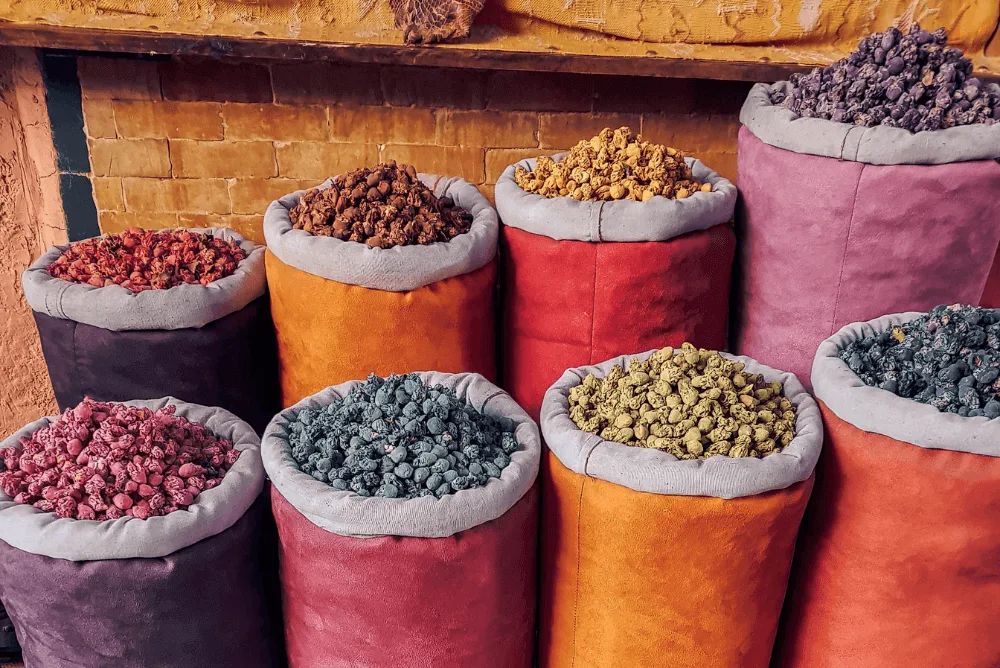
Moroccan food often builds flavor from combinations rather than from one dominant spice. Cumin, ginger, paprika, cinnamon, coriander, saffron and pepper can appear in different proportions depending on the dish.
Ras el hanout is itself a spice blend rather than one fixed ingredient, and its composition can vary from one seller or household to another.
Preserved lemons, olives, fresh herbs, dried fruit and nuts also play important roles, meaning the character of Moroccan food cannot be understood through dried spices alone.
Read more in our Moroccan Spices Guide →
Best Cities for Food Experiences in Morocco
Historic medina restaurants, traditional cooking, bakeries, markets and refined riad dining make Fes an important food destination.
Combine traditional dishes with Jemaa el-Fna, rooftop dining, riads and hands-on food experiences.
The port and coast make fresh fish and seafood a natural part of the city’s food identity.
Morocco’s largest city offers a broad mix of local food, modern restaurants and international dining.
If Fes is on your route, see our Best Restaurants in Fes Guide →
Street Food vs Riad Dining
| Experience | Street / Casual Food | Riad Dining |
|---|---|---|
| Atmosphere | Busy, informal and local | Quiet and intimate |
| Best For | Snacks and simple dishes | Longer traditional meals |
| Pacing | Usually faster | Relaxed |
| Food Discovery | Grills, bread, juice, snacks | Salads, tagines and multi-course meals |
| Experience | Street life and markets | Traditional accommodation setting |
Moroccan Dining Etiquette
Travelers do not need to memorize a long set of rules to enjoy Moroccan food. Pay attention to your host, guide or dining companions and follow the rhythm of the table.
Especially important when bread is being used to share food from a communal dish.
If you are eating in a home, let the host’s cues guide when and how the meal begins.
Khobz may function almost like a utensil with tagines, salads and sauces.
A meal can be part of the social experience rather than simply a fast stop between attractions.
Cooking Classes & Market Experiences
A cooking class becomes much more meaningful when it teaches how a dish begins rather than only handing you a finished recipe.
Some experiences begin with a market visit where ingredients are selected before returning to a kitchen to prepare salads, bread or a tagine.
This helps travelers understand why preserved lemon tastes different from fresh lemon, how spice combinations are built and why Moroccan cooking often depends on technique and patience as much as ingredients.
See vegetables, herbs, olives, spices and bread in their everyday context.
Tagine and salads are common choices, but the exact class can vary.
Learn how seasonings, vegetables and aromatics are combined.
The experience ends where Moroccan food is most meaningful: around the table.
Food Experiences on a Private Morocco Tour
A private itinerary gives you more freedom to mix famous monuments with the everyday food experiences that often become favorite memories.
Try different food environments as the route moves between Fes, the Sahara, Marrakech and the coast.
Include quieter traditional dinners alongside independent restaurant evenings.
Explore ingredients and everyday food culture rather than only finished restaurant dishes.
Add a hands-on experience when food is one of your main travel interests.
Read our Private Morocco Tours Guide →
Make Food Part of Your Morocco Itinerary
Do not schedule every meal before you arrive. Leave space for recommendations, market discoveries and the restaurant you notice while walking through a medina.
At the same time, plan the experiences that require advance coordination—such as a cooking class, special riad dinner or particular restaurant.
Start with Planning a Trip to Morocco → or explore Our Morocco Itineraries →
Moroccan Cuisine FAQ
What is Moroccan cuisine known for?
Moroccan cuisine is known for slow-cooked tagines, couscous, breads, soups, salads, grilled meats, pastries, mint tea and layered combinations of spices, herbs, preserved lemon, olives, nuts and dried fruit.
What food should I try first in Morocco?
Tagine is a natural starting point, but travelers should also try couscous, pastilla, harira, khobz, msemen, baghrir and regional specialties such as Marrakech tanjia.
Is Moroccan food very spicy?
Moroccan food is often highly aromatic but not necessarily hot. Spices are commonly used to build depth and fragrance rather than simply intense chili heat.
Is Moroccan cuisine good for vegetarians?
Yes. Vegetable tagines, zaalouk, salads, breads, legumes and other vegetable dishes provide many options, although travelers should confirm ingredients when avoiding meat or meat-based stock.
What is a typical Moroccan breakfast?
A riad breakfast may include khobz, msemen, baghrir, honey, jam, butter, eggs, fruit, yogurt, mint tea and coffee, with the exact selection varying between properties.
What is the difference between tagine and tanjia?
Tagine refers to a broad family of dishes prepared in a distinctive covered cooking vessel, while tanjia is a Marrakech-associated meat dish traditionally slow-cooked in an earthenware jar.
When do Moroccans traditionally eat couscous?
Couscous has a particularly strong tradition as a Friday meal, although travelers may find it offered on other days in restaurants and tourism settings.
What Moroccan foods are associated with Ramadan?
Harira, dates and chebakia are strongly associated with breaking the daily fast during Ramadan, alongside other foods that vary by household and region.
Where is the best place to try Moroccan food?
There is no single best place. Fes is excellent for traditional food and riad dining, Marrakech combines local specialties with markets and cooking classes, while Essaouira is particularly appealing for seafood.
Should I try street food in Morocco?
Street and casual food can add another side to the culinary experience. Choose busy vendors with good turnover and combine street food with restaurants, riads and market experiences.
Are cooking classes worth doing in Morocco?
They can be especially worthwhile for travelers interested in food because they explain ingredients, spices and preparation methods that are difficult to understand from restaurant dining alone.
Can food experiences be included in a private Morocco tour?
Yes. Depending on the itinerary, travelers can build in riad dinners, food-focused market visits, restaurant experiences and cooking classes alongside sightseeing.
Build a Morocco Journey You Can Taste as Well as See
Tell Altni Tours which cities, landscapes and food experiences interest you most. We can help shape those ideas into a private Morocco itinerary that combines the country’s famous sights with the flavors, markets and meals that make each region memorable.
PLAN MY MOROCCO TRIP VIEW MOROCCO ITINERARIES