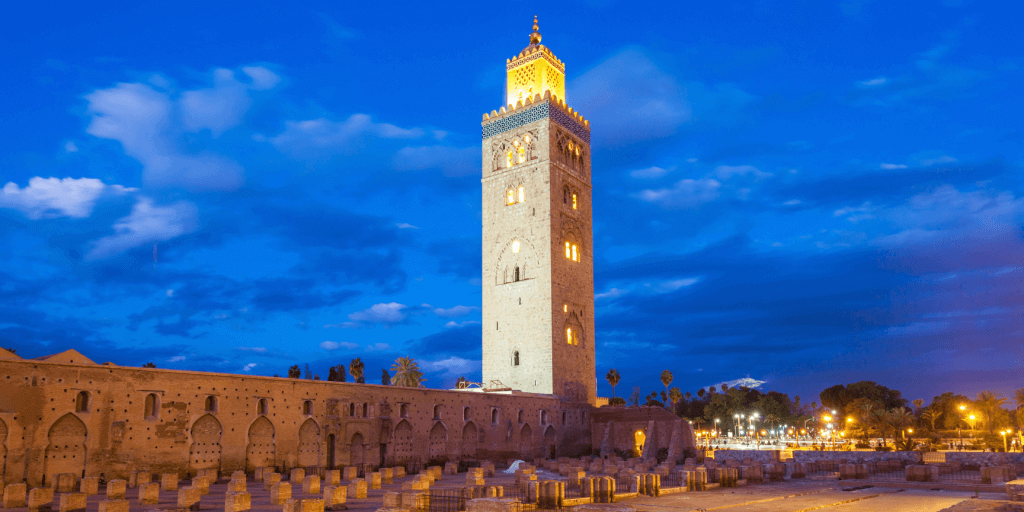
The best Things to Do in Marrakech Morocco combine much more than famous monuments. Marrakech is a city of palace courtyards, red walls, garden retreats, busy souks, hidden riads, rooftop cafés, traditional hammams and one of Morocco’s most energetic public squares.
A strong Marrakech itinerary should also allow the city to change around you. Jemaa el-Fna feels different in the morning than it does after sunset. A narrow medina lane can lead from a busy market into a remarkably peaceful riad. A morning of architecture can be balanced by a garden, spa or long lunch.
This 2027 guide brings those experiences together with practical planning advice: how many days to stay, when a local guide helps, where photography works best, how to approach the souks, and which day trips make sense when you have additional time.
What Marrakech Actually Feels Like
Marrakech is a city built on contrast. The medina can be loud, fast and visually overwhelming, while a courtyard only a few meters away may be almost silent. Red-earth walls sit beside intensely green gardens. Traditional workshops operate near contemporary restaurants and design boutiques.
This contrast is one of the reasons it is better to experience Marrakech in layers instead of attempting to complete a checklist as quickly as possible. The first walk helps you understand the streets. The second allows you to notice details. By evening, the same neighborhood can feel entirely different.
The Medina of Marrakesh is recognized as a UNESCO World Heritage Site. Its importance comes not only from individual monuments but from the historic urban environment they form together.
Learn more through the UNESCO Medina of Marrakesh page →
A Practical First-Day Route Through Marrakech
For a first visit, a guided medina day can connect the major historic sights without turning the experience into constant navigation. Start around Koutoubia, move toward the historic core, visit Bahia Palace or the Saadian Tombs, continue to Ben Youssef and the souks, then finish near Jemaa el-Fna as the atmosphere begins changing toward evening.
Red City Explorer Route
A flexible framework rather than a minute-by-minute itinerary.
Experience Jemaa el-Fna by Day and Night
Jemaa el-Fna is not an attraction to visit once and cross off your list. During the day, the square works as a major meeting point between the medina, Koutoubia and surrounding souks. As evening approaches, its character changes significantly.
Food stalls begin to dominate the square, smoke rises into the evening air and the surrounding terraces fill with visitors watching the activity from above. The transition itself is part of the experience.
One of the best approaches is to see the square briefly during daylight, continue sightseeing, then return in the late afternoon and stay into the evening. That gives you two different versions of the same place.
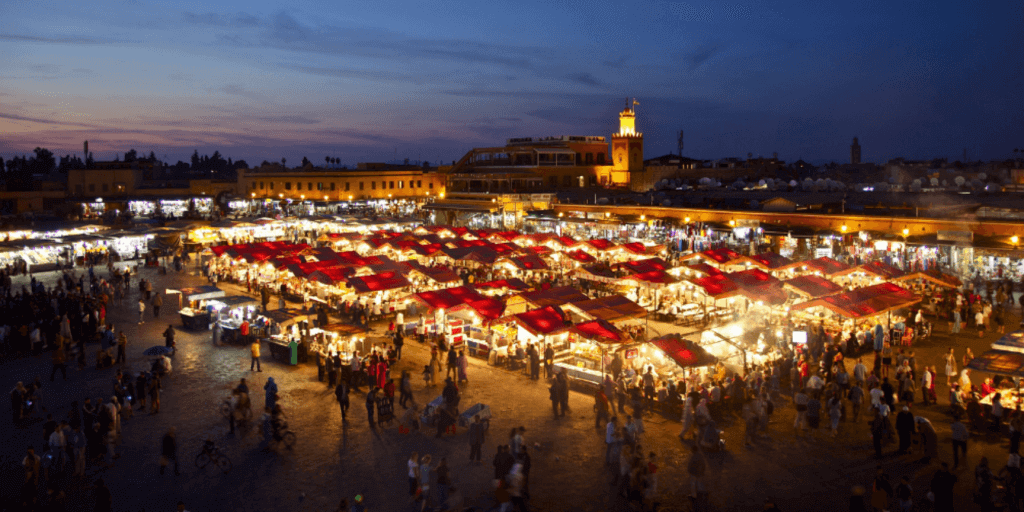
Evening transforms Marrakech’s central square into one of the city’s most memorable experiences.
Explore the Marrakech Souks
The souks are where Marrakech becomes a sensory experience. Lanterns, rugs, leather goods, ceramics, spices, textiles and metalwork appear in dense clusters through the medina.
Shopping can be enjoyable, but do not approach every lane as a transaction. Part of the experience is simply observing how different trades, workshops and stores occupy the old city.
If you decide to buy something, take time to compare quality and ask questions. Negotiation remains common in many traditional-market settings, but a good purchase should still feel comfortable for both sides.
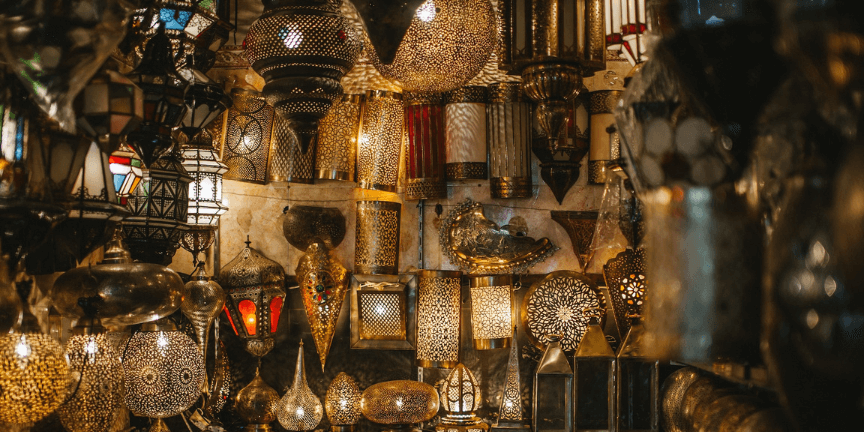
Lanterns, metalwork and handmade objects are part of Marrakech’s long craft tradition.
Step Inside Bahia Palace
Bahia Palace provides one of Marrakech’s strongest introductions to Moroccan decorative architecture. Courtyards, painted ceilings, carved surfaces, zellij and garden spaces reward travelers who look closely rather than moving quickly from room to room.
The palace developed during the nineteenth century and is closely associated with Si Moussa and later Ba Ahmed. Today, it offers a window into elite residential architecture from that period.
Morning can be a practical time to visit because the architectural details are easier to appreciate before your day becomes dominated by the busier souks and square.
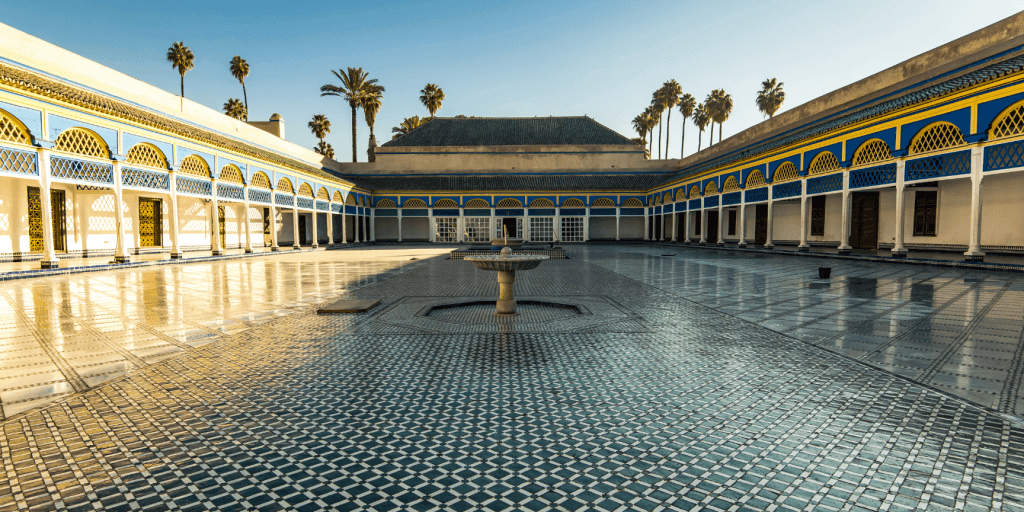
Courtyards and intricate decorative details make Bahia Palace an essential architectural stop.
See the Koutoubia Mosque and Minaret
Koutoubia is one of the visual anchors of Marrakech. Its minaret rises above the relatively low cityscape and helps orient visitors around the western side of the medina.
The mosque dates to the Almohad period, and its architecture influenced later minaret design elsewhere in the region. Non-Muslim visitors normally experience the site from outside, but the surrounding area and gardens still make it worthwhile.
Koutoubia is especially photogenic later in the day when warmer light complements Marrakech’s red and ochre palette.
Explore Ben Youssef Madrasa
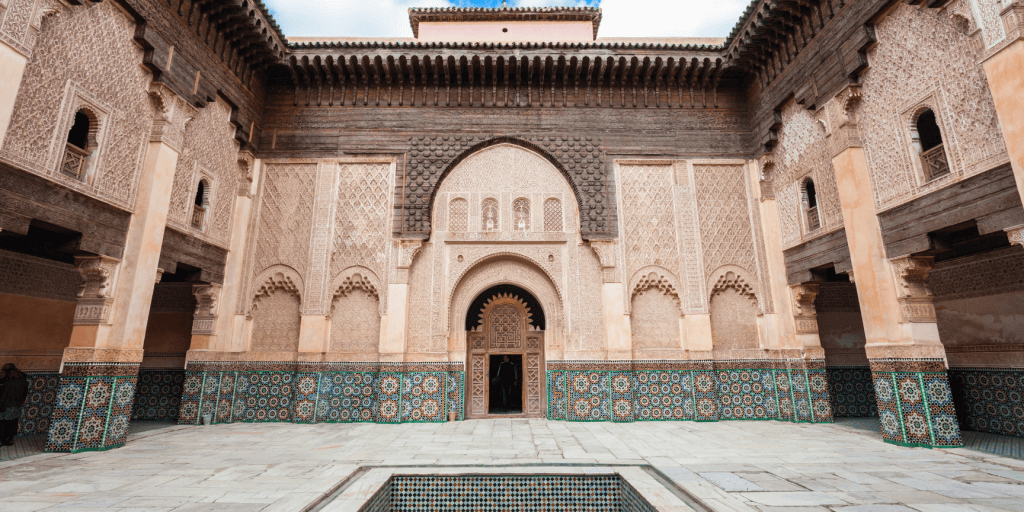
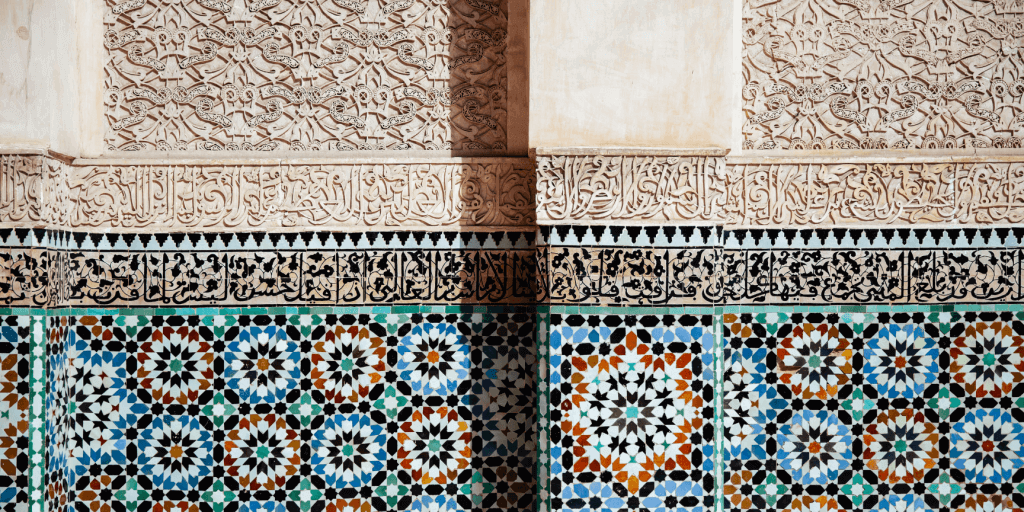
Ben Youssef Madrasa is one of Marrakech’s best places for slowing down and studying Moroccan architectural detail. The central courtyard combines carved plaster, tilework, wood and calligraphy in a carefully balanced composition.
What makes the experience especially interesting is the contrast between the ornate communal spaces and the much simpler rooms once used by students.
Look beyond the broad courtyard view. Some of the most impressive craftsmanship appears in repeating geometric patterns, Arabic inscriptions and transitions between wood, plaster and tile.
Visit the Saadian Tombs
The Saadian Tombs offer a compact but richly detailed encounter with one of Morocco’s important dynasties. Decorative tile, marble and carved surfaces turn the mausoleum complex into much more than a burial site.
The famous Chamber of the Twelve Columns attracts much of the attention, but the surrounding garden and smaller burial spaces also help communicate the scale of the royal necropolis.
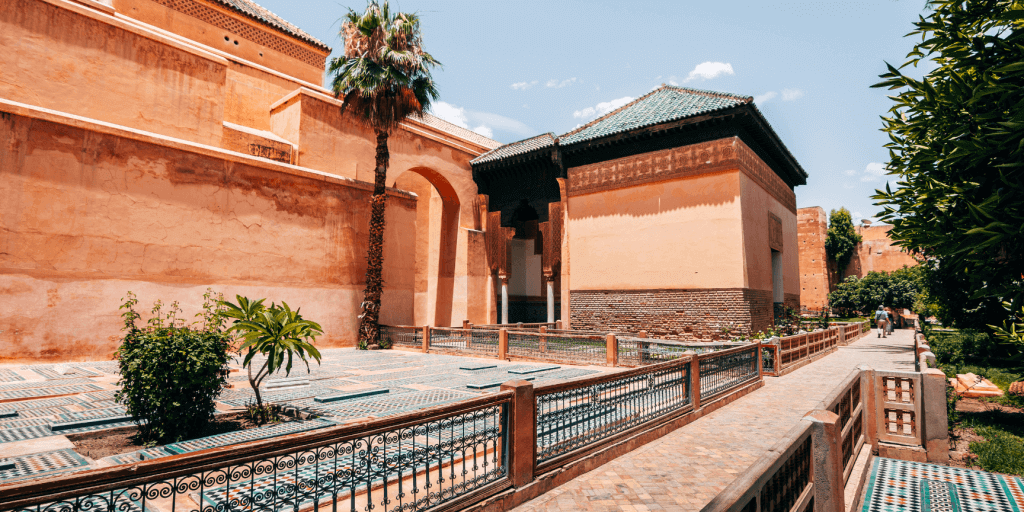
The tomb complex preserves an important chapter of Marrakech’s royal and architectural history.
Use Marrakech’s Gardens as a Real Break From the Medina
Marrakech’s gardens are most useful when they are treated as a deliberate contrast to the old city’s intensity. After several hours of medina walking, greenery, water and open space can completely change the rhythm of the day.
Jardin Majorelle is the most visually famous option, particularly for its intense blue architecture and carefully designed botanical setting. Other garden choices can provide quieter alternatives depending on your route and interests.
Do not try to visit every garden just because it appears on a list. One well-timed garden visit can be more valuable than three rushed stops.
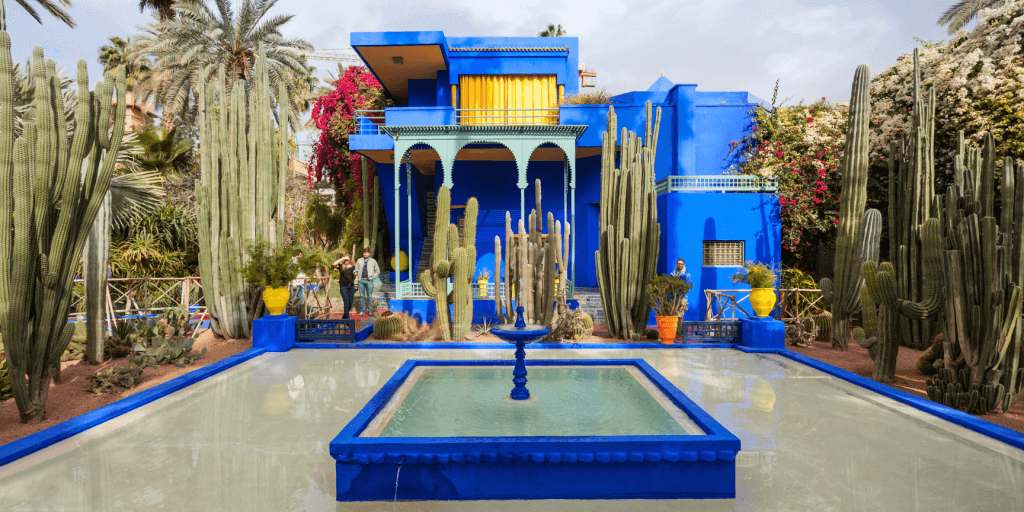
Majorelle’s vivid colors provide a striking visual contrast to Marrakech’s red medina.
Stay in a Traditional Marrakech Riad
A riad is more than a place to sleep. In Marrakech, it can become one of the clearest examples of how the city’s architecture works.
From the street, the exterior may appear deliberately simple. Step through the door and the building turns inward toward a central courtyard, often with plants, fountains, tilework and rooftop space.
That transition from busy medina lane to quiet interior is one of Marrakech’s most memorable contrasts. Staying inside the medina also makes early-morning and evening walks easier because you are already close to the historic center.
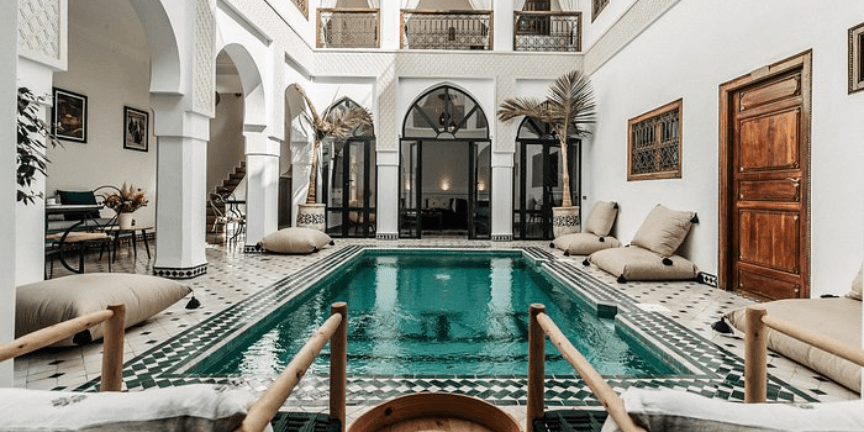
A central courtyard can feel worlds away from the medina lane immediately outside.
Try a Traditional Moroccan Hammam
The hammam is one of Morocco’s long-standing bathing traditions. Public neighborhood hammams and visitor-oriented hammam experiences can be quite different, so it helps to understand which style you want before booking.
A traditional treatment commonly involves steam, black soap and exfoliation. Public facilities may have separate times or sections for men and women, while riads and private spas often provide more individualized treatments.
Travelers who want the cultural experience should learn what to expect in advance. Those who prefer privacy and a more polished wellness setting may be happier with a spa-style hammam.
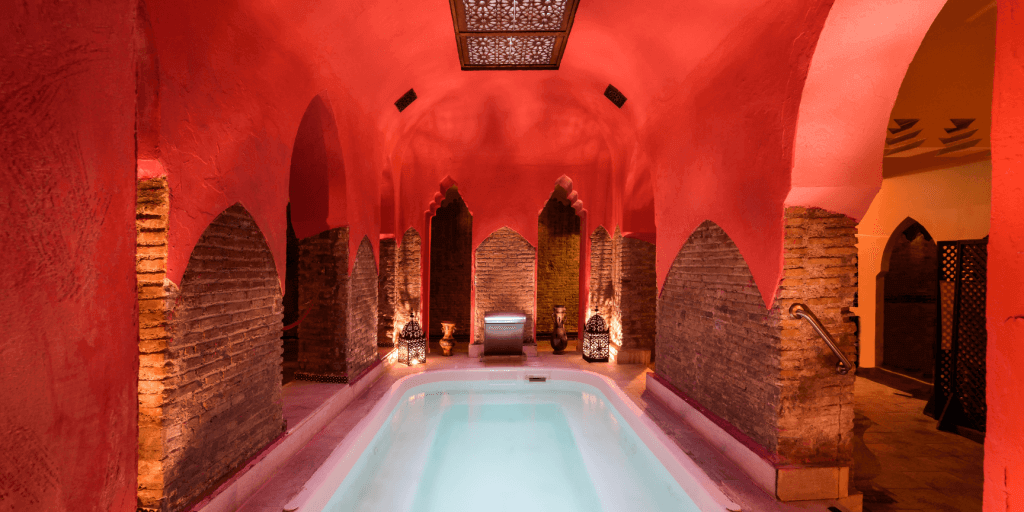
Traditional bathing rituals offer a very different experience from conventional sightseeing.
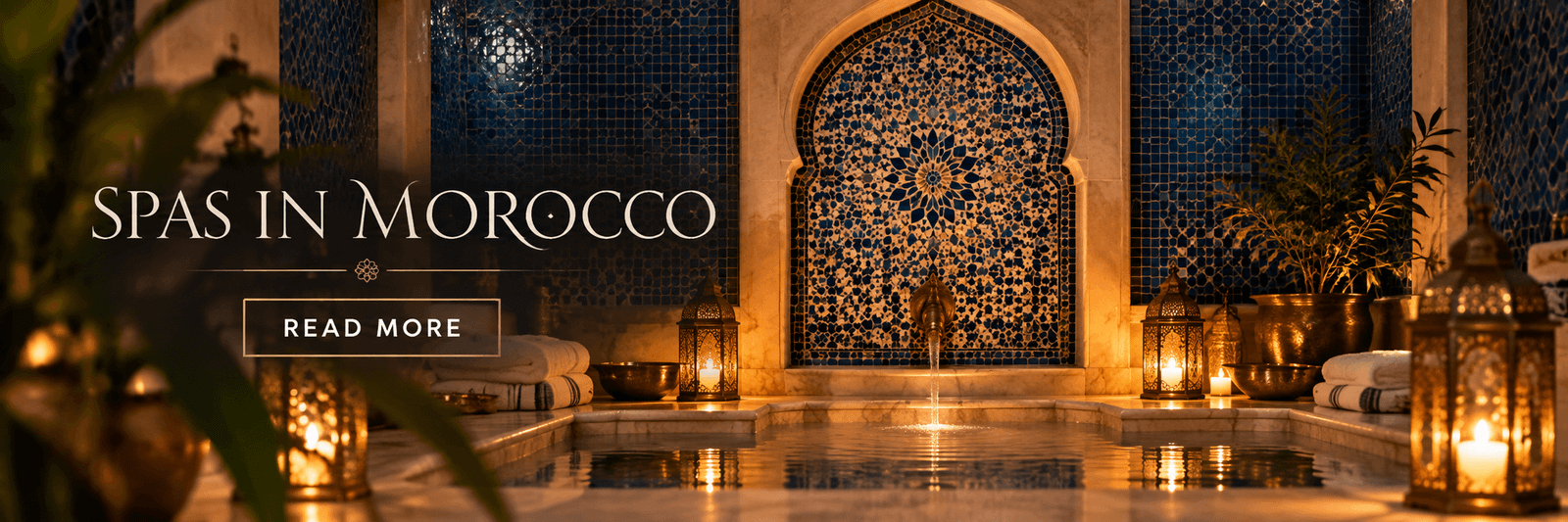
Relax in a Private Moroccan Spa
If a neighborhood hammam sounds more adventurous than relaxing, Marrakech also has private wellness experiences ranging from riad treatments to dedicated spas.
This works particularly well after a long medina day. Instead of adding another museum or market to an already full itinerary, a hammam treatment or massage can create a natural pause.
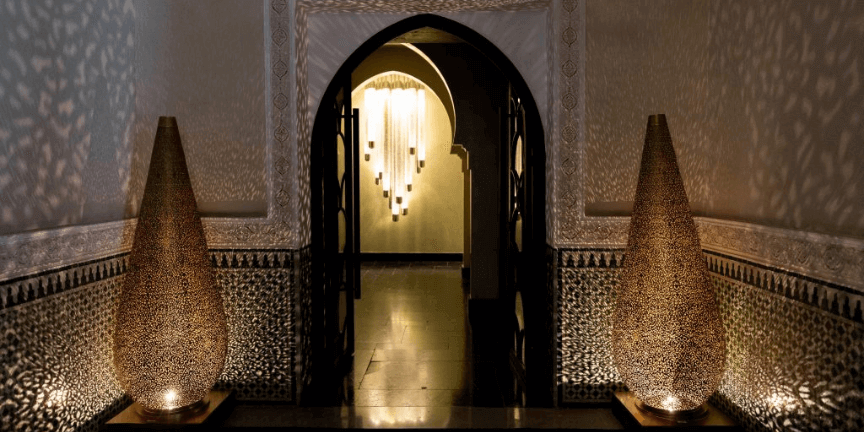
Marrakech offers both traditional hammams and more private spa-style wellness experiences.
Visit Maison de la Photographie
Maison de la Photographie gives you a quieter way to understand Morocco through historical images rather than architecture alone.
Its photographic collection provides glimpses of Moroccan people, places and daily life from earlier periods. After spending time in the medina outside, seeing historic images can make the changing city easier to appreciate.
The rooftop is another reason to visit. Marrakech is often easiest to understand when you move between street level and higher viewpoints.
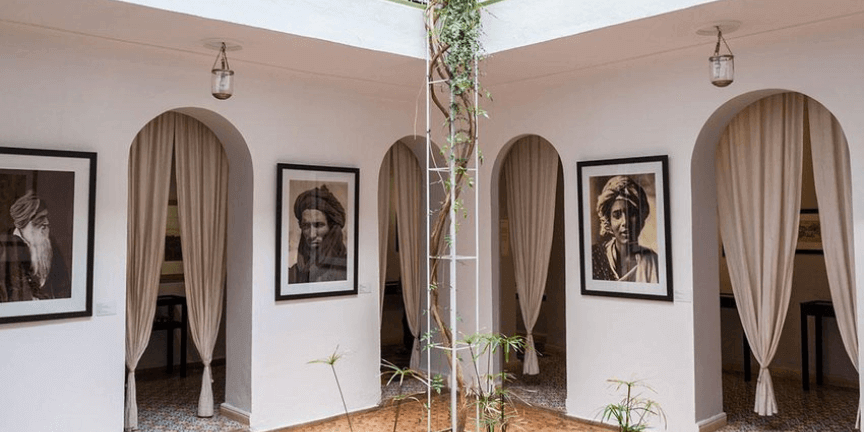
Historic photographs offer a different way to connect Marrakech’s past with the city you see today.
Photography lovers can also read our Photography in Morocco guide →
Taste Fresh Orange Juice & Moroccan Flavors
Some memorable Marrakech experiences are extremely simple. Fresh orange juice is one of them. Juice stalls are closely associated with the city’s busy public spaces and provide an easy refreshment during a long sightseeing day.
Food deserves more time than a quick snack, too. Marrakech offers tagines, couscous, pastilla, breads, salads and street-food options alongside contemporary Moroccan restaurants.
Rather than eating every meal in the same style of restaurant, mix experiences: a riad breakfast, a medina lunch, rooftop tea and an evening meal near the square can make food part of the itinerary.
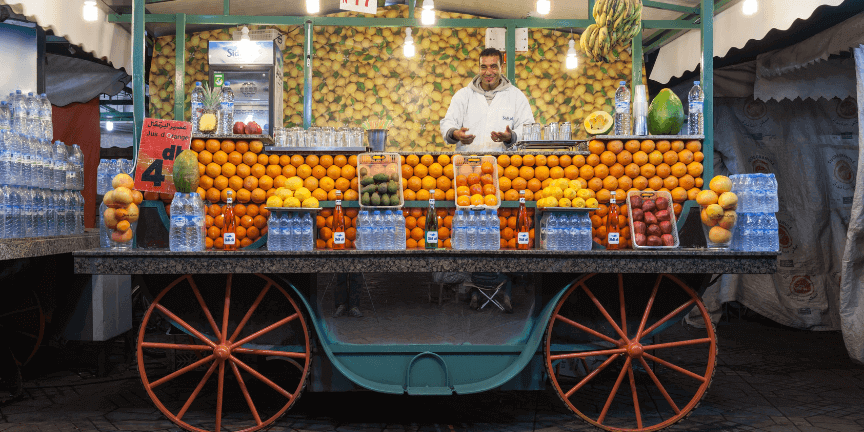
Fresh juice is one of Marrakech’s simplest and most recognizable street experiences.
Continue with our Moroccan Cuisine: Must-Try Foods →
Watch Marrakech From a Rooftop With Mint Tea
A rooftop is one of the best places to understand Marrakech without leaving the medina. From above, the maze becomes a landscape of flat roofs, minarets, terraces and distant mountains.
Around Jemaa el-Fna, an elevated café also lets you watch the square transform from afternoon into evening without remaining in the middle of the crowds the entire time.
Order Moroccan mint tea and give yourself permission to sit for a while. Marrakech does not need to be experienced at full speed.

Tea and a rooftop view can be just as memorable as another hour of sightseeing.
See the Marrakech Region From a Hot-Air Balloon
A hot-air balloon flight offers a completely different Marrakech experience. Instead of focusing on the medina’s narrow lanes, you see the wider landscape beyond the city from above.
Balloon experiences generally begin early because morning conditions and sunrise views are part of the appeal. For couples, photographers and travelers who want one special activity outside the normal sightseeing circuit, this can become a trip highlight.

Sunrise balloon flights reveal a much wider landscape beyond the medina walls.
Consider a Horse-Drawn Carriage Ride
Marrakech’s horse-drawn carriages are a long-standing part of the visitor landscape and offer an alternative way to see parts of the city when you want a break from walking.
They can be especially appealing for families or travelers who enjoy slower sightseeing. Agree on the route and price before departing, and choose an operator whose animals appear properly cared for.
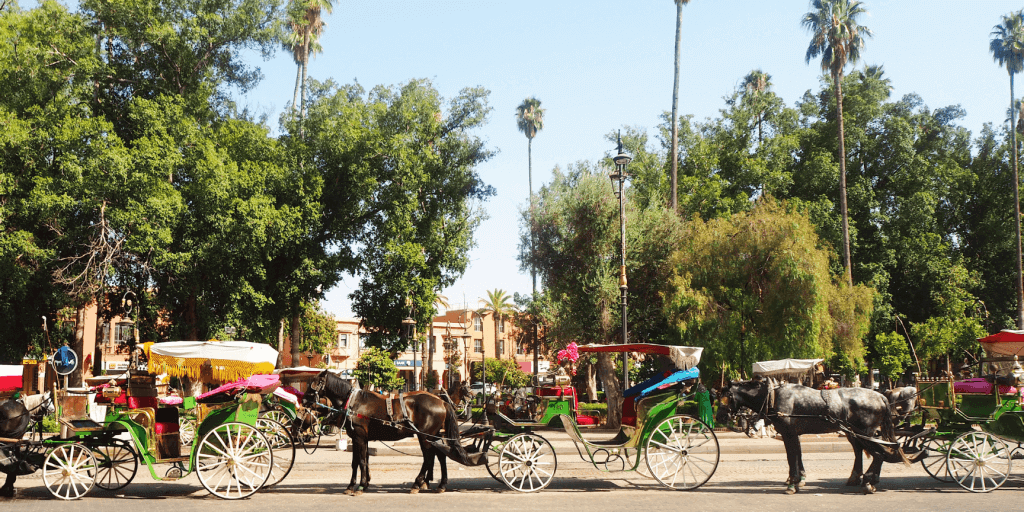
A carriage can provide a slower alternative when you want to see the city without another long walk.
Marrakech by Day vs Marrakech by Night
| Time | Best For | Atmosphere |
|---|---|---|
| Morning | Palaces, madrasa, photography | Cooler and more focused |
| Afternoon | Gardens, souks, cafés | Busier and brighter |
| Late Afternoon | Koutoubia and rooftops | Warm light |
| Evening | Jemaa el-Fna and dining | Energetic and atmospheric |
Guided First Day vs Exploring Marrakech Independently
Guided First Day
- Efficient route through the historic medina.
- Context for architecture and history.
- Easier introduction to the souks.
- Less time spent navigating.
- Useful for a short first visit.
Independent Time
- Perfect for cafés and photography.
- More flexibility for shopping.
- Easy to revisit favorite areas.
- Works better after initial orientation.
- Allows a slower personal pace.
For many first-time travelers, the strongest combination is a guided introduction followed by free time rather than choosing only one approach.
1 Day vs 2 Days vs 3 Days in Marrakech
Koutoubia, Bahia or Ben Youssef, souks and Jemaa el-Fna at sunset.
Add gardens, Saadian Tombs, riad time, rooftop dining, photography and slower shopping.
Add a hammam, balloon experience or a carefully selected day trip beyond Marrakech.
For most first-time visitors, two to three full days provides a much better balance than trying to see Marrakech in one rushed day.
Marrakech Walking & Mobility Tips
Much of historic Marrakech is best explored on foot, and medina surfaces can be uneven. Riads may also have narrow staircases and rooftop dining areas without elevators.
Travelers who find long walks difficult should prioritize accommodation near convenient medina access points, ask for ground-floor rooms when necessary, and build regular breaks into the itinerary.
A private driver can reduce unnecessary walking between separated areas such as the historic medina, Gueliz and Majorelle.
Best Day Trips From Marrakech
Marrakech is also a useful base for exploring landscapes beyond the city. The right choice depends on whether you want mountains, villages, waterfalls or southern Moroccan architecture.
| Trip | Best For | Style |
|---|---|---|
| Atlas Mountains | Mountain scenery and villages | Nature + culture |
| Ourika Valley | Shorter mountain escape | Scenery + walking |
| Ouzoud | Waterfalls | Longer nature day |
| Ait Benhaddou | Architecture and High Atlas scenery | Long full-day route |
If your itinerary continues beyond Marrakech rather than returning the same evening, see our private Morocco itineraries →
Where Marrakech Fits Into a Morocco Itinerary
Marrakech can work as the beginning, middle or final major city in a longer Morocco journey. From here, routes can continue through the High Atlas toward Ait Benhaddou and the Sahara, west toward Essaouira, or north toward Casablanca, Rabat and the imperial cities.
For a first-time Morocco itinerary, avoid adding destinations simply because they fit on a map. The better question is how much driving you want compared with how much time you want inside each place.
Read our complete Planning a Trip to Morocco guide → or explore Things to Do in Morocco →
Things to Do in Marrakech Morocco FAQ
Is Marrakech worth visiting?
Yes. Marrakech combines historic architecture, markets, gardens, food, traditional riads, wellness experiences and easy access to the Atlas Mountains, making it one of Morocco’s most varied destinations.
How many days should I spend in Marrakech?
Two to three full days works well for most first-time visitors. Two days covers the main city experiences, while a third day allows time for a hammam, balloon flight or day trip.
What should I see first in Marrakech?
A strong first-day route can combine Koutoubia, Bahia Palace or the Saadian Tombs, Ben Youssef Madrasa, the souks and Jemaa el-Fna in the evening.
Do I need a guide in Marrakech?
A guide is not required, but a guided first medina day can make navigation easier and add useful historical and cultural context. Independent exploration is often more enjoyable afterward.
When should I visit Jemaa el-Fna?
Visit once during daylight and return in the late afternoon or evening. The square changes significantly as food stalls and evening activity develop.
Is Marrakech good for shopping?
Yes. The medina souks offer rugs, lanterns, leather goods, ceramics, textiles, spices, slippers and many other Moroccan crafts.
Should I stay in a riad in Marrakech?
A riad is a strong choice if you want a traditional courtyard-style accommodation experience and convenient access to the historic medina.
What is the difference between a hammam and a spa?
A traditional hammam centers on steam, washing and exfoliation, while private spas typically add massages, treatments and a more private wellness environment.
Is Marrakech easy to walk around?
Much of the medina is best explored on foot, but lanes can be uneven and crowded. Comfortable shoes, realistic pacing and planned breaks help considerably.
What are the best day trips from Marrakech?
Popular options include the Atlas Mountains, Ourika Valley, Ouzoud Falls and Ait Benhaddou. The best choice depends on how much driving and walking you want.
What is the best time for Marrakech photography?
Morning works well for architecture and quieter streets, while late afternoon and evening are excellent for Koutoubia, rooftops and Jemaa el-Fna.
Can Marrakech be included in a private Morocco tour?
Yes. Marrakech connects naturally with the High Atlas, Sahara routes, Essaouira, Casablanca and Morocco’s other imperial cities.
Make Marrakech Part of Your Morocco Story
Altni Tours can combine Marrakech’s medina, palaces, food, riads and cultural experiences with a private route through the Atlas Mountains, Sahara, imperial cities and other destinations across Morocco.
PLAN MY MOROCCO TRIP VIEW MOROCCO ITINERARIES