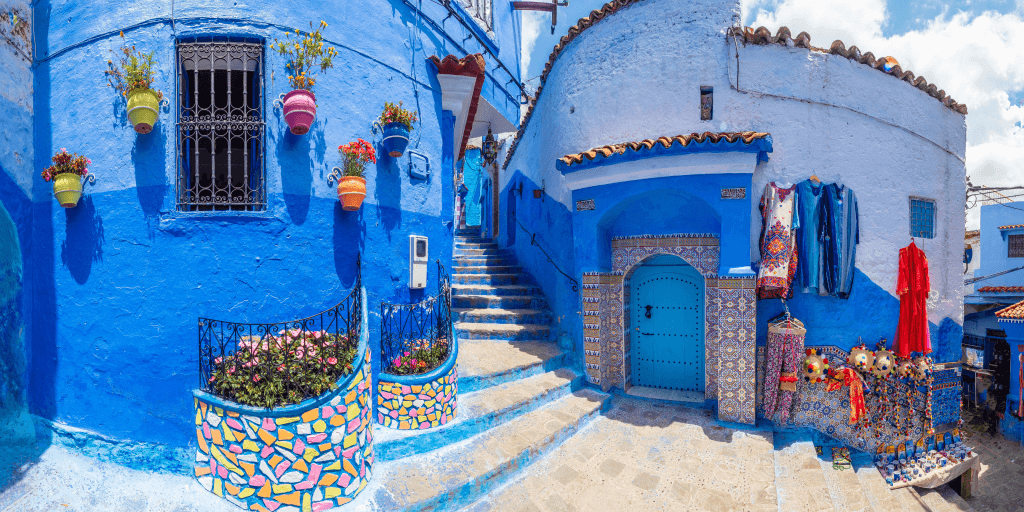

The best Things to Do in Chefchaouen Morocco are not about rushing between monuments. Chefchaouen works best when you slow down, wander through its blue medina, watch the light change across the walls, drink mint tea overlooking the Rif Mountains and give yourself enough time to notice the small details.
Set into the Rif Mountains of northern Morocco, Chefchaouen is one of the country’s most recognizable towns. Its blue-painted streets attract photographers from around the world, but the color is only part of the appeal. The city also offers mountain scenery, local crafts, a historic kasbah, traditional food, easy café culture and access to outdoor experiences around the Rif.
This guide goes beyond a basic attraction list. It explains what to see, how long to stay, when to photograph the streets, what the walking is really like, how to include Akchour, and how Chefchaouen fits into a larger northern Morocco itinerary.
What Chefchaouen Actually Feels Like
Chefchaouen feels very different from Morocco’s larger cities. There is no equivalent here to the vast complexity of Fes or the constant energy of Marrakech. The town is smaller, the pace is easier and the surrounding mountains remain visible from many streets.
That difference is exactly why Chefchaouen works so well inside a longer Morocco itinerary. After several intense sightseeing days, the Blue City offers space to slow down. You can spend an hour walking without needing a destination, sit in a café simply because the view is good, or return to the same lane later when the light has changed.
Experience It Tours also emphasizes this slower side of Chefchaouen, particularly early walks, relaxed cafés and allowing the town to unfold without packing the day too tightly. :chatgpt-content-reference{index=”1″}
A Simple Chefchaouen Walking Route
Chefchaouen is enjoyable without a strict route, but first-time visitors benefit from having a loose sequence. Begin in or near Plaza Uta el-Hammam, visit the Kasbah, walk deeper through the blue medina, continue toward Ras El Maa and then climb toward the Spanish Mosque if your energy and mobility allow.
Chefchaouen Blue City Route
Walk slowly and allow extra time for photography and cafés.
Wander the Blue Medina Early in the Morning
The medina is the experience that defines Chefchaouen. Blue walls, painted doors, stone steps and narrow arches create the visual identity that made the city famous.
The best approach is not to hunt for a single “Instagram street.” Chefchaouen is at its strongest when you simply move slowly and pay attention to changes in color, light and elevation.
Early morning is particularly rewarding. Experience It Tours notes that streets are quieter before visitor traffic builds, making it easier to photograph architectural details and experience the town at a calmer pace. :chatgpt-content-reference{index=”2″}
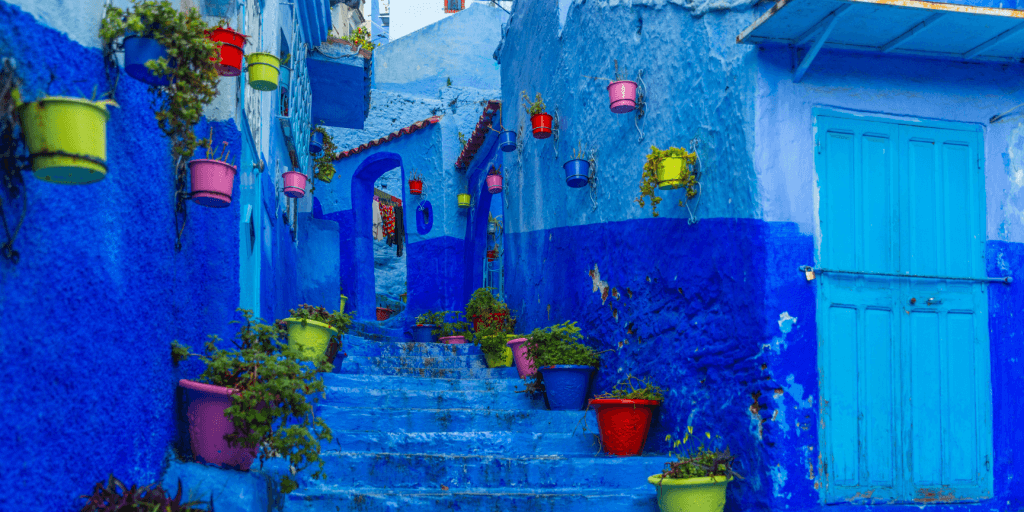
Early mornings reveal quieter streets, softer light and the architectural details that make Chefchaouen distinctive.
Start at Plaza Uta el-Hammam
Plaza Uta el-Hammam acts as the social center of the medina. Cafés and restaurants frame the square, while the Kasbah gives the space its strongest historical landmark.
The square works well as both a starting point and a place to return to during the day. You can sit with mint tea, watch the rhythm of the town and decide whether you want to continue deeper into the medina or pause before another walk.
This is one of the places where doing less often gives you more. Instead of treating the square as something to photograph in five minutes, stay long enough to notice how visitors and local residents use the same space differently throughout the day.
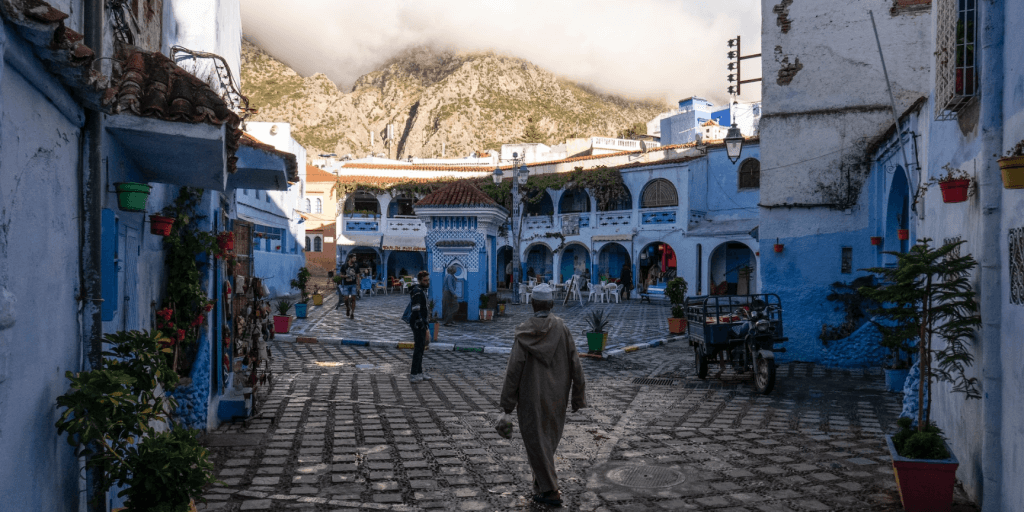
Chefchaouen’s main square is ideal for a relaxed café stop between medina walks.
Explore the Chefchaouen Kasbah
Chefchaouen is often discussed mainly in terms of blue streets, but the Kasbah gives the visit more historical structure. Located beside Uta el-Hammam, the fortified complex offers architecture, garden spaces and local cultural context.
Its tower is particularly useful because it gives you a different view of the surrounding town. From above, the famous blue buildings begin to feel less like individual photo locations and more like one connected mountain settlement.
This is a good early-day stop because it provides historical context before you continue through the medina.
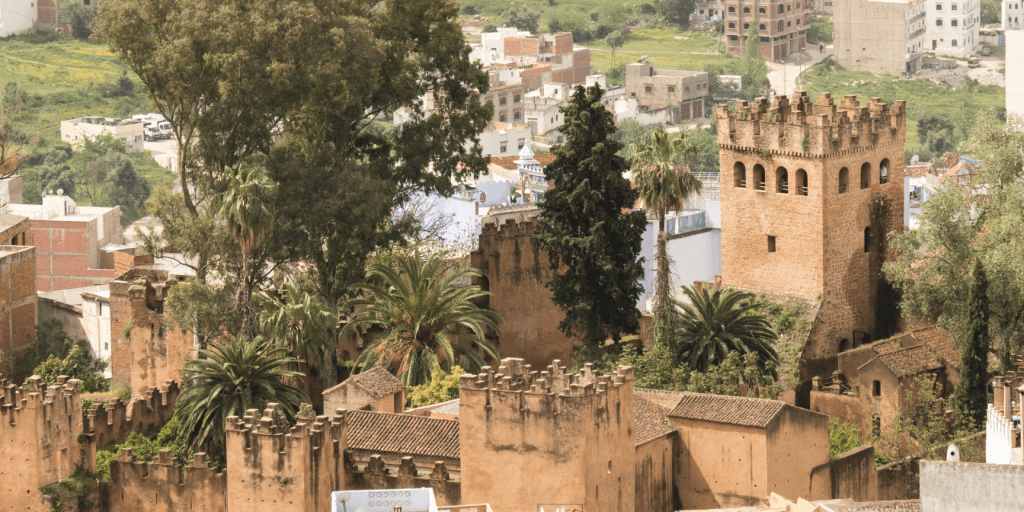
The Kasbah adds history and architecture to a visit often dominated by photography.
Walk to Ras El Maa
Ras El Maa sits where fresh mountain water reaches the edge of the medina and provides a natural transition between the town and the hills above.
The walk is worthwhile because the experience is not limited to the water itself. You gradually move away from the central square and into a quieter part of Chefchaouen, with houses, small streets and mountain scenery combining along the route.
Historically, the water source has played a practical role in local life. Today it remains a popular gathering point and is one of the most logical places to pass before continuing uphill toward the Spanish Mosque.
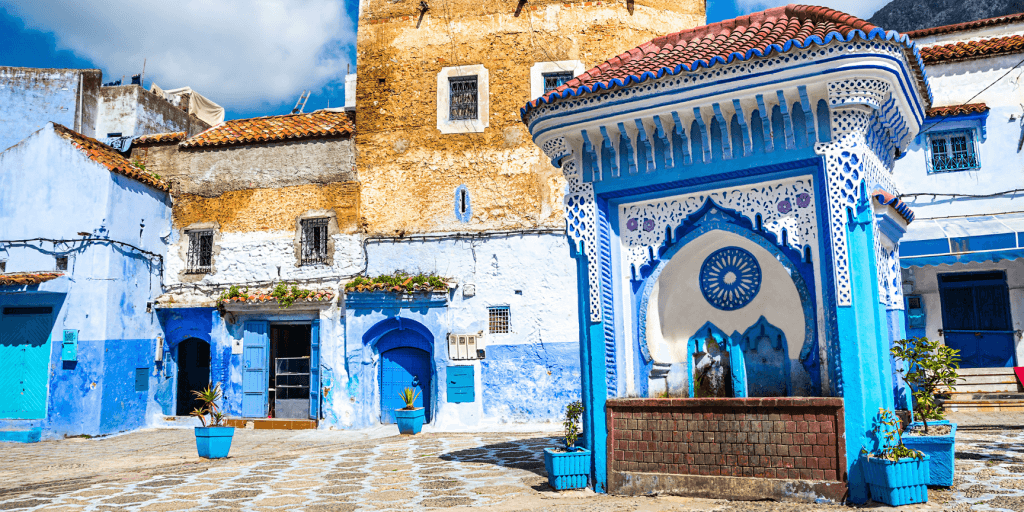
The water source provides a natural connection between the medina and the mountain slopes above Chefchaouen.
Hike to the Spanish Mosque for a Wider View
The Spanish Mosque is one of Chefchaouen’s best-known viewpoints. The walk starts beyond Ras El Maa and climbs into the hills above the town.
The reward is perspective. From the hillside, Chefchaouen appears as a blue-and-white settlement pressed against the Rif Mountains. The view is especially attractive later in the day when warm sunlight contrasts with the cool tones of the buildings.
The walk is not suitable for every traveler. Chefchaouen is already built on a slope, and this adds further climbing. Experience It Tours also highlights the mosque as a scenic walk but notes the city’s steep terrain as a real consideration for travelers with limited mobility. :chatgpt-content-reference{index=”3″}
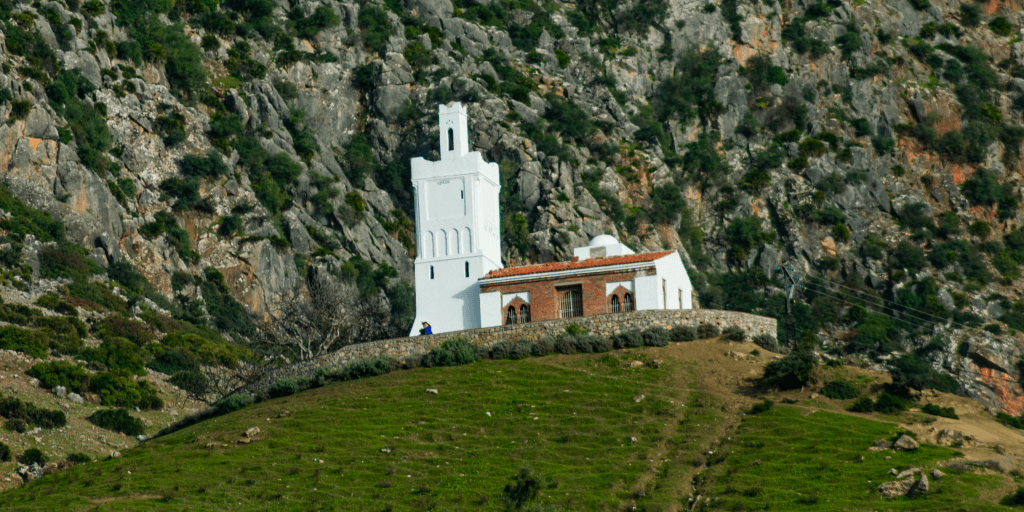
The hillside walk provides one of the best wide views of the Blue City and surrounding Rif landscape.
Photograph Chefchaouen at the Best Light
Chefchaouen is one of Morocco’s easiest places to enjoy photography because visual interest exists at almost every scale. Wide street scenes work well, but so do small details: painted steps, flower pots, arched passages, doorways, textiles and changing shadows.
The color also changes throughout the day. Morning light tends to feel softer and cooler, while later sunlight creates stronger contrasts between blue walls and warm stone.
Experience It Tours specifically recommends getting out early, when the streets are quieter, and notes how the changing light creates different photographic opportunities throughout the day. :chatgpt-content-reference{index=”4″}
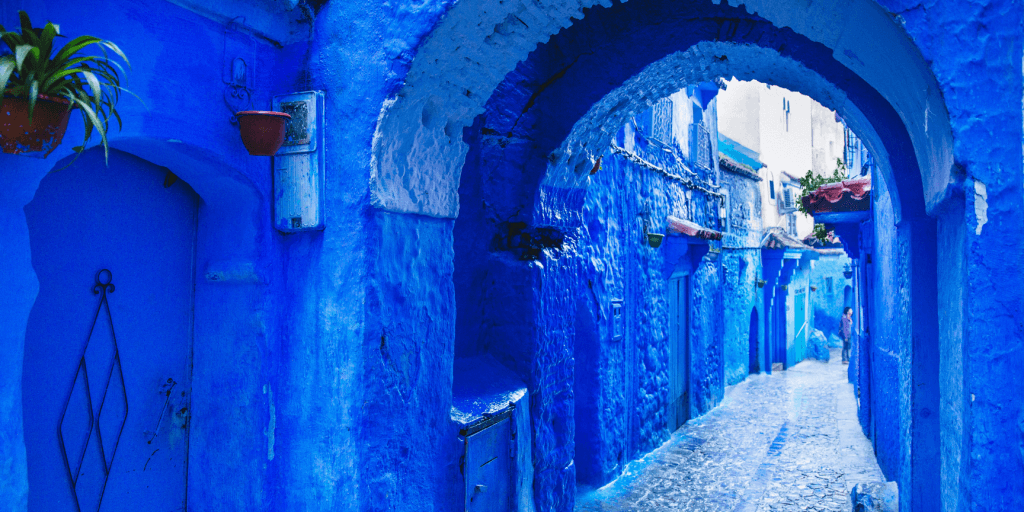
Look for arches, stairs, painted doors and details rather than photographing only the widest street views.
Meet Local Artisans & Shop for Chefchaouen Crafts
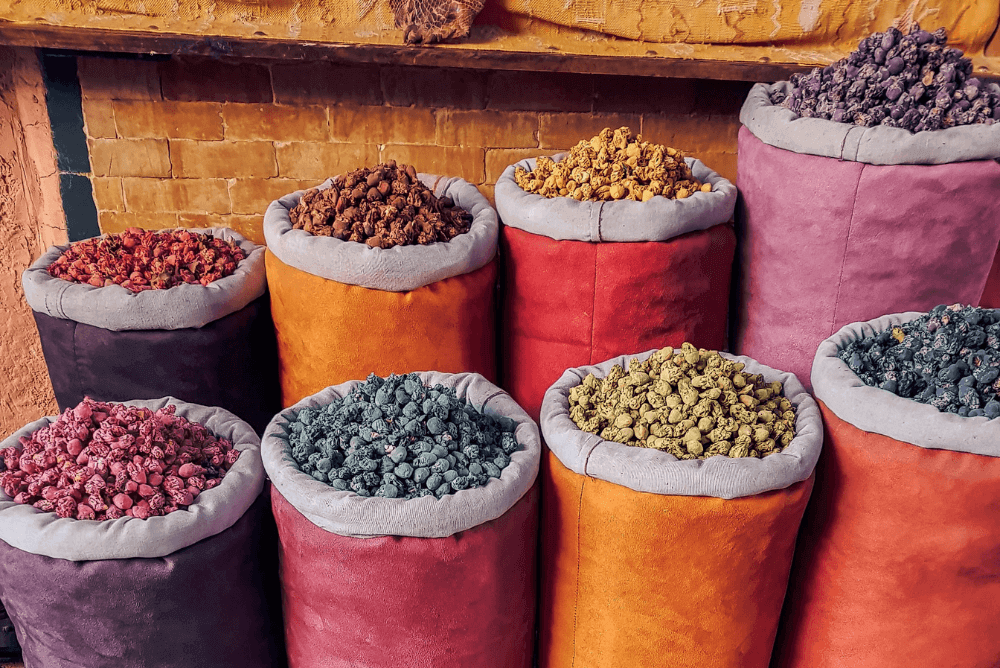
Chefchaouen offers a shopping experience that feels different from the larger commercial medinas of Fes and Marrakech. Wool goods, woven textiles, rugs, blankets, slippers and small handmade items appear throughout the old town.
The strongest experience comes from paying attention to materials and workmanship rather than shopping only for souvenirs. Some products reflect mountain traditions and the regional character of northern Morocco.
Experience It Tours also highlights artisan workshops and colorful crafts as part of the Chefchaouen experience, especially because these products stand out so dramatically against the blue medina walls. :chatgpt-content-reference{index=”5″}
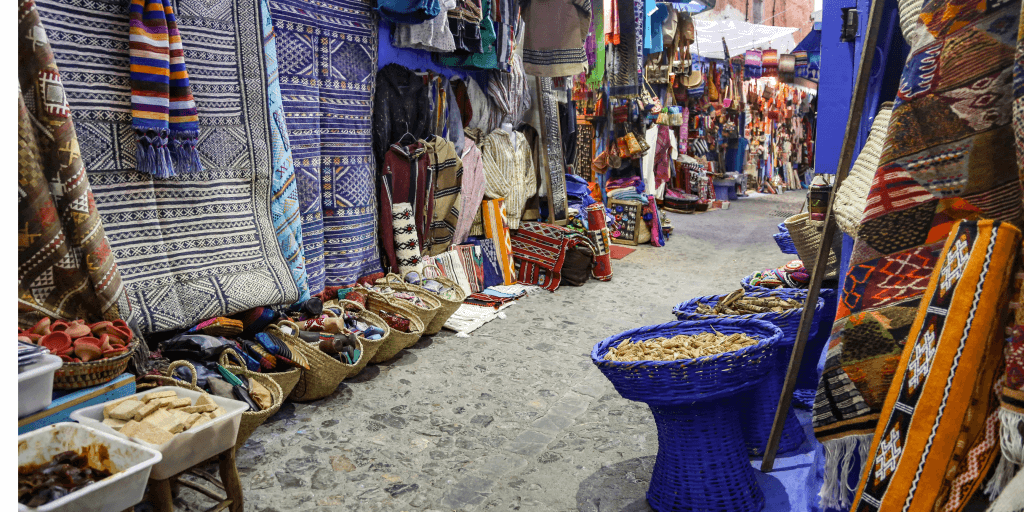
Textiles and handmade goods add color and regional character to Chefchaouen’s blue medina.
Taste Chefchaouen Food & Local Mountain Flavors
Chefchaouen is a good place to let meals become part of the travel experience rather than a break between activities. Fresh bread, olives, vegetables, tagines and simple regional dishes fit naturally with the slower atmosphere of the town.
The wider northern region is also associated with goat cheese, which is worth trying if you encounter it in a local market or restaurant.
A bakery stop can be just as memorable as a formal meal. Bread is part of daily life across Morocco, and the smell of freshly baked loaves in a mountain town adds a simple but authentic sensory detail to the day.
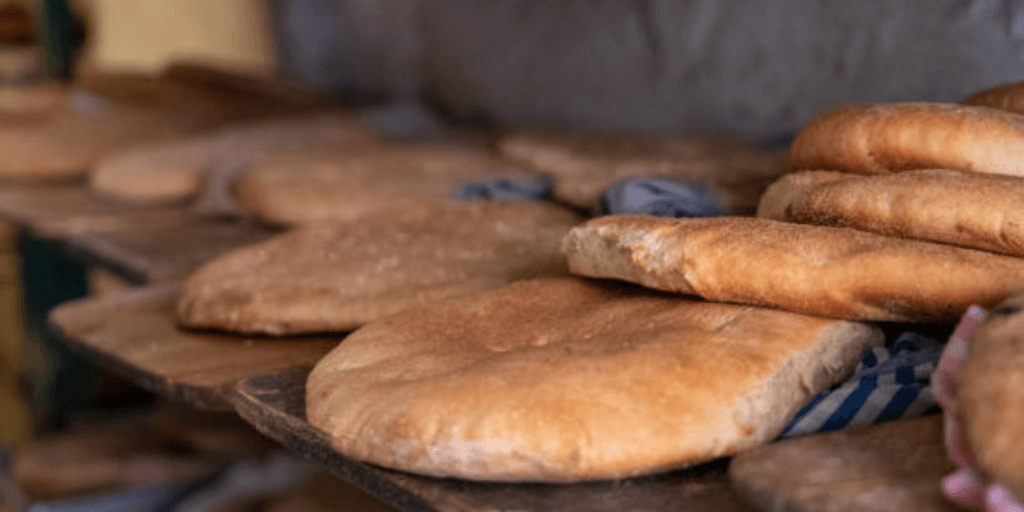
Simple breads and regional flavors fit naturally into a slow exploration of the Blue City.
Enjoy Sunset From a Rooftop Café
Chefchaouen is one of the Moroccan cities where sitting still can be one of the day’s best activities. A rooftop café gives you enough elevation to see blue roofs, mountains and the changing colors of the sky without committing to a longer hike.
This can work especially well for couples, families or travelers who have already spent several hours climbing through the medina. Experience It Tours also emphasizes rooftop dining and sunset as part of the town’s relaxed appeal. :chatgpt-content-reference{index=”6″}
Order tea or dinner, put the camera down for a few minutes and let the town change color as the light fades.
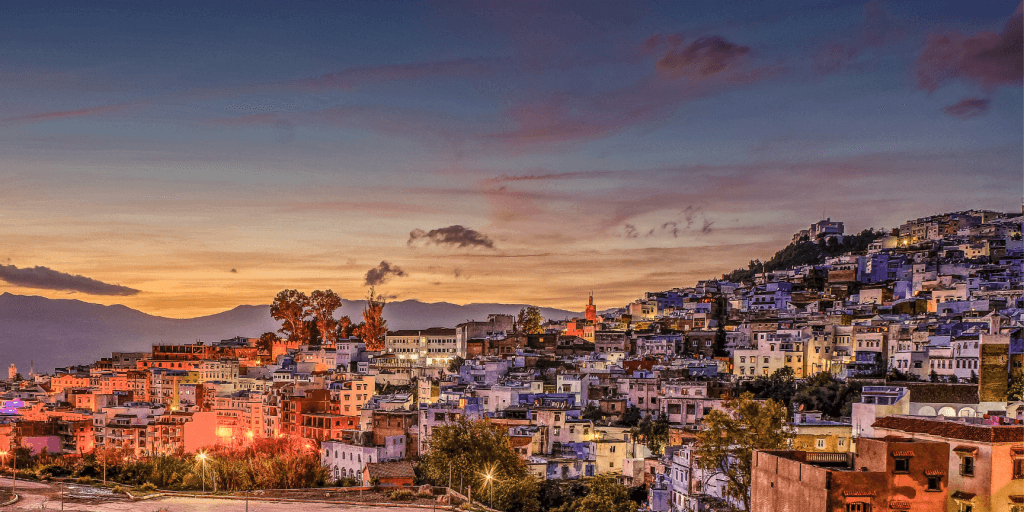
Warm evening light creates a striking contrast with the cool blue tones of the town.
Explore the Rif Mountains
Chefchaouen’s mountain setting is not simply a background for the blue medina. The Rif Mountains provide another reason to stay longer, especially for travelers who enjoy walking and outdoor scenery.
Short hikes can provide higher views over the town, while longer excursions open a very different side of northern Morocco. The landscape can be steep and rocky, so appropriate footwear and realistic planning are important.
Experience It Tours also suggests leaving the town for higher mountain views and nature photography when time permits. :chatgpt-content-reference{index=”7″}
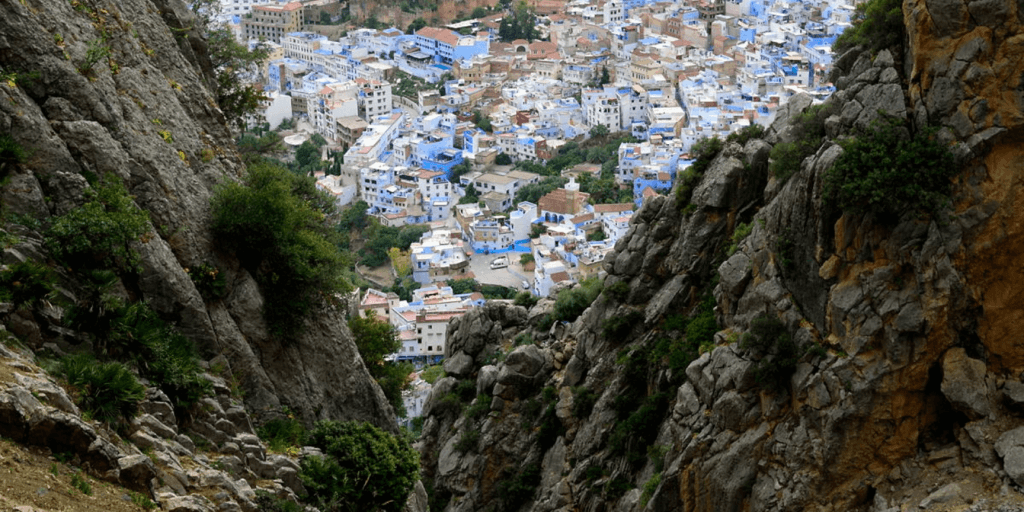
Chefchaouen’s mountain setting makes nature and hiking a natural extension of a Blue City visit.
Take a Nature Trip to Akchour
Travelers with extra time can use Chefchaouen as a base for exploring the Akchour area. The region is known for mountain scenery, hiking routes and waterfalls, making it a strong contrast to the medina.
Do not squeeze Akchour into an already full sightseeing day. Outdoor excursions take more time than they appear to on a map, and the experience is far better when you are not watching the clock.
If nature is a major priority, consider giving Chefchaouen two nights and dedicating part of the second day to the surrounding mountains.
Slow Down and Experience Everyday Chefchaouen
The final experience is intentionally not another monument. Chefchaouen is one of the places where free time is part of the itinerary.
Walk without a destination. Sit at a café. Return to a street you liked in different light. Browse a shop slowly. Watch daily life from a quiet corner rather than trying to capture every minute with a camera.
This slower rhythm is one of the strongest ideas repeated across Experience It Tours’ newer Chefchaouen content: the town rewards travelers who give it space instead of treating it as a quick photo stop between larger cities. :chatgpt-content-reference{index=”8″}
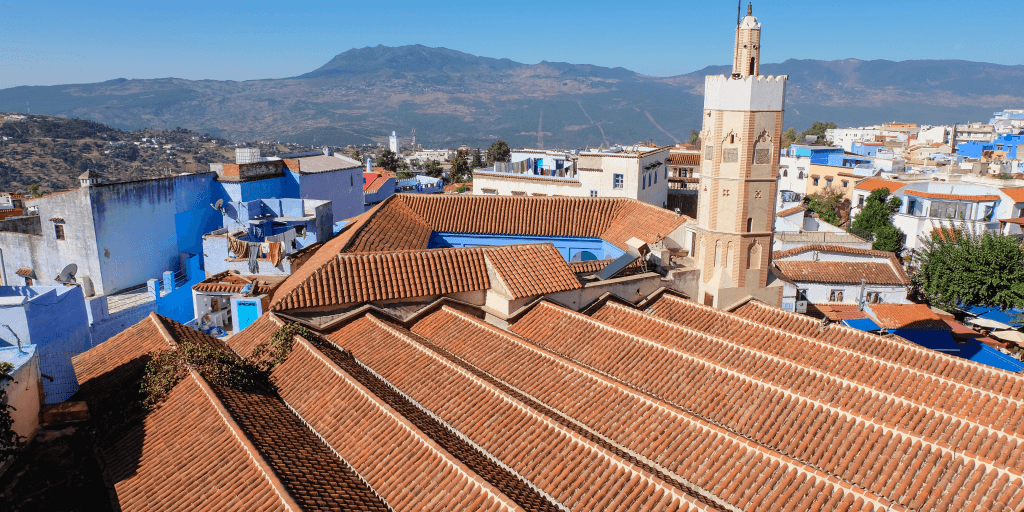
The Blue City often gives its best moments to travelers who leave room for nothing in particular.
Why Is Chefchaouen Blue?
There is no single origin story for Chefchaouen’s blue-painted streets that should be presented as unquestionably proven fact.
Several explanations are commonly repeated. Some link the color to Jewish communities and symbolic traditions. Others describe blue as a practical or aesthetic choice associated with cooling, insects, water or sky. Over time, the blue palette also became strongly connected with the town’s modern visual identity and tourism.
Rather than presenting one attractive story as historical certainty, it is more accurate to say that the reasons are debated and that the practice developed into a defining feature of Chefchaouen.
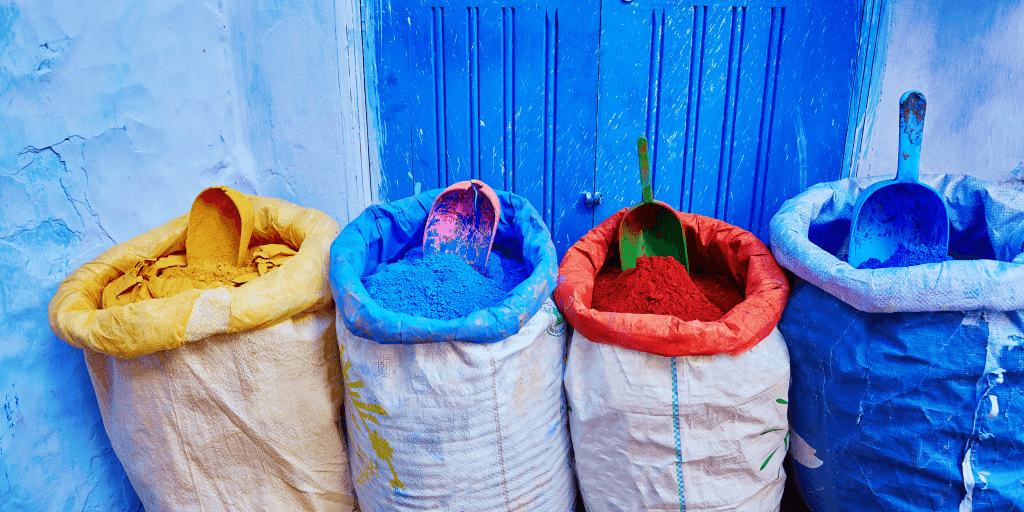
Whatever its precise historical origins, blue has become inseparable from Chefchaouen’s modern identity.
Best Time of Day for Chefchaouen Photography
| Time | Best For | What to Expect |
|---|---|---|
| Early Morning | Blue streets and empty lanes | Soft light and fewer visitors |
| Late Morning | Shops and street life | More activity and brighter contrast |
| Late Afternoon | Mountain views | Warmer light across the town |
| Sunset | Spanish Mosque or rooftop | Blue town against warm sky |
If photography is important to you, one night is far better than arriving and leaving in the same afternoon. Staying overnight gives you access to both early-morning streets and evening light.
1 Day vs 2 Days in Chefchaouen
Medina, Uta el-Hammam, Kasbah, Ras El Maa, crafts and a Spanish Mosque or rooftop sunset.
Add early-morning photography, slower café time, local crafts and either Rif Mountains or Akchour.
One full day works if your Morocco itinerary is tight. Two days is better if you want Chefchaouen to feel like a destination rather than a photo stop.
Visiting Chefchaouen With Children
Chefchaouen can be enjoyable for families because it is smaller and less overwhelming than some of Morocco’s large medinas. Children may enjoy the colors, small shops, mountain scenery and open spaces around the town.
The main challenge is elevation. Stairs and sloped lanes appear throughout the medina, so families with strollers or very young children should plan routes carefully.
Avoid building a day around constant climbing. Mix walking with cafés, the square, the Kasbah and longer breaks. For older children who enjoy nature, a mountain excursion can be a highlight.
Chefchaouen Walking & Accessibility Tips
Chefchaouen is beautiful, but it is not flat. The town is built against a mountainside and many of its most photogenic streets involve slopes, stairs and uneven surfaces.
Experience It Tours specifically identifies Chefchaouen as challenging for travelers with limited mobility because steep streets and steps are widespread throughout the medina. :chatgpt-content-reference{index=”9″}
Comfortable footwear is essential. Travelers with mobility concerns should prioritize the lower medina, Uta el-Hammam and accessible viewpoints rather than assuming every famous blue stairway or mountain viewpoint needs to be included.
Chefchaouen vs Fes vs Marrakech
Best for blue streets, photography, mountain scenery and a slower pace.
Best for deep medina exploration, crafts, historic scholarship and cultural immersion.
Best for major sights, gardens, shopping, dining and southern Morocco connections.
They are not substitutes for one another. Including Chefchaouen with Fes creates an especially strong contrast: one is compact, calm and mountain-based; the other is dense, historic and intensely urban.
Tangier → Chefchaouen → Volubilis → Fes
Chefchaouen fits particularly well into a northern Morocco itinerary rather than being treated as an isolated detour.
Travelers arriving through Tangier can continue south through the Rif Mountains to Chefchaouen, then move toward Volubilis and finally Fes. The route creates a natural progression from coast and mountains to archaeology and one of Morocco’s great imperial cities.
Northern Morocco Route
A strong private-tour sequence with minimal unnecessary backtracking.
Explore our Things to Do in Fes guide →
Things to Do in Chefchaouen Morocco FAQ
Is Chefchaouen worth visiting?
Yes. Chefchaouen is especially worthwhile for travelers interested in photography, mountain scenery, relaxed medina walks, local crafts and a slower atmosphere than Morocco’s larger cities.
How many days do I need in Chefchaouen?
One full day can cover the main highlights, but two days is better if you want early-morning photography, relaxed cafés and time for the Rif Mountains or Akchour.
Why is Chefchaouen blue?
Several explanations are commonly given for Chefchaouen’s blue-painted streets, including religious, cultural, practical and aesthetic traditions. The precise historical origin is debated, but blue has become a defining part of the town’s identity.
What are the best things to do in Chefchaouen?
Top experiences include wandering the blue medina, Plaza Uta el-Hammam, the Kasbah, Ras El Maa, the Spanish Mosque viewpoint, local crafts, food, photography and excursions into the Rif Mountains.
What is the best time of day to photograph Chefchaouen?
Early morning is excellent for quieter blue streets and softer light. Late afternoon and sunset work well for wider mountain views and the Spanish Mosque viewpoint.
Is the Spanish Mosque walk difficult?
The walk requires uphill climbing from the edge of the medina. Many active travelers find it manageable, but the slope can be challenging for visitors with limited mobility.
Is Chefchaouen easy to walk around?
The town is compact, but it is built on a slope and contains many stairs and uneven lanes. Comfortable footwear and a realistic pace are important.
Is Chefchaouen good for families?
Yes. Families can enjoy the colorful medina, Kasbah, cafés and mountain scenery, but parents should plan around the town’s steep streets and stairs.
Can I visit Akchour from Chefchaouen?
Yes. Akchour is a popular nature excursion from Chefchaouen and works best when you have enough time for a half-day or full-day outdoor experience.
Should I stay overnight in Chefchaouen?
Staying overnight is recommended if your itinerary allows because it gives you access to quieter morning streets and evening light after many day visitors have left.
Can Chefchaouen be combined with Fes?
Yes. Chefchaouen and Fes work very well together because they offer contrasting experiences. Many northern Morocco itineraries connect Tangier, Chefchaouen and Fes.
Can Chefchaouen be included in a private Morocco tour?
Yes. Chefchaouen fits naturally into private northern Morocco itineraries and longer journeys that continue toward Fes, the imperial cities and southern Morocco.
Add the Blue City to Your Morocco Journey
Altni Tours can connect Chefchaouen with Tangier, Volubilis, Fes and the rest of Morocco in a private itinerary designed around your pace, interests and preferred travel style.
PLAN MY MOROCCO TRIP VIEW MOROCCO ITINERARIES