
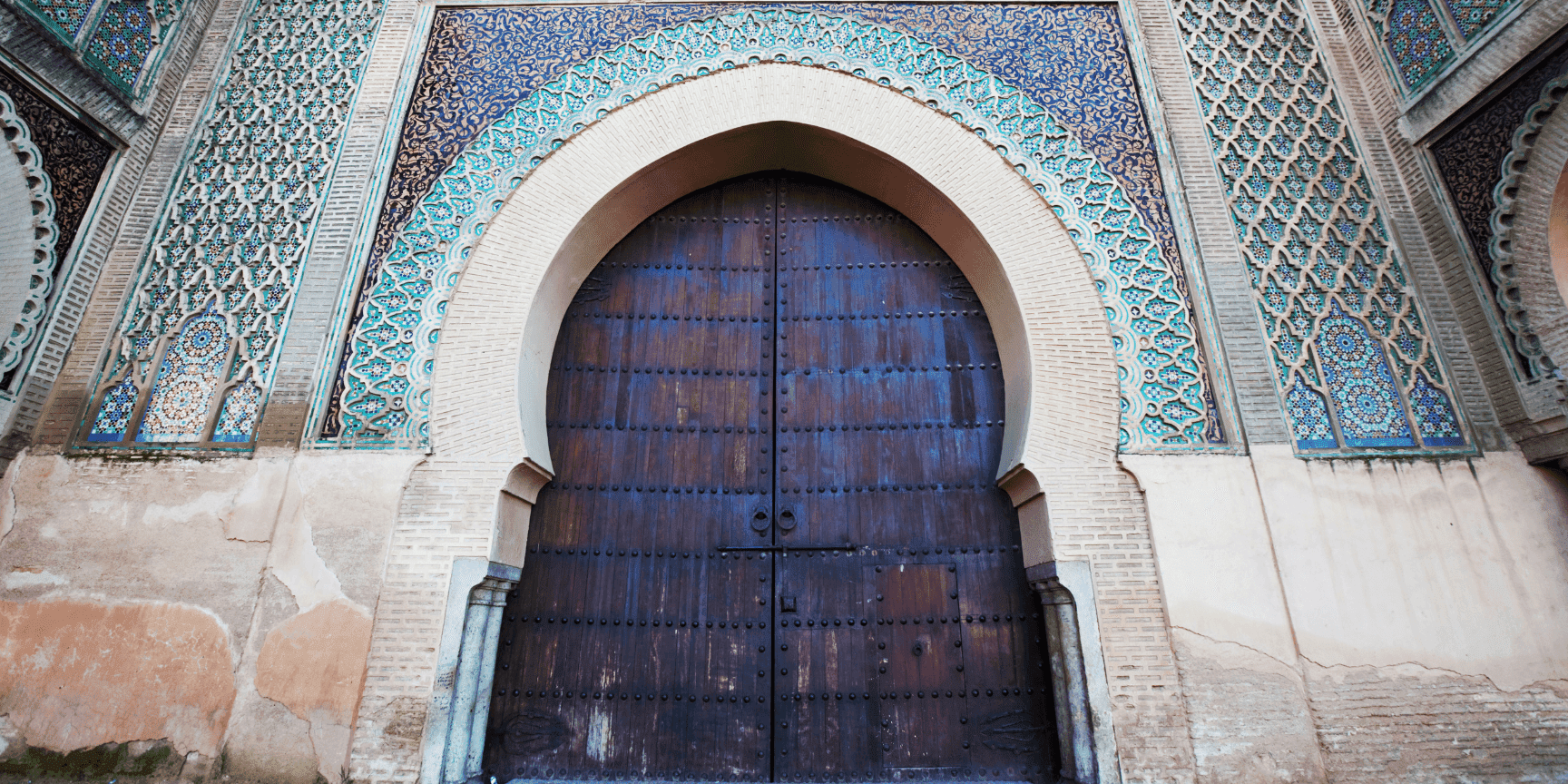
The best Things to Do in Fes Morocco go far beyond checking famous monuments off a list. Fes is a city that reveals itself gradually through its gates, medina lanes, tanneries, workshops, religious heritage, food markets, gardens and panoramic viewpoints.
For travelers who enjoy culture, history and everyday life, Fes can become one of the most memorable places in Morocco. Its historic core feels intensely alive. Bakers still work near neighborhood ovens, craftspeople shape metal and leather, market stalls spill into narrow streets, and quiet courtyards appear only a few steps away from crowded commercial lanes.
This 2027 guide combines the essential attractions with the practical details that make a Fes visit work: where to begin, when a guide is useful, how many days to stay, how to explore with children, what to expect from the walking, and how to add Volubilis, Moulay Idriss and Meknes as a day trip.
Fes Is an Experience, Not Just a Sightseeing List
Fes is one of Morocco’s great historic cities, but statistics and monument names only explain part of its appeal. What makes the city memorable is the way history and daily life occupy the same streets. The old medina is not a reconstructed heritage zone. It remains a living urban environment filled with homes, shops, workshops, mosques, schools, food markets and family businesses.
This is why Fes often rewards travelers who slow down. You may begin the morning focused on a famous madrasa or tannery, then discover that the strongest memory of the day is a baker carrying trays through a narrow lane, a craftsman working behind an open doorway, or a rooftop view over thousands of tightly packed buildings.
UNESCO recognizes the Medina of Fez as a World Heritage Site. Its historic importance is one reason to visit, but the strongest itineraries combine the major monuments with enough unstructured time to notice the city around them.
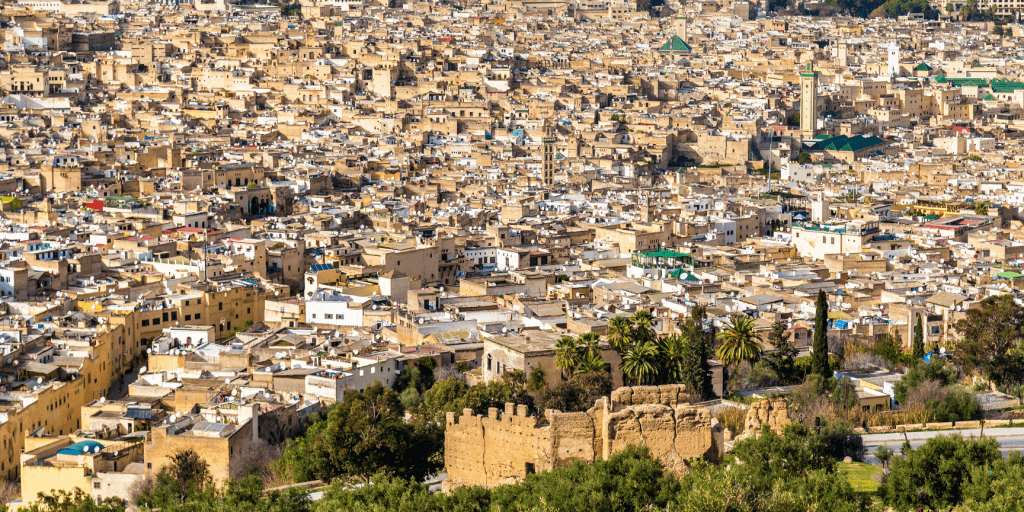
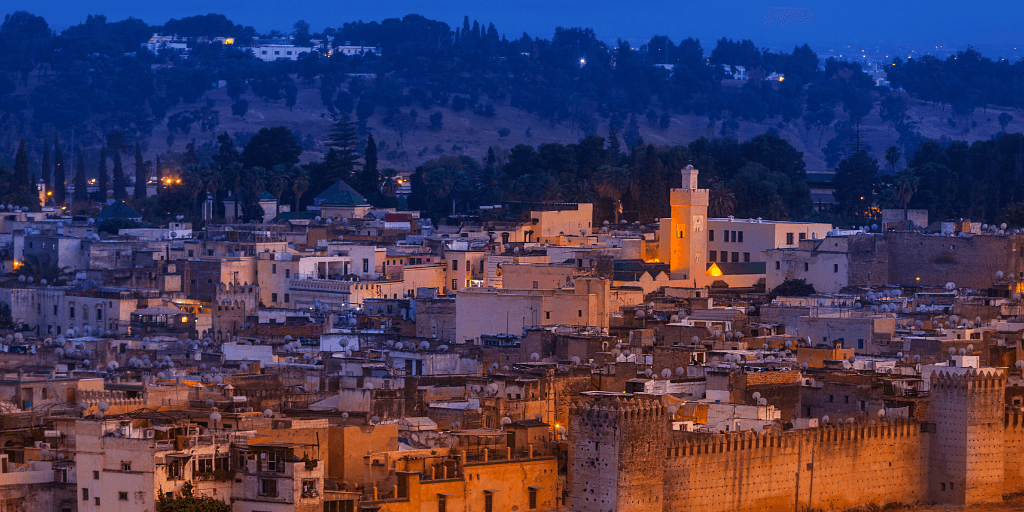
Seeing Fes from above helps explain the extraordinary density of the medina before you return to its narrow streets.
Official heritage information is available from UNESCO’s Medina of Fez page →
A Practical First Walking Route Through the Fes Medina
A first walk through Fes feels easier when the day has a loose structure. You do not need to follow a rigid route every minute, but connecting a handful of major landmarks gives the medina a sense of direction.
Begin around Bab Bou Jeloud, continue toward Bou Inania Madrasa, then move deeper toward Nejjarine and Al-Qarawiyyin. From there, continue toward the Chouara Tanneries and the surrounding artisan areas. The exact order can change according to opening times, crowds and your guide’s preferred route.
Fes Medina Explorer Route
Illustrative route — allow time for markets, workshops and spontaneous stops.
Enter Fes el-Bali Through Bab Bou Jeloud
Bab Bou Jeloud is one of the most recognizable entrances to the old medina and a natural place to begin a first Fes visit. The gate gives you a clear visual threshold between the wider streets outside and the dense pedestrian environment beyond.
Once you pass through, the rhythm changes quickly. Vehicle traffic gives way to pedestrians, carts and working animals. Market stalls begin to crowd the edges of the lanes, and signs of everyday life compete for your attention with historic architecture.
Instead of hurrying immediately toward the next landmark, spend a few minutes observing the area. The entrance provides an excellent introduction to the combination of commerce, architecture and movement that defines Fes el-Bali.
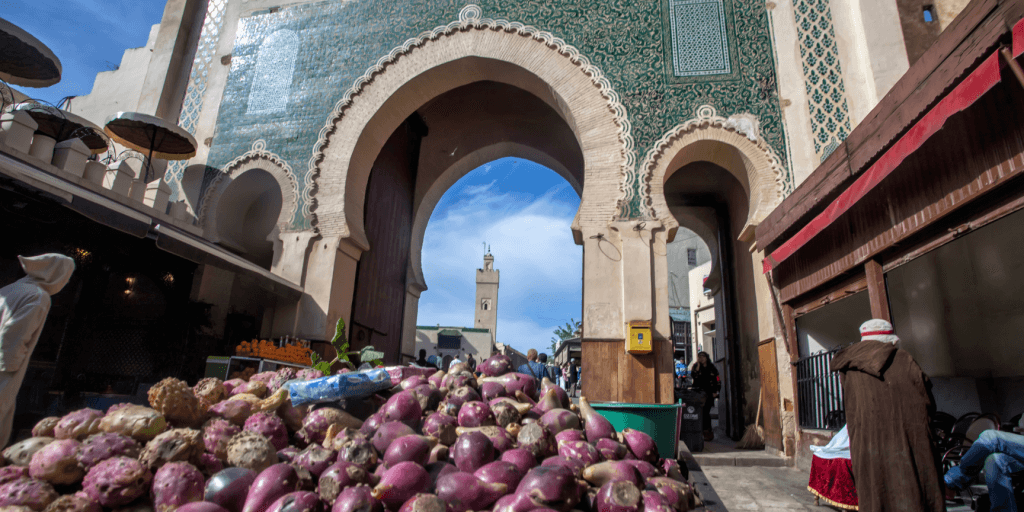
Begin here, then let the streets gradually pull you deeper into Fes el-Bali.
Walk the Medina With a Local Guide
You can explore parts of Fes independently, but a knowledgeable local guide often adds the most value on your first full medina day. The reason is not simply that Fes contains many narrow streets. The real advantage is context.
A guide can connect places that otherwise appear unrelated. A carved doorway becomes part of a larger story about religious architecture. A workshop becomes an explanation of how traditional crafts continue to function. A busy commercial lane begins to make sense as part of a neighborhood rather than simply a confusing street.
Guided exploration also makes it easier to balance major landmarks with smaller experiences. Instead of spending half the day looking at a map, you can focus on what is happening around you.
Visit the Al-Qarawiyyin Area
Al-Qarawiyyin is central to the historical identity of Fes. Founded in the ninth century and closely associated with religious learning and scholarship, the institution helps explain why the city developed such a strong intellectual and spiritual reputation.
Visitors should remember that this is not simply a tourist attraction. It remains part of a living religious environment, and access to certain areas may be restricted. Even when you view parts of the complex from surrounding entrances rather than exploring the interior, the site remains valuable when its history is explained properly.
This is another place where a local guide improves the experience. Without context, you may see only an impressive doorway. With context, you begin to understand how education, religion and urban life shaped Fes for centuries.
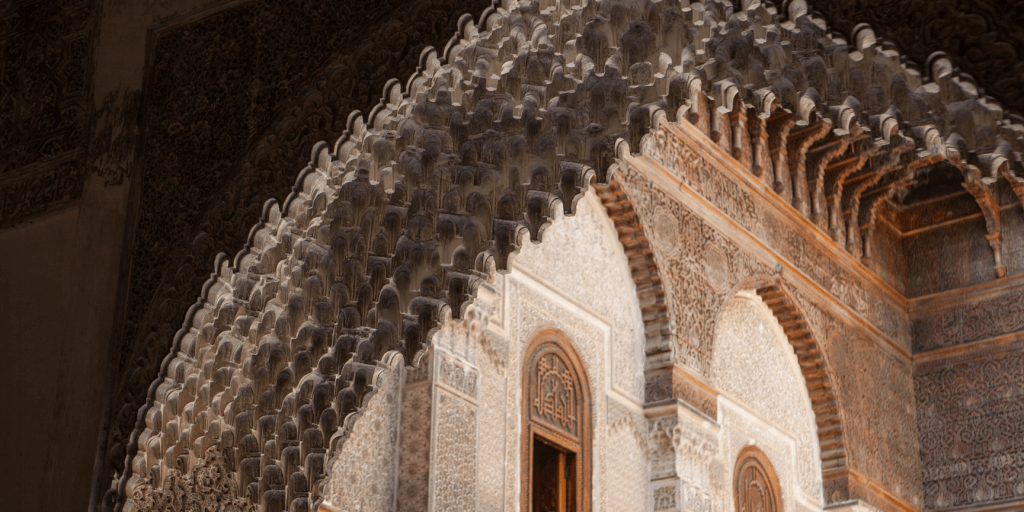
Religious and scholarly heritage remains an essential part of understanding historic Fes.
See the Chouara Tanneries
The Chouara Tanneries are among the most recognizable sights in Fes. Viewed from surrounding terraces, the circular and rectangular vats create one of the city’s most distinctive visual scenes.
The real interest, however, goes beyond the photograph. Leather production is part of the broader craft economy of Fes. Watching the work from above gives you a glimpse into a trade that has long been connected with the city.
Many viewpoints are accessed through leather shops. There may be an opportunity to browse finished products afterward, but you should never feel obligated to buy. If you are only interested in the view, be polite and clear.
The smell can be strong, particularly on warm days. Some visitors find morning visits more comfortable, while others simply treat the scent as part of the sensory experience.
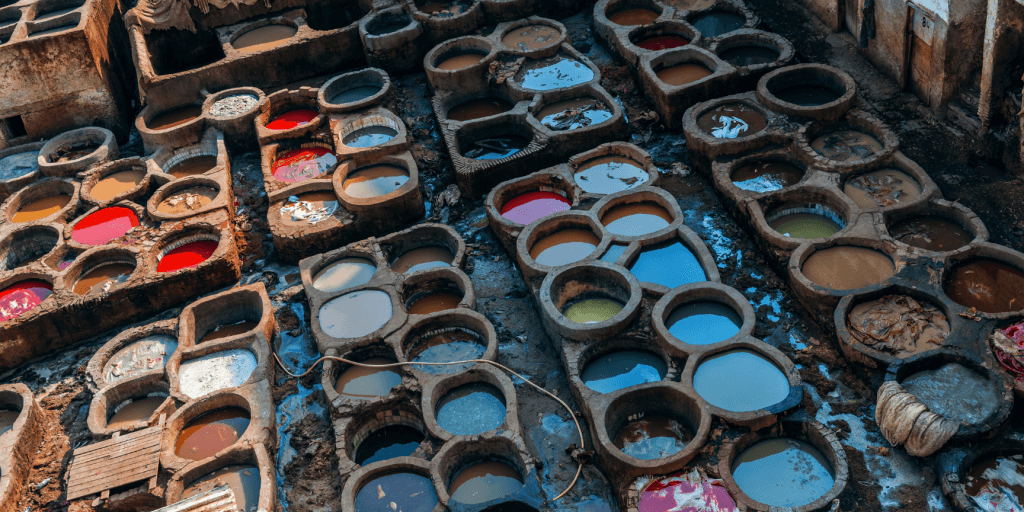
One of the most recognizable examples of Fes’s continuing artisan heritage.
Explore Bou Inania Madrasa
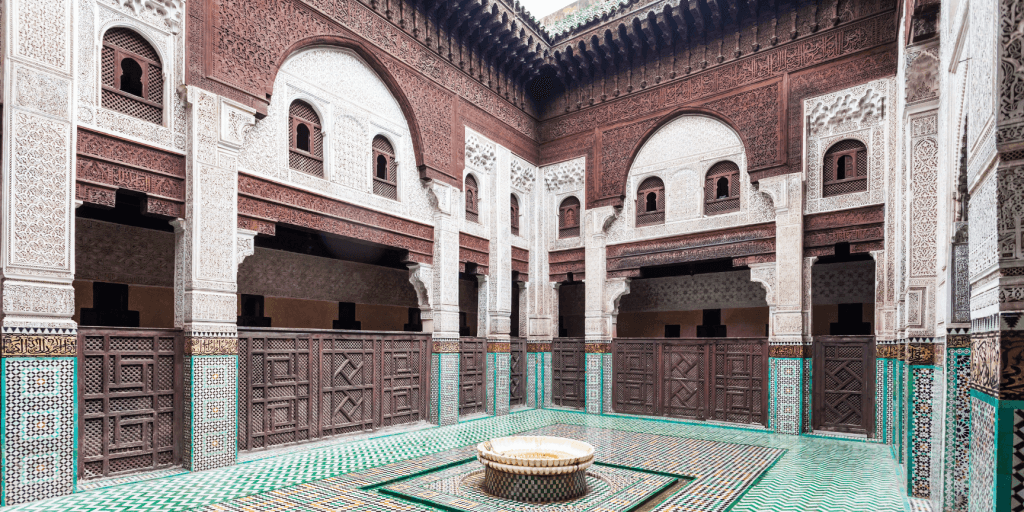
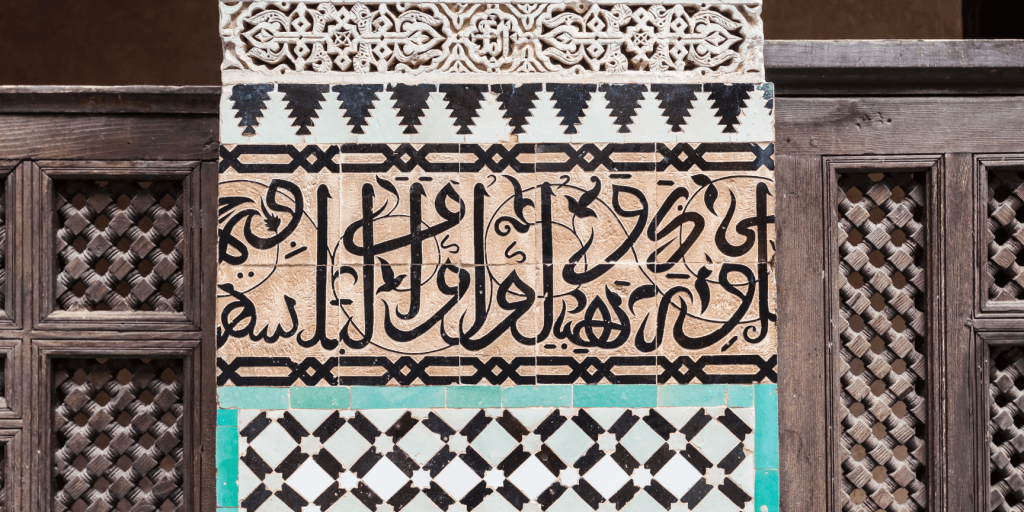
Bou Inania Madrasa provides a quieter architectural experience after the intensity of the surrounding streets. Founded during the Marinid period in the fourteenth century, the madrasa is admired for its detailed tilework, carved plaster, wood and carefully balanced courtyard design.
The contrast is part of the experience. One moment you may be moving through a crowded commercial lane; a few minutes later you are standing inside a refined space built around geometry, craftsmanship and proportion.
Take time to look beyond the overall room. Much of the beauty is in the smaller details: carved surfaces, calligraphy, wooden screens and the interaction between color and structure.
Discover Nejjarine Museum & Fountain
Nejjarine gives you another way to understand Fes craftsmanship. The area is known for its historic fountain and the museum devoted to wooden arts and crafts, housed in an architectural setting that is itself part of the attraction.
Museums are useful in Fes because the city can sometimes feel overwhelmingly active. A museum visit slows the pace and allows you to focus on one aspect of Moroccan craftsmanship without the distractions of a busy market street.
The Nejjarine area also works well within a walking route because it connects naturally with several other central medina landmarks. Even travelers who normally skip museums may appreciate the combination of architecture, craftsmanship and relative calm.
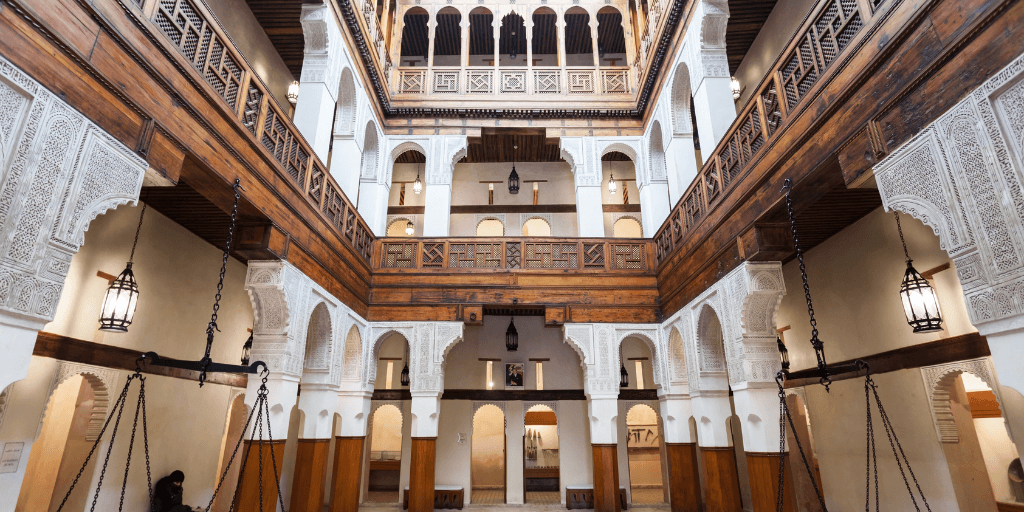
A quieter cultural stop can balance the energy of a long Fes medina walk.
Meet Fes Artisans — Pottery, Copper, Carpets & Textiles
One of the strongest reasons to spend real time in Fes is that craft is still visible throughout the city. The medina is not simply filled with shops selling finished souvenirs. In many areas, you can also encounter workshops where people are actively producing the objects being sold.
Look for pottery, woodwork, textiles, embroidery, copper, brass, leather and carpets. The value of these stops is not necessarily buying something. Watching a craftsperson work can make the object itself far more meaningful.
A good guide can also help distinguish between a genuine workshop experience and a purely commercial stop. If you are interested in purchasing something substantial such as a carpet, take your time, ask questions and avoid feeling rushed.
The details of Fes become more meaningful when you understand the hands and skills behind them.
Walk Through the Food Markets & Taste Fassi Flavors
Food is one of the easiest ways to experience the everyday side of Fes. The medina markets can introduce you to olives, preserved lemons, breads, vegetables, dried fruits, spices, nuts and sweets before you ever sit down for a formal meal.
Instead of treating lunch as a break from sightseeing, make it part of the sightseeing. A traditional meal gives you another window into the city, particularly when you have already seen the ingredients being sold in local markets.
If your schedule allows, combine a market walk with a rooftop lunch or a restaurant inside a restored riad. The transition from crowded lanes to a quiet dining courtyard is one of the classic Fes contrasts.
For more ideas, see our Best Restaurants in Fes guide →
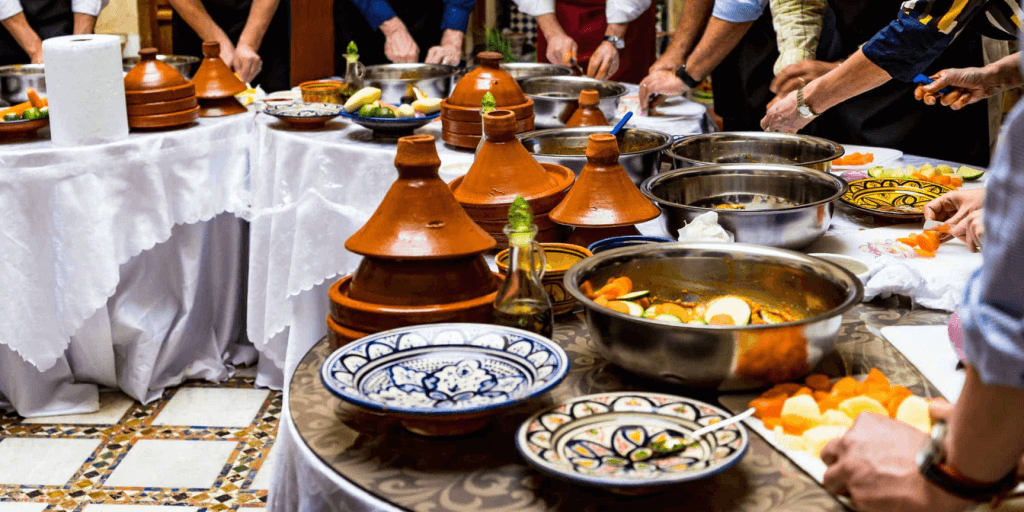
Markets, kitchens and shared meals add an important cultural layer to a Fes itinerary.
See the Royal Palace Gates & Explore the Mellah
Fes is more than Fes el-Bali. Moving toward Fes el-Jdid changes the visual and historical context of the day, particularly around the Royal Palace gates and the Mellah.
The Royal Palace itself is not generally visited as a conventional tourist attraction, but its monumental gates make an impressive architectural stop. Nearby, the Mellah reflects another important part of the city’s history.
The architecture here can feel noticeably different from the medina. Balconies and outward-facing windows help distinguish parts of the former Jewish quarter from surrounding areas.
Visiting this part of the city makes your Fes experience more complete because it moves the story beyond Islamic monuments alone and introduces another layer of the city’s diverse social history.
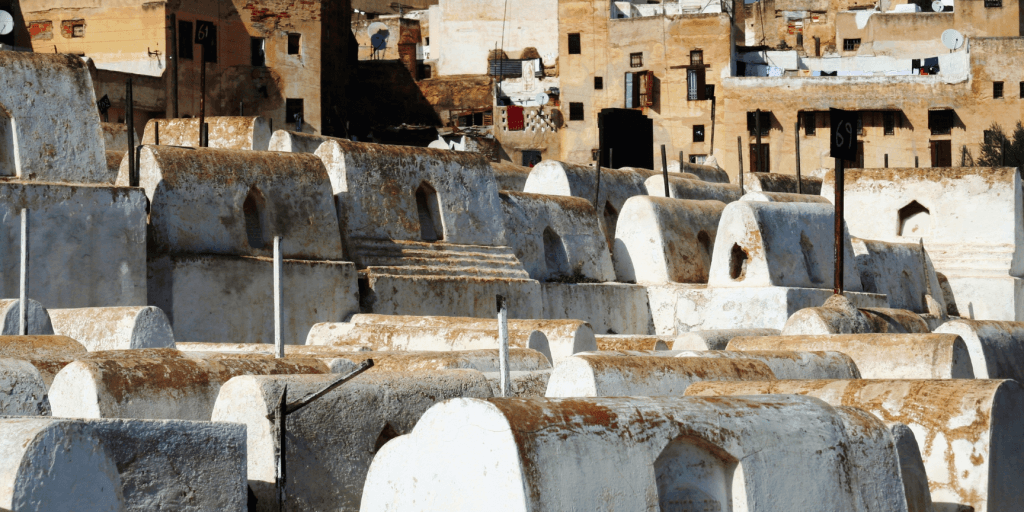
Fes’s historical identity includes multiple communities and architectural traditions.
Relax in Jnan Sbil Gardens
After several hours inside narrow medina lanes, Jnan Sbil offers exactly the kind of change of pace many travelers need. The garden provides more open space, shade and greenery, making it useful as both a destination and a strategic break.
This matters because Fes can be physically and mentally intense. You are constantly processing sound, movement, textures and navigation. A garden stop gives you time to reset before continuing.
Families may find this especially helpful. Instead of expecting children to spend an uninterrupted full day moving between historical monuments, adding a calmer outdoor break can make the entire experience more enjoyable.
Watch the City From the Marinid Tombs
After spending hours inside the medina, the Marinid Tombs area gives you the opposite perspective. From higher ground, the maze begins to look like a single urban landscape.
The viewpoint helps you appreciate the extraordinary scale of historic Fes. Roofs, walls, minarets and hills overlap in layers, making it easier to understand why the medina can feel endless when experienced at street level.
Late afternoon can be particularly attractive for photography as the light becomes softer. The remains themselves are part of the historical setting, but for many visitors the panoramic view is the main reason to come.
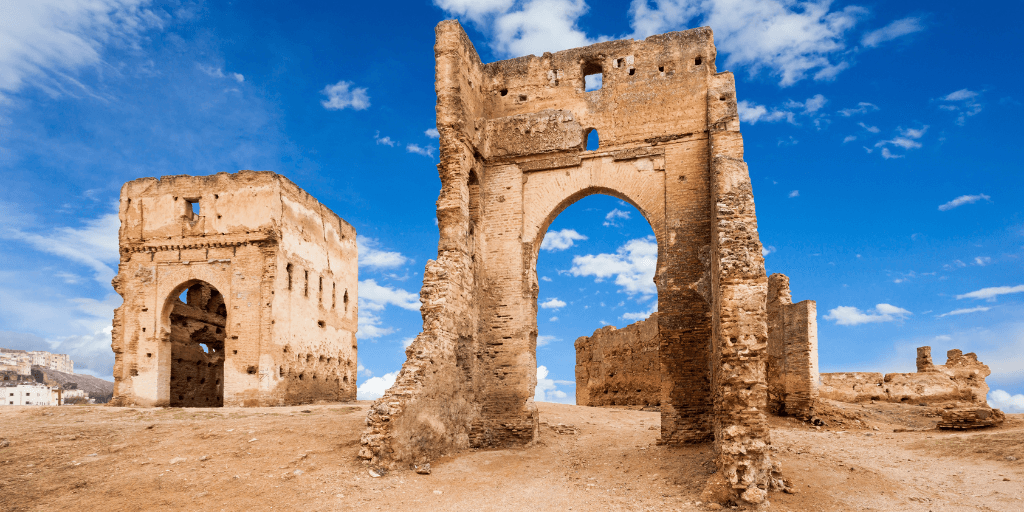
Finish a medina day by stepping back and seeing historic Fes as a complete cityscape.
Add a Cooking or Hands-On Cultural Experience
If you want your time in Fes to feel more personal, consider a hands-on activity such as a Moroccan cooking class, a market-to-kitchen experience or a workshop connected to local crafts.
These experiences change the role of the traveler. Instead of only observing culture from the outside, you begin participating in a small part of it. A cooking class may start in a market, where you learn about ingredients before returning to a kitchen to prepare a meal.
This works especially well in Fes because food is already woven into the medina experience. You pass produce, spices, breads and local products throughout the day, so cooking provides a natural continuation of what you have been seeing.
It also creates useful balance. After several hours focused on architecture and historical sites, preparing and sharing food offers a slower and more social way to experience Moroccan culture.

A hands-on food experience adds participation and personal connection to a culture-focused Fes itinerary.
What Fes Actually Feels Like
A good Fes guide should explain more than where to go. The city is memorable because of the transitions that happen constantly as you move through it.
A dark covered lane suddenly opens into a bright square. A noisy market becomes a calm courtyard. The smell of leather gives way to fresh bread or spices. A quiet religious doorway may sit only a few steps from a busy shop selling household goods.
This constant shift is part of why Fes can feel intense at first. It demands more attention than an open, easy-to-navigate city. But that intensity often becomes the reason travelers remember it so clearly.
Allow the medina to be imperfect and unpredictable. You do not need every street to be beautiful or every moment to be organized. The experience comes from seeing a historic city continue to function as a real city.
Fes el-Bali vs Fes el-Jdid vs Ville Nouvelle
Fes becomes easier to understand when you stop thinking of it as one continuous medina. Three broad areas create very different experiences.
| Area | Character | Best For |
|---|---|---|
| Fes el-Bali | Old medina, narrow lanes and major heritage sites | History, crafts, tanneries, markets and walking |
| Fes el-Jdid | Historic expansion connected with royal and Jewish heritage | Royal Palace gates and Mellah |
| Ville Nouvelle | Modern streets and contemporary city life | Hotels, cafés, transport and wider roads |
Most first-time travelers spend the majority of their sightseeing time in Fes el-Bali, but seeing at least part of Fes el-Jdid gives the city more historical depth.
Guided vs Self-Guided in Fes
Guided First Day
- Easier orientation inside Fes el-Bali.
- More historical and architectural context.
- Efficient access to workshops and key landmarks.
- Less time spent concentrating on navigation.
- Useful for travelers with limited time.
Self-Guided Time
- Excellent for slower wandering.
- Works well after your first guided introduction.
- More freedom for cafés and photography.
- Good for repeat visitors.
- Useful for revisiting a favorite neighborhood.
For many travelers, the strongest combination is a guided first day followed by independent time. Once you understand the basic geography and character of the medina, wandering becomes more enjoyable.
1 Day vs 2 Days vs 3 Days in Fes
The amount of time you need depends on whether you want to see highlights or actually absorb the city.
Guided medina walk, Bou Inania, Al-Qarawiyyin area, tannery and one panoramic stop.
Add artisans, food, Jnan Sbil, Fes el-Jdid, Mellah and slower independent time.
Two days in Fes plus Volubilis, Moulay Idriss and Meknes on the third day.
For most first-time visitors, two full days gives Fes enough space to feel rewarding instead of exhausting.
Visiting Fes With Children
Fes can work very well for families when the day is designed around realistic attention spans rather than an adult sightseeing checklist.
Children often find the medina naturally interesting because there is so much movement: animals carrying goods, colorful shops, pottery, food markets and workshops. The city can feel like a maze rather than a museum.
The challenge is fatigue. Long periods of walking through crowded streets can become tiring, so alternate major sightseeing stops with experiences that feel more interactive. A pottery demonstration, cooking activity, garden break or rooftop lunch can help.
Walking & Accessibility Tips for Fes
Fes el-Bali is primarily experienced on foot. Many lanes are narrow, uneven or stepped, and motor vehicles cannot simply take you to every historic doorway.
Comfortable footwear is essential. Choose something with support and good grip rather than shoes selected only for appearance. If mobility is limited, plan shorter medina sections and arrange transportation to practical access points rather than assuming every attraction should be linked on foot.
Accommodation location can also make a difference. Travelers who do not want a long luggage transfer through narrow streets may prefer a riad closer to a practical medina entrance.
A private guide allows the walking route to be adjusted in real time, which is useful for older travelers, families and anyone who wants a more comfortable pace.
How to Photograph Fes Without Only Taking the Famous Shots
Fes is extremely photogenic, but the most interesting images are not always the largest landmarks. Pay attention to repetition, texture and light.
Photograph carved doors, tiled fountains, rows of spices, stacks of slippers, artisan hands, copper surfaces and shafts of sunlight entering covered lanes. These details often communicate the atmosphere of Fes better than one wide image of a monument.
For broader views, use the Marinid Tombs or another elevated viewpoint to show the density of the medina. Early morning and later afternoon generally provide softer light than the middle of the day.
When photographing people or active workshops, be respectful. Ask permission when appropriate rather than treating daily life as scenery.
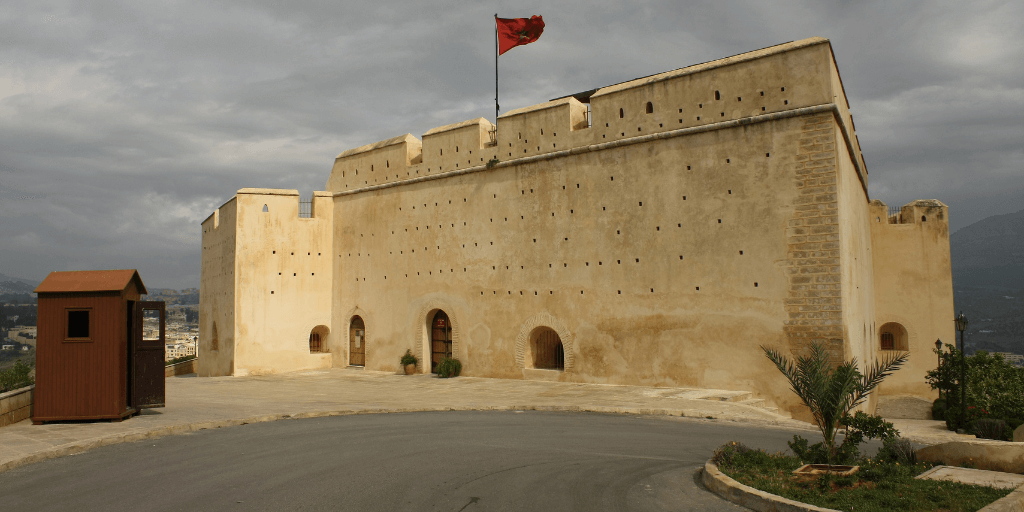
Elevated sites around Fes provide a useful counterpoint to close-up medina photography.
Fes → Volubilis → Moulay Idriss → Meknes
If you have a third day, one of the most rewarding extensions from Fes combines the archaeological site of Volubilis, the hill town of Moulay Idriss Zerhoun and the imperial city of Meknes.
The route works well because each destination adds a different layer of Moroccan history. Volubilis introduces ancient archaeology, Moulay Idriss adds religious and cultural context, and Meknes brings you into the monumental world of Sultan Moulay Ismail.
Classic Heritage Day Trip
Private route concept — exact timing should match your interests.
A private day trip can connect Fes with the Roman, sacred and imperial history of the surrounding region.
Read our complete Things to Do in Meknes Morocco guide →
Connect Fes With the Rest of Morocco
Fes works well as part of several larger Morocco routes. It can connect south toward the Middle Atlas and Sahara, west toward Rabat and Casablanca, or north toward Chefchaouen and Tangier.
The right itinerary depends on how much driving you want, how deeply you want to explore each city and whether your priorities are food, history, desert landscapes or a balance of everything.
You can also explore our Morocco itineraries → or read our Planning a Trip to Morocco guide →
Things to Do in Fes Morocco FAQ
Is Fes worth visiting?
Yes. Fes is especially worthwhile for travelers interested in Moroccan history, architecture, food, craftsmanship and medina life. Its historic core offers one of the country’s most immersive cultural experiences.
How many days should I spend in Fes?
Two full days works very well for most first-time visitors. One day can cover the main highlights, while three days allows you to add Volubilis, Moulay Idriss and Meknes as a day trip.
What is Fes most famous for?
Fes is famous for its historic medina, Al-Qarawiyyin, traditional crafts, Chouara Tanneries, madrasas, food markets and its long role as an important cultural and religious center.
Do I need a guide in Fes?
A guide is not mandatory, but many first-time visitors benefit from one. A knowledgeable local guide can make navigation easier and provide historical and cultural context that is difficult to get from simply walking through the streets.
Can I explore Fes Medina on my own?
Yes. Independent exploration can be enjoyable, especially after you already understand the basic layout. Many travelers prefer a guided introduction on the first day and independent wandering afterward.
What should I see first in Fes?
Bab Bou Jeloud is a convenient starting point for many visitors. From there you can explore Bou Inania Madrasa and continue deeper into Fes el-Bali toward Nejjarine, Al-Qarawiyyin and the Chouara Tanneries.
Are the Fes tanneries worth visiting?
Yes. The Chouara Tanneries are one of Fes’s most distinctive craft experiences and provide a memorable view of traditional leather production from surrounding terraces.
Is Fes good for families with children?
Yes, especially when the itinerary includes breaks and interactive experiences. Workshops, food markets, gardens and a cooking activity can help keep the visit engaging for children.
Is Fes difficult to walk around?
Fes el-Bali involves significant walking on narrow and sometimes uneven lanes. Comfortable shoes, a realistic pace and planned breaks make the experience much easier.
What is a good day trip from Fes?
A popular history-focused route combines Volubilis, Moulay Idriss Zerhoun and Meknes. The three stops work well together as a full private day trip from Fes.
Is Fes better than Marrakech?
They offer different experiences. Marrakech is known for its energetic squares, gardens and southern Morocco connections, while Fes offers a particularly deep medina, craft and scholarly heritage experience. Many travelers benefit from visiting both.
Can Fes be included in a private Morocco tour?
Yes. Fes fits naturally into imperial-city itineraries, northern Morocco routes and longer journeys that continue through the Middle Atlas toward the Sahara.
Experience Fes at Your Own Pace
Altni Tours can build Fes into a private Morocco itinerary that combines guided medina exploration, cultural experiences, food, artisan workshops and carefully planned travel between Morocco’s major destinations.
PLAN MY MOROCCO TRIP VIEW MOROCCO ITINERARIES