
Moroccan Souvenirs: 15 Best Things to Buy in Morocco in 2027
Moroccan Souvenirs can be much more than small reminders of a vacation. Morocco’s souks, workshops and artisan shops are filled with rugs, pottery, leather, spices, metalwork, textiles and everyday objects that reflect regional craft traditions.
The challenge is not finding something to buy. It is deciding what is worth carrying home, how to recognize a product that suits your needs and how to shop without feeling rushed into a purchase.
This guide focuses on 15 of the best things to buy in Morocco, where to look for them, what to check before paying and which Moroccan souvenirs are easiest to pack for the journey home.
Before buying, think about quality, size, weight, how you will use the item and whether it will fit safely in your luggage. For larger purchases such as rugs, decide your measurements, colors and budget before entering the shop.
What to Buy in Morocco at a Glance
Some Moroccan souvenirs are inexpensive and easy to carry, while others are purchases you should think through carefully. Use this table as a quick starting point before exploring the detailed sections below.
| Souvenir | Why Buy It | Before You Buy |
|---|---|---|
| Moroccan Rug | Statement piece for your home | Know dimensions, colors and budget |
| Babouche Slippers | Colorful and easy to pack | Check fit, stitching and sole |
| Pottery | Useful and decorative | Inspect for cracks and pack carefully |
| Leather Goods | Bags, wallets and belts | Check stitching, hardware and finish |
| Spices | Lightweight culinary souvenir | Buy quantities you will actually use |
| Argan Oil | Compact regional product | Check intended use and packaging |
| Tea Set | Classic Moroccan hospitality item | Ask if the pot is decorative or functional |
| Thuya Wood | Distinctive Essaouira craft | Check finish and suitcase space |
Where to Shop for Moroccan Souvenirs
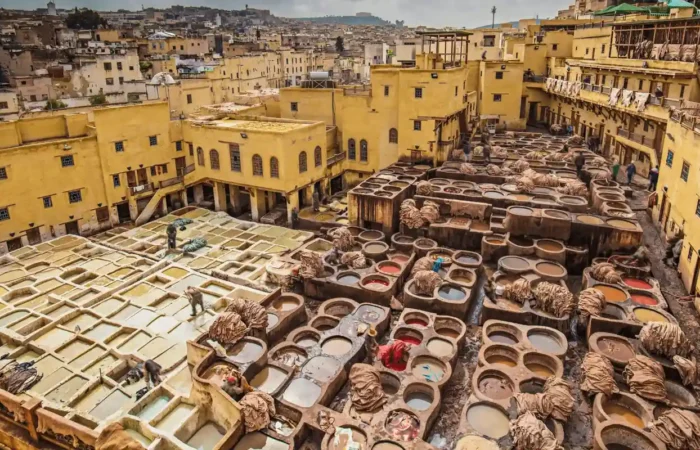
Fes and Marrakech offer the widest variety for many first-time visitors, but the best shopping experience is not always found in the largest souvenir shop. Small workshops, craft streets and regional markets can help you understand where an item comes from and how it is made.
Give yourself time. Shopping is easier when it is part of the day rather than something squeezed into the final hour before departure. Compare similar pieces, ask questions and notice how prices and quality vary between shops.

Rugs, textiles, pottery and other handmade items can appear together in Moroccan markets, making comparison part of the experience.
Morocco’s official tourism site also provides an overview of the country’s regional craftsmanship and artisan traditions: Explore Moroccan Craftsmanship →
Moroccan Rugs & Amazigh Carpets
Moroccan rugs are among the most memorable souvenirs a traveler can take home, but they are also among the purchases that benefit most from planning.
Different rugs vary greatly in color, size, material, pattern, age and workmanship. That makes it difficult to make a useful decision if you enter a carpet shop without knowing where the rug will eventually go.

Color, dimensions and design matter just as much as how attractive a rug looks inside the shop.
Before You Shop for a Moroccan Rug
Know the maximum and minimum dimensions that will work before you leave for Morocco.
Keep a photo of the room or a color reference on your phone so a beautiful rug does not become the wrong rug once you get home.
Set a comfortable spending range before the carpet presentation begins.
Ask what the rug is made from, where it comes from and whether it is handmade or machine-made.
A shop may unfold many rugs for you. Enjoy the presentation, but looking does not require you to buy.
These are particularly useful habits because a carpet presentation can quickly introduce dozens of colors and patterns. Planning your room size, preferred colors and budget beforehand makes the experience much easier.

Look closely at the weave, edges, texture and finishing rather than judging a rug only from across the room.
Babouche Slippers
Traditional Moroccan slippers are one of the easiest recognizable gifts to carry home. They come in many colors, styles and levels of decoration, from simple leather pairs to heavily embroidered designs.
Do not choose only by size number. Try them on when possible and look at the stitching, interior finish and sole. Some styles are primarily indoor slippers, while others are more substantial.

Moroccan leatherwork ranges from slippers and poufs to bags, wallets and other practical accessories.
Moroccan Pottery & Ceramics
Bowls, plates, serving dishes and decorative ceramics are excellent Moroccan souvenirs for travelers who enjoy bringing something useful into their home.
Styles differ noticeably. Some pieces use strong geometric patterns and multiple colors, while others are dominated by the blue-and-white decoration many visitors associate with Fes.
Before buying, check the rim and base for chips, run your fingers gently over the surface and think about how the piece will survive the flight home.

Decorative plates and functional ceramics offer one of the widest ranges of color and pattern in Moroccan craft shopping.
Leather Bags & Accessories
Leather bags, wallets, belts, slippers and small accessories are widely available, especially in historic cities with long leather-working traditions.
Look beyond decoration. Open and close zippers, inspect buckles, check the stitching around corners and handles, and examine how cleanly the inside has been finished.
Leather can also have a noticeable smell depending on treatment and finishing. If that matters to you, check the item closely before packing it into your suitcase.

Inspect stitching, straps, hardware and interior finishing before choosing a leather bag or accessory.
Moroccan Spices
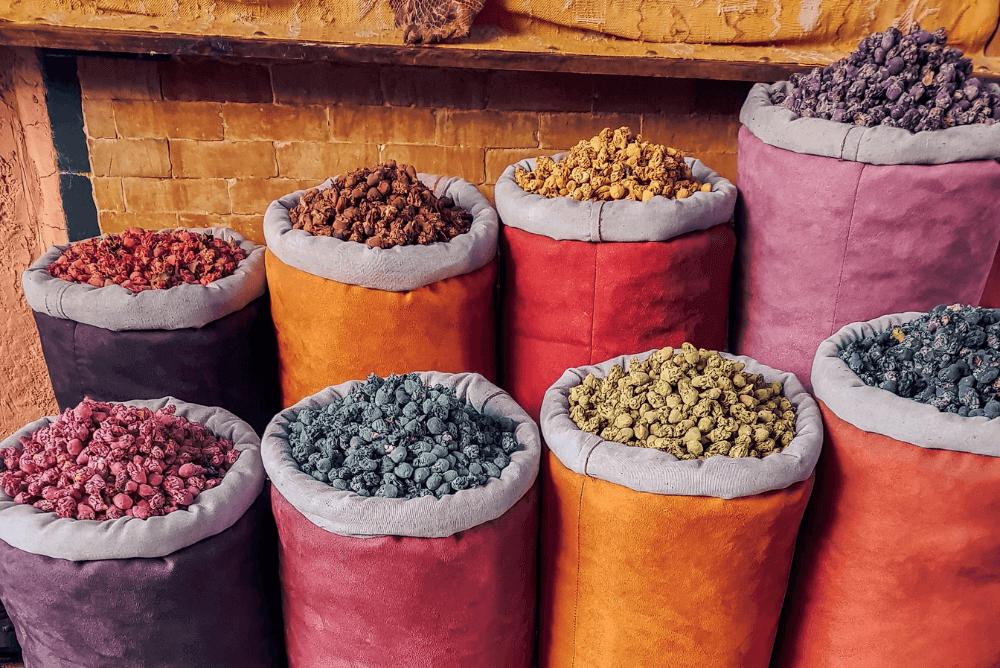
Spices are among the easiest Moroccan souvenirs to carry and one of the few that can immediately become part of your kitchen at home.
Cumin, paprika, saffron and Ras El Hanout are common choices. Instead of buying the biggest package, choose quantities you are likely to use while the aroma is still strong.
Ask exactly what you are buying. This is especially important for prepared blends such as Ras El Hanout, where ingredients can vary.

Buy spices for aroma and usefulness, not simply because a colorful display makes a large package look appealing.
For a detailed explanation of cumin, saffron, Ras El Hanout and other seasonings, see our Moroccan Spices Guide →
Argan Oil
Argan oil is a compact souvenir strongly associated with southwestern Morocco. Before purchasing, determine whether you want culinary argan oil or a product intended for cosmetic use, because they are not interchangeable shopping decisions.
Read the label, check the container and choose packaging that can travel safely in checked or carry-on luggage according to your airline’s liquid rules.
If a product contains additional ingredients or fragrance, the label should make that clear. For a gift, intact packaging is usually more practical than an unmarked bottle.
Amazigh-Inspired Silver Jewelry
Jewelry can be one of the most personal Moroccan gifts, with geometric forms, colored stones, enamel and motifs inspired by regional Amazigh craft traditions.
Ask what the piece is actually made from. “Silver-colored” and sterling silver are not the same thing, and decorative stones may be natural, synthetic or glass.
Buy the design because you like it, but understand the material before paying a premium price.
Moroccan Tea Sets
Mint tea is closely connected with Moroccan hospitality, making a teapot, tray or set of decorated glasses a souvenir that has an obvious connection to everyday Moroccan culture.
Traditional tea sets often combine an engraved metal teapot with colorful glasses and a serving tray. Some pots are decorative, while others are designed for actual tea preparation.
If you intend to use the pot rather than display it, ask the seller directly about its intended function and care.

An engraved metal teapot and decorated glasses make a practical souvenir when you want to recreate Moroccan tea service at home.
Brass, Copper & Decorative Metalwork
Trays, teapots, bowls and decorative pieces can add Moroccan detail to a home without requiring the space of a large rug.
Compare weight, finishing and engraved detail. Check that trays sit flat and that handles and joints feel secure.
If an item will come into contact with food or drink, ask whether it is intended for functional use or decoration.

Engraved tea pots, trays and decorative metal objects combine useful forms with traditional Moroccan design.
Moroccan Lanterns
Moroccan lanterns and pierced-metal wall lights create some of the most recognizable patterns found in souk décor.
Before buying, think carefully about size and transportation. A smaller lantern can be a realistic suitcase souvenir, while a large fixture may require shipping.
If the piece includes electrical components, remember that wiring, sockets and voltage standards may differ from what you use at home. Decorative use and electrical use are different considerations.
Thuya Wood Crafts
Essaouira is particularly associated with decorative thuya woodwork. Travelers may find small boxes, trays and other polished items that are much easier to pack than large furniture.
Check hinges, corners and surface finishing. Small wooden boxes can be especially useful souvenirs because they are decorative without taking up much luggage space.
Zellige-Inspired Gifts
Moroccan geometric tilework is difficult to separate from the visual identity of riads, fountains, palaces and historic buildings.
Instead of carrying large tiles, look for smaller objects inspired by the same geometry: coasters, small tabletops, boxes or decorative pieces.
These offer the visual impact of Moroccan tile design in a size that is more realistic for most travelers.
Woven Textiles & Blankets
Textiles can be a good alternative for travelers who love Moroccan weaving but do not want to purchase a full-size rug.
Blankets, cushion covers, table textiles and smaller woven pieces are generally easier to fold into luggage and can still bring strong color and texture into the home.
Check dimensions before buying cushion covers or table textiles so you know they fit what you already own.
Traditional Woven Baskets
Woven baskets and bags are practical souvenirs for travelers who prefer something casual and useful.
When comparing pieces, inspect the handles, edges and tightness of the weave. A basket that will be used regularly needs stronger finishing than one intended only as decoration.
Consider luggage dimensions before buying a rigid basket. Softer woven bags are usually much easier to transport.
Moroccan Sweets & Food Gifts
Travelers who do not need another decorative object may prefer an edible reminder of Morocco.
Spices, packaged sweets, tea and other shelf-stable products can make useful gifts, provided they are packaged well for travel.
Before packing food, check the customs and agricultural rules of the country you are entering. Requirements can differ depending on the product and destination.
Why Small Ceramics Work So Well as Moroccan Souvenirs
You do not need to buy a large serving bowl to bring Moroccan ceramics home. Small dishes, coasters and bowls give you the craftsmanship and color without using most of your suitcase.

Small plates and bowls can be easier to protect in luggage and make practical gifts for family and friends.
Best Moroccan Souvenirs by City
You can find many of the same souvenir categories throughout Morocco, but certain destinations are especially useful places to look for particular crafts.
| Destination | Good Things to Look For | Shopping Character |
|---|---|---|
| Fes | Ceramics, leather, metalwork | Historic medina and artisan traditions |
| Marrakech | Rugs, lamps, textiles, leather, spices | Large variety across many souks |
| Essaouira | Thuya wood, textiles, small crafts | Compact medina and coastal craft shops |
| Safi | Pottery and ceramics | Strong ceramic craft identity |
| Southern Morocco | Argan products, saffron, woven crafts | Regional products and local specialties |
If you are spending time in the medinas, our Fes Guide and Marrakech Guide can help you plan the rest of your sightseeing around shopping time.
How to Bargain for Moroccan Souvenirs
Bargaining is common in many traditional souks, particularly where prices are not displayed, but the purpose is not to turn every purchase into a confrontation.
Start by deciding what an item is worth to you. Ask the price, make a reasonable counteroffer if negotiation is appropriate and keep the conversation friendly.
Shop Without Pressure
Especially for larger items such as rugs, decide your comfortable maximum before negotiating.
Looking in more than one shop helps you understand both design choices and price ranges.
Bargaining can be conversational. There is no need to make the interaction aggressive.
If you cannot agree on a price you are comfortable with, politely thank the seller and continue shopping.
A long demonstration or carpet presentation does not create an obligation to purchase.
Boutiques and shops with clearly marked fixed prices may operate differently from traditional souks.
How to Check Quality Before Buying
Which Moroccan Souvenirs Are Easiest to Pack?
| Souvenir | Packing Difficulty | Practical Approach |
|---|---|---|
| Spices | Easy | Use sealed packaging |
| Jewelry | Easy | Keep small pieces protected |
| Leather Goods | Easy | Fill bags with soft clothing |
| Textiles | Easy | Fold or roll |
| Pottery | Moderate | Wrap with clothing or protective material |
| Tea Glasses | Moderate | Wrap each piece separately |
| Large Rug | Moderate / Difficult | Discuss folding, packing or shipping |
| Large Lantern | Difficult | Consider shipping rather than luggage |
What Not to Buy Without Checking First
Some purchases deserve more research than an ordinary souvenir. Be especially careful with items described as antiques, precious metals, rare materials or highly valuable handmade objects.
A seller’s description is not the same as independent authentication. If age, material or collectible value is the reason for a high price, understand exactly what evidence supports that claim.
Also check the import rules of your home country before purchasing food, plant material, animal-origin products or items that could be subject to customs restrictions.
Moroccan Gifts for Different Budgets
Spices, tea glasses, small ceramics, woven items and simple accessories can make practical gifts without filling your luggage.
Leather bags, tea sets, decorative metalwork, jewelry and larger pottery provide more substantial options.
A quality rug, larger lantern or significant artisan piece deserves more planning, comparison and luggage or shipping preparation.
The souvenir you genuinely like and will use is usually a better purchase than an item chosen only because it seems inexpensive.
Moroccan Souvenirs on a Private Morocco Tour
A private itinerary can make shopping easier because there is more flexibility to spend additional time in a medina, visit an artisan area or stop when something genuinely interests you.
That flexibility should not mean feeling pressure to shop. Tell your driver or guide what you are interested in—and equally, when you are not interested in shopping at all.
If you know before the trip that you want a rug, pottery, leather or a particular regional craft, mention it during itinerary planning so appropriate time can be included without sacrificing the sightseeing you care about.
Learn more about planning a customized journey in our Private Morocco Tours Guide →
Moroccan Souvenirs: Frequently Asked Questions
What are the best Moroccan souvenirs to buy?
Popular Moroccan souvenirs include rugs, pottery, leather goods, spices, argan oil, jewelry, tea sets, metalwork, lanterns, thuya wood crafts, textiles and woven baskets.
What should I buy in Morocco that is easy to pack?
Spices, jewelry, small leather goods, cushion covers, tea glasses and small ceramic pieces are generally easier to pack than large rugs, lanterns or heavy metalwork.
Where is the best place to buy souvenirs in Morocco?
Fes and Marrakech offer a very broad selection, while destinations such as Essaouira and Safi are particularly useful for certain regional crafts. The best place depends on what you want to buy.
Should I bargain when shopping in Morocco?
Bargaining is common in many traditional souks where prices are not fixed. Keep the conversation friendly, know your budget and remember that you can politely leave if you cannot agree on a price.
How do I choose a Moroccan rug?
Know the dimensions of the space at home, keep your preferred colors in mind, set a budget and ask about the rug’s material, origin and construction before making a decision.
Do I have to buy after a carpet demonstration?
No. A carpet presentation can involve many rugs being unfolded, but viewing them does not create an obligation to purchase.
What should I check when buying Moroccan leather?
Inspect the stitching, hardware, handles, interior finishing and overall smell and feel of the leather before buying.
What Moroccan spices make good souvenirs?
Cumin, paprika, saffron and Ras El Hanout are common choices. Buy reasonable quantities and ask what is included when purchasing a prepared spice blend.
Are Moroccan tea pots functional or decorative?
Both types can be sold. If you intend to prepare tea in the pot, ask the seller whether that particular piece is designed for functional use rather than decoration only.
How should I pack Moroccan pottery?
Wrap individual pieces separately with protective material or soft clothing, avoid placing them directly against the outside of a suitcase and fill empty space so the pieces cannot move easily.
What souvenirs are good gifts from Morocco?
Small ceramics, spices, tea glasses, leather accessories, woven textiles and jewelry can all work well because they are distinctly connected to Morocco and generally manageable to carry home.
Can I buy Moroccan souvenirs during a private tour?
Yes. A private itinerary can provide flexibility for shopping stops and artisan visits, especially when you tell your tour planner in advance which crafts interest you.
Choose Moroccan Souvenirs for the Story, Not Just the Shelf
The best Moroccan souvenirs are not necessarily the largest, most expensive or most heavily decorated items in the souk. They are the things that still make sense once you return home.
Take your time, compare craftsmanship, ask useful questions and think about how an item will fit into your home or daily life. A simple tea glass, small ceramic bowl or bag of spices can hold as much memory as a large purchase when it connects you to a particular place or experience in Morocco.
Make Morocco’s Markets Part of Your Journey
Tell Altni Tours which cities, crafts and experiences interest you. We can help build a private Morocco itinerary that leaves room for historic sites, local culture, artisan experiences and the shopping moments you genuinely want.
PLAN MY MOROCCO TRIP VIEW MOROCCO ITINERARIES