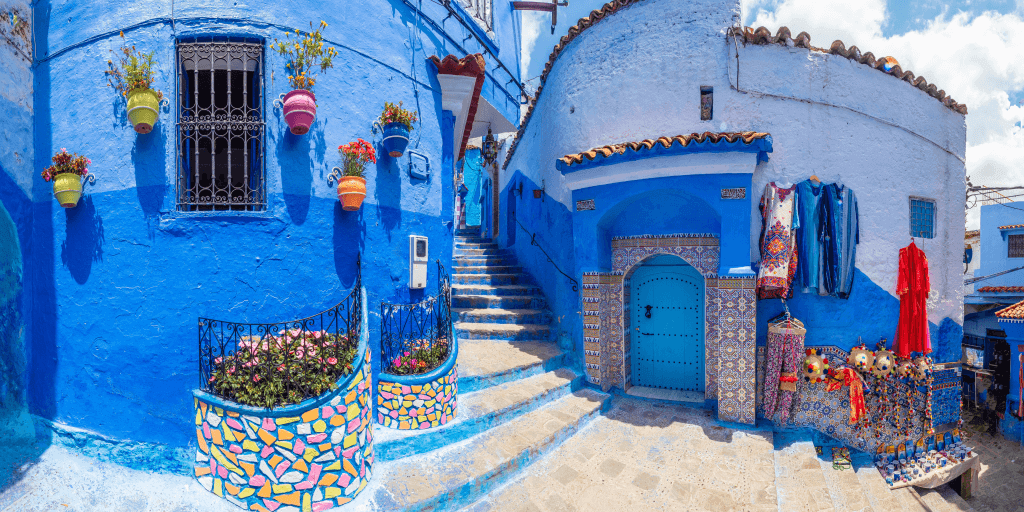
Morocco Guided Tours become far more interesting when the guide does more than point at a beautiful building and tell you its age. Morocco’s historic cities make the most sense when somebody connects the layers: why Fes developed the way it did, how Marrakech became a major western Islamic capital, why Meknes looks different from both of them, and how Roman Volubilis fits into a story that begins long before the imperial cities.
That context changes what you see. A carved cedar ceiling becomes evidence of a craft tradition rather than decoration. A city gate becomes part of an old defensive system. A market street begins to make sense as an urban structure shaped by trades, neighborhoods and religious institutions. Even a drive through southern Morocco becomes more meaningful once you understand why fortified settlements and caravan routes developed where they did.
Morocco currently has nine places on UNESCO’s World Heritage List, all of them cultural sites. Together they create an unusually good framework for understanding the country: Roman archaeology, medieval medinas, imperial capitals, Andalusian influence, pre-Saharan earthen architecture, Atlantic trade and European-Moroccan exchange all appear within one journey.
This guide is not meant to turn your vacation into a history class. It does the opposite. It shows you where historical context makes travel more enjoyable, what a knowledgeable local guide can add, which places work naturally together, and how much time to give them without rushing from monument to monument.
What Part of Morocco’s Past Interests You Most?
You do not have to see every historical site. Start with the story that interests you and build the route around it.
A Very Short Morocco History Timeline
You do not need to memorize dynasties before your trip. A few anchor points are enough to make the places you visit connect to one another.
The Northern & Imperial History Circuit
This is the most efficient historical route for travelers who want Roman archaeology, imperial capitals, medieval medinas and Andalusian heritage without crossing the entire country.
Fes — The City Where History Still Feels Lived In
Fes is where a good guide can change your experience most dramatically. The medina is not arranged for visitors. Streets turn into passages, commercial areas blend into residential quarters, workshops appear behind small doors, and buildings that look modest from outside can open into extraordinary interiors.
The city was founded in the ninth century and reached a major period of prosperity under the Marinids in the thirteenth and fourteenth centuries. Many of the madrasas, fondouks, fountains, residences and religious buildings that define the historic city belong to those layers. Fes later lost its role as political capital, but its cultural and spiritual importance continued.
A guide is useful here not simply because the medina is difficult to navigate. The real value is learning to read it. Why do certain crafts cluster on one street? What was a fondouk used for? Why does a madrasa look so different once you understand the balance between study, religion and architecture? How were neighborhoods organized around fountains, ovens, hammams and places of worship?
Leave room for independent wandering after the guided portion. Once somebody has given you a mental map of the medina, getting slightly lost becomes enjoyable rather than frustrating.
Marrakech — Imperial Power, Architecture & Public Life
Marrakech is famous enough that it is easy to arrive thinking you already know it. You have seen Jemaa el-Fnaa, lantern shops, red walls and rooftop photographs before the plane lands. The history underneath those images is what makes the city more interesting.
Founded by the Almoravids in the eleventh century, Marrakech became a major political, economic and cultural center whose influence reached far beyond Morocco. Later dynasties kept adding layers: Almohad monuments, Saadian tombs and palaces, madrasas, residences and gardens.
A guided historical day works best when it is selective. You do not need to enter every monument on a checklist. Koutoubia helps explain the Almohad city. Ben Youssef Madrasa reveals the sophistication of religious education and decoration. Bahia Palace provides a later architectural layer. The Saadian Tombs change the story again.
Then there is Jemaa el-Fnaa. It makes more sense when you stop thinking of it only as a tourist spectacle and see it as a public space connected to storytelling, food, music, commerce and the life of the medina.
Meknes — The Imperial Vision of Moulay Ismail
Meknes is sometimes treated as the quieter cousin of Fes, which undersells it. Its importance comes from a different chapter of Moroccan history.
The city began as an Almoravid military settlement and became an imperial capital under Sultan Moulay Ismail in the late seventeenth and early eighteenth centuries. His building program created monumental gates, walls and a royal city whose scale reflected political ambition as much as aesthetics.
This is exactly why Meknes pairs so well with Volubilis. In the morning you can stand among evidence from ancient Mauritanian and Roman periods; later you enter a city shaped by a powerful Alaouite ruler more than a millennium afterward. The contrast makes Moroccan history feel less like a straight timeline and more like layers occupying the same region.
If your itinerary already includes Fes, a combined Volubilis–Meknes day can be one of the most efficient historical excursions of the trip. Experience It Tours uses the same pairing in its Fes day-trip planning, and it makes geographical as well as historical sense.
Rabat — Where Medieval Morocco Meets the Modern Capital
Rabat tells a story that the other imperial cities cannot. Its heritage includes twelfth-century Almohad remains, later Andalusian and Moorish elements, and an important twentieth-century planned capital.
The Hassan Tower and surrounding remains point back to an ambitious Almohad project begun in the twelfth century. The Kasbah of the Udayas offers another historical atmosphere entirely. Then the city’s broad avenues and administrative areas introduce the modern urban planning that developed when Rabat became the political capital in the twentieth century.
This mix makes Rabat a particularly useful first historical stop. Instead of beginning with a dense medieval medina, you see old and modern Morocco next to one another and can understand that preservation and contemporary capital life are not opposites.
Volubilis — Morocco Before the Imperial Cities
Volubilis is the place that expands the historical story beyond the dynasties most visitors associate with Morocco. The settlement has roots in the ancient Mauritanian world, later became an important Roman outpost and continued to carry significance into the Islamic period.
The site is spread across an open agricultural landscape, so at first the ruins can feel like disconnected columns, foundations and mosaics. This is one of the places where interpretation matters most.
A knowledgeable guide can help reconstruct the city mentally: public buildings, houses, roads, arches, agricultural wealth and the relationship between Roman influence and local culture. The mosaics become especially interesting when you know what room you are standing in and what the imagery was meant to communicate.
Volubilis later became connected with Idris I, founder of the Idrisid dynasty, who is buried at nearby Moulay Idriss. That geographic connection creates a remarkable transition from the ancient Mediterranean world into the beginnings of Islamic dynastic Morocco.
The Story Does Not Stop at the City Walls
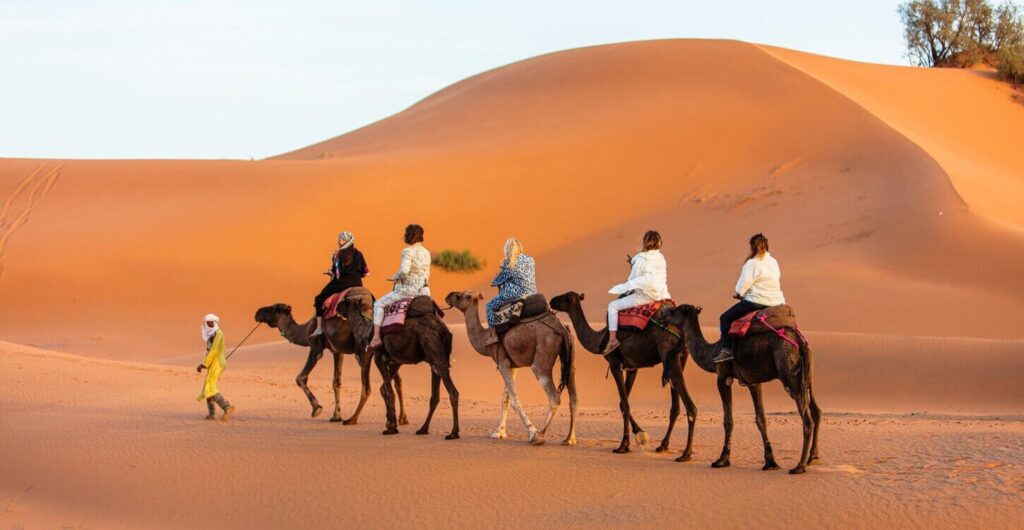
Trade, pilgrimage and travel connected Morocco’s cities with the Sahara and regions farther south. When you drive toward the pre-Saharan valleys, the landscape itself starts explaining why fortified settlements and caravan stopping points mattered.
The Marrakech to Caravan Country Route
This route moves from an imperial capital across the High Atlas toward the earthen architecture and trading landscapes of southern Morocco.
Aït Ben Haddou — Architecture Built for a Caravan Landscape
Aït Ben Haddou is often introduced through cinema because its earthen skyline has appeared on screen many times. That is entertaining, but it is not the most interesting reason to visit.
The ksar is a compact fortified settlement built in the architectural tradition of southern Morocco. Houses, defensive walls, towers and communal spaces reveal how people constructed settlements from local earth in a demanding pre-Saharan environment.
Its location also matters. The area formed part of historic routes linking southern regions and trans-Saharan trade with Marrakech. Once you understand that, the defensive form and compact layout stop looking like a decorative movie set and begin to look practical.
Walk slowly. Look at how buildings share walls, how towers dominate the silhouette and how the settlement relates to the surrounding valley. The most useful historical explanation here is not a list of movie titles—it is why this architecture developed in this place.
Essaouira — A Port City Looking Outward
Essaouira is one of the best places to understand that Morocco’s history was shaped by the Atlantic as well as by inland dynasties and Saharan routes.
The fortified town developed in the eighteenth century as an important commercial port connecting Morocco and its Saharan hinterland with Europe and wider international trade. Its urban plan reflects both North African traditions and European military architecture.
The city’s multicultural past is equally important. Muslim, Jewish, Amazigh, Arab, African and European communities all contributed to the commercial and cultural life associated with the port.
A historical walking tour should therefore go beyond the ramparts. The harbor, medina plan, merchant history and different community quarters make the story much richer than simply photographing the sea walls.
Tétouan — Morocco’s Andalusian Connection
Tétouan deserves far more attention from history-focused travelers. Its location made it an important connection point between Morocco and Andalusia, and its later development was deeply influenced by Andalusian refugees who resettled in the region.
That influence remains visible in the architecture, street patterns and artistic traditions of the medina. Compared with Fes or Marrakech, the historic core is smaller and can feel more compact, which actually makes it easier to focus on details.
A local guide can point out architectural elements that might otherwise look simply “Moroccan” and explain how northern Morocco absorbed and reinterpreted Andalusian influences.
Tétouan works particularly well in a northern itinerary with Chefchaouen and Tangier, or as an extension to a Fes–Volubilis route for travelers who want a deeper historical trip rather than the classic Sahara circuit.
El Jadida / Mazagan — A Different Atlantic Chapter
El Jadida adds another unexpected layer to Morocco’s historical map. The former Portuguese fortified city of Mazagan developed on the Atlantic coast in the sixteenth century and later passed into Moroccan control.
Its bastions and fortifications represent European Renaissance military ideas adapted to an African coastal setting. Surviving structures show how Portuguese and Moroccan histories intersected rather than existing in separate worlds.
This is not usually the first destination people think of when planning Morocco guided tours, which is exactly why it can be interesting for a second trip or a history-focused coastal itinerary.
Combine it with Casablanca or continue south toward Essaouira and the Atlantic story becomes much clearer: Morocco was linked continuously to maritime trade, European powers and wider commercial networks.
From Caravan Routes to the Atlantic
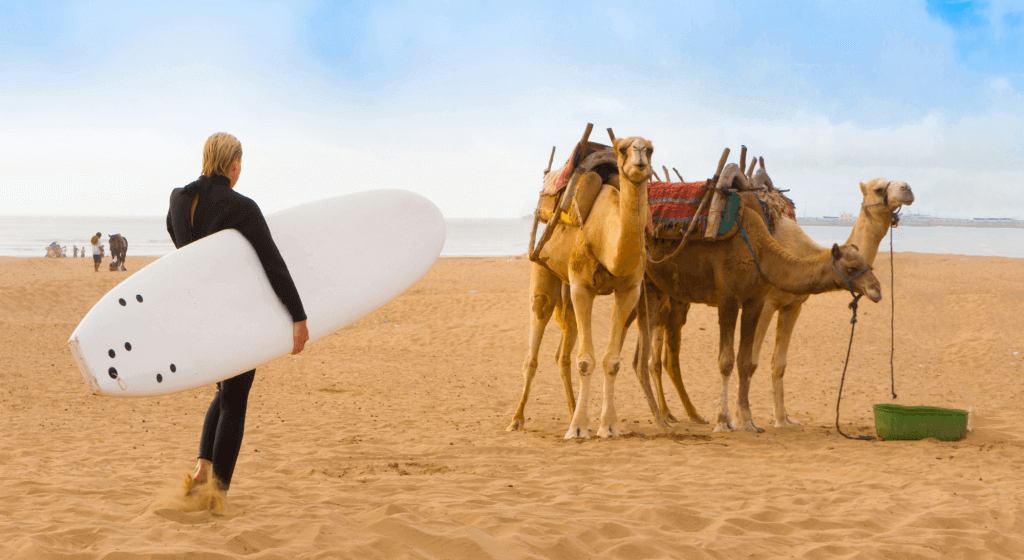
Morocco’s history makes more sense when you stop separating the desert, cities and coast. Goods, people, traditions and ideas moved between them for centuries. A well-designed route lets you see those connections instead of treating every stop as an isolated attraction.
Morocco’s Historic Places at a Glance
| Historic Place | Main Story | What a Guide Adds | Recommended Time |
|---|---|---|---|
| Fes | Medieval urban life & Marinid heritage | Medina structure, crafts, architecture | 2–3 days |
| Marrakech | Almoravid, Almohad & Saadian layers | Dynastic context and monuments | 2–3 days |
| Meknes | Moulay Ismail & Alaouite power | Imperial planning and architecture | Half–Full day |
| Rabat | Almohad heritage + modern capital | Historic/modern urban connection | 1–2 days |
| Volubilis | Ancient Mauritanian & Roman Morocco | Reconstructing the archaeological city | 1.5–2 hours |
| Aït Ben Haddou | Pre-Saharan earthen architecture | Caravan and settlement context | 2–3 hours |
| Essaouira | Atlantic trade & multicultural port | Commercial and community history | 1–2 nights |
| Tétouan | Andalusian-Moroccan heritage | Architecture and northern history | 1 day |
| El Jadida | Portuguese-Moroccan exchange | Fortification and maritime context | Half–Full day |
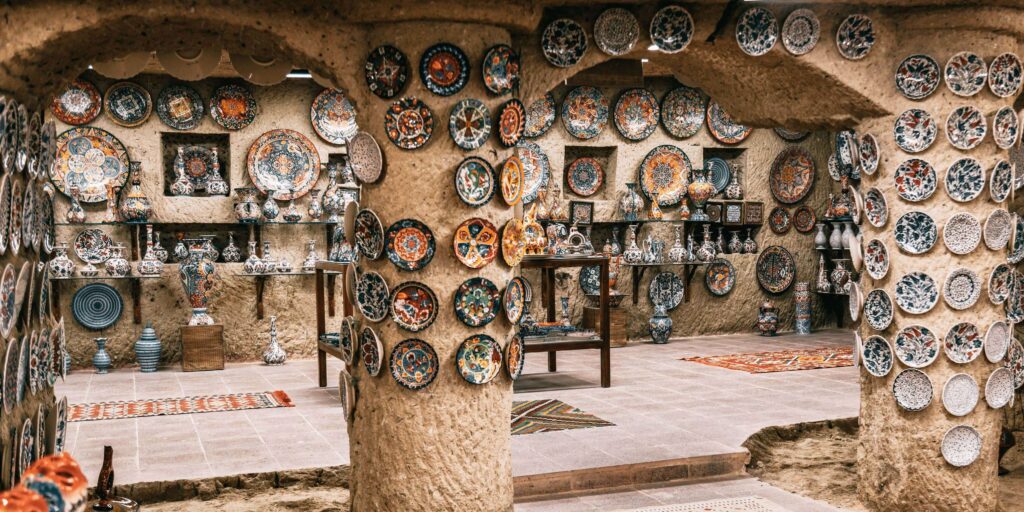
Living Heritage Matters as Much as Monuments
A historical tour should not end when you leave a palace or archaeological site. Workshops, ceramics, leather, textiles, food, music and neighborhood traditions show how cultural knowledge continues to be practiced rather than sitting behind museum glass.
The History You Can Still See People Practicing
This is where a local guide can make a historical trip feel human. Morocco’s heritage is not only monumental; it is also carried by skills, rituals, markets and everyday routines.
Seeing how ceramics, leather, metalwork or textiles are made connects decorative details in monuments with skills that continue today.
Markets, communal ovens, spices and family recipes reveal movement between Amazigh, Arab, Andalusian, African and Mediterranean influences.
Historic cities still function as places to live, work, worship, shop and raise families—not simply as preserved visitor districts.
Stories, performance and regional music traditions add forms of heritage that architecture alone cannot explain.
Driver vs Licensed Local Guide: They Are Not the Same Job
This is one of the most useful ideas to take from Experience It Tours’ planning content, and it is also important for explaining how Altni Tours operates.
A private driver stays with the journey, handles transportation and becomes a familiar person as you move between regions. The driver knows roads, practical logistics and the rhythm of the route. That continuity matters greatly on a multi-city trip.
A licensed local guide has a different role. In cities such as Fes and Marrakech, the guide joins you specifically to interpret history, architecture, customs and the medina. A specialist at Volubilis can focus on archaeology in a way that your long-distance driver should not be expected to do.
At Altni Tours, the private English-speaking driver accompanies the journey, while professional licensed guides are used for guided visits in major cities. That gives travelers continuity on the road without pretending that one person must be an expert in every city, dynasty and archaeological site.
Transportation, road logistics, transfers, practical help and local perspective as you travel between regions.
Historical explanation, medina orientation, architecture, cultural context and specialized knowledge of a particular destination.
What a Good Historical Guide Actually Adds
The worst version of a guided tour is somebody reciting dates while you wait to take a photograph. A strong guide does something different: they help you notice relationships.
In Fes, that may mean connecting a madrasa to the neighborhood around it. At Volubilis, it means helping you reconstruct a city from archaeological remains. In Marrakech, it means showing how monuments from different dynasties occupy the same urban landscape. In Essaouira, it means explaining why a North African medina has a distinctly different relationship with European military planning and Atlantic trade.
The best guides also adjust. A traveler fascinated by architecture should not receive exactly the same tour as a family whose children want stories and short stops. Someone interested in Jewish heritage, photography, food or crafts can follow a different thread through the same city.
That flexibility is one of the reasons private historical touring can work so well. Context becomes personal rather than generic.
7, 10 & 14-Day Morocco History Routes
Experience It Tours makes a useful planning point in its trip-length content: the route should fit the number of days, not the other way around. Morocco’s historical cities reward time, especially Fes and Marrakech.
Casablanca/Rabat → Meknes → Volubilis → Fes → Marrakech. Focus on the core imperial story and Roman archaeology rather than trying to add the Sahara as well.
Rabat → Volubilis → Meknes → Fes → Marrakech → Aït Ben Haddou. This adds southern architecture and historic trade-route context to the imperial cities.
Add Tétouan or Chefchaouen in the north and Essaouira or El Jadida on the Atlantic, giving time for imperial, Andalusian, archaeological, caravan and maritime history.
How Much Time Should You Give Morocco’s Historic Cities?
One of the quickest ways to weaken a history-focused trip is to schedule a famous city for only one evening. The building may still be there, but the experience becomes a race.
For Fes, two full days is a strong starting point: one guided day and another for workshops, food, photography or independent wandering. Marrakech deserves at least two days as well, especially if you want historic monuments and enough time to experience the medina after the formal tour ends.
Rabat can work with one full day, while Meknes fits naturally into a Volubilis day from Fes. Essaouira benefits from an overnight stay because the city’s atmosphere changes once day visitors leave.
Volubilis itself does not require a whole day, but it deserves enough time to walk beyond the first visible ruins. Tétouan and El Jadida can each work as full-day historical stops or as part of a wider regional route.
The point is not to maximize the number of UNESCO sites collected. The goal is to understand enough about each place that you remember why it mattered.
Morocco’s UNESCO World Heritage Sites
Morocco currently has nine properties inscribed on UNESCO’s World Heritage List, all classified as cultural properties. They include Volubilis, Meknes, Aït Ben Haddou, Essaouira, Fes, Marrakech, Tétouan, Mazagan/El Jadida and Rabat.
This makes them a useful framework for a history-focused itinerary, but UNESCO status should not become a checklist. Some of the most memorable historical experiences happen in workshops, neighborhoods, markets and smaller places between the official sites.
Related Morocco Travel Guides
Morocco Guided Tours FAQ
Are guided tours worth it in Morocco?
Guided tours can be especially valuable in historic medinas, archaeological sites and major cultural landmarks where context improves the experience. You do not need a guide for every hour of the trip, but a knowledgeable local guide can make places such as Fes, Marrakech and Volubilis much easier to understand.
What are Morocco’s four imperial cities?
Morocco’s four imperial cities are Fes, Marrakech, Meknes and Rabat. Each served as a capital at an important point in Moroccan history and each reflects different dynasties, architectural traditions and periods of political power.
What is the best city in Morocco for history?
Fes is particularly strong for travelers interested in medieval urban history, religious architecture and traditional crafts. Marrakech, Meknes and Rabat offer different imperial stories, so the best choice depends on the historical period that interests you most.
Is Volubilis worth visiting?
Yes, especially for travelers interested in archaeology and the history of Morocco before the imperial cities. Volubilis preserves important remains from Mauritanian, Roman and later periods and combines naturally with Meknes and Moulay Idriss.
How long should I spend at Volubilis?
Around one and a half to two hours works well for many visitors, allowing time to walk through the archaeological site, see major structures and mosaics and understand the layout without rushing.
Do I need a guide in Fes?
You can explore independently, but a licensed local guide is especially useful in Fes because the medina is complex and many important details are easy to miss. A guide can explain architecture, crafts, historic institutions and the organization of the old city.
What is the difference between a driver and a guide in Morocco?
A private driver handles transportation and practical road logistics between destinations. A licensed local guide specializes in interpreting a particular city, monument or historical area. On an Altni Tours private journey, these roles are kept separate where professional city guiding is required.
How many days do I need for Morocco’s imperial cities?
Around seven to eight days can cover the four imperial cities at a reasonable pace. More time allows additional stops such as Volubilis, Tétouan or cultural experiences without turning the trip into a sequence of one-night stays.
What UNESCO sites can I visit in Morocco?
Morocco’s UNESCO World Heritage properties include the medinas of Fes, Marrakech, Essaouira and Tétouan, the historic cities of Meknes and Rabat, Volubilis, Aït Ben Haddou and the Portuguese City of Mazagan in El Jadida.
Is Aït Ben Haddou only famous because of movies?
No. Its importance goes much deeper. Aït Ben Haddou is an important example of pre-Saharan earthen architecture and reflects settlement patterns associated with historic southern Moroccan trade routes.
Which Morocco historical sites work well together?
Volubilis and Meknes combine very well from Fes. Marrakech and Aït Ben Haddou work naturally on a route through the High Atlas. El Jadida and Essaouira can form part of an Atlantic heritage route, while Tétouan fits well into a northern Morocco itinerary.
Are private historical tours customizable?
Yes. A private history-focused route can emphasize architecture, archaeology, Jewish heritage, crafts, photography, food or particular dynasties rather than giving every traveler the same standard sightseeing program.
Build a Morocco Journey Around the History That Interests You
A historical trip does not need to feel academic. Altni Tours can combine private transportation with licensed local guides and build your route around imperial cities, archaeology, crafts, architecture, Atlantic heritage or the southern caravan landscapes that interest you most.
PLAN MY MOROCCO HISTORY TOUR