
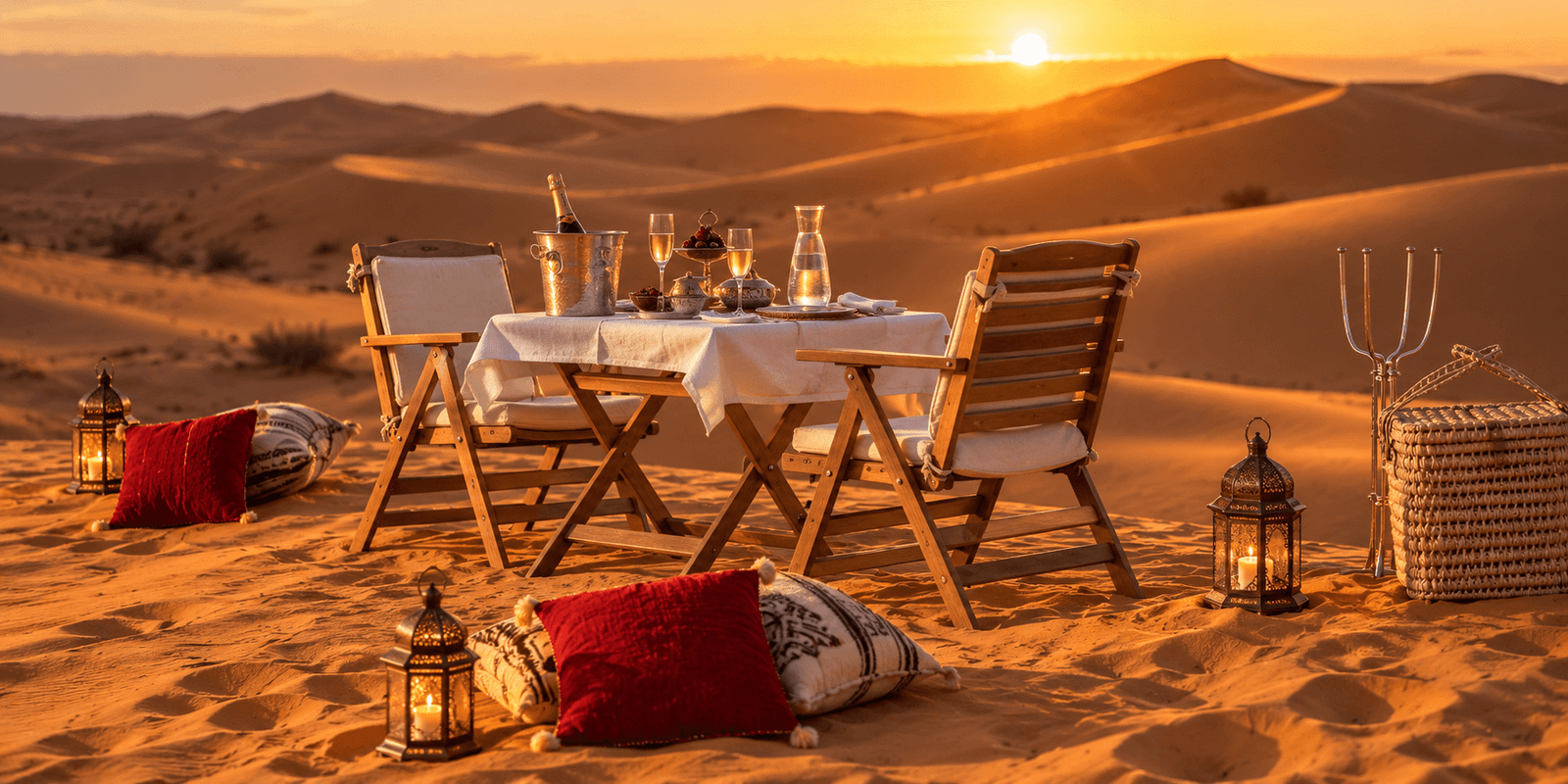
A good Morocco Sahara Desert Travel Guide should answer more than “where are the dunes?” The real questions start after you decide you want to go: Which desert should you choose? How many days do you need? Is one night enough? Should you travel from Marrakech or Fes? What actually happens at a desert camp? And what should you pack when a sunny afternoon can turn into a surprisingly cool night?
The Moroccan Sahara is one of those places that looks familiar before you arrive. You have seen photographs of camel caravans, orange dunes and tents lit by lanterns. Then you reach Merzouga and realize photographs leave something important out: the scale, the quiet and the way the light changes the dunes every few minutes.
For many first-time visitors, the classic desert experience centers on Merzouga and the Erg Chebbi dunes in southeastern Morocco. Morocco’s National Tourist Office describes Merzouga as one of the gateways to the Sahara and places it in a landscape of dunes, palm groves, trails and desert activity. But Merzouga is not the only desert option. Southern routes through Zagora and toward Erg Chigaga offer a different style of journey, while Agafay near Marrakech provides a much shorter rocky-desert escape that should not be confused with the great Saharan dunes.
This guide is designed to help you choose the experience that actually fits your trip rather than simply booking the first “desert tour” you find online.
Merzouga & Erg Chebbi: The Classic Morocco Sahara Experience
Merzouga is a small settlement at the edge of Erg Chebbi, the dune field most international travelers picture when they imagine a Morocco desert journey. This is where paved-road travel gives way to camel tracks, 4×4 routes and the rolling orange dunes that dominate the horizon.
The official Moroccan tourism site describes Merzouga as one of the country’s gateways to the Sahara. The wider region includes palm groves, desert trails, the seasonal Dayet Srij lake area and routes through Erfoud, Rissani and the Tafilalet region.
For a first Sahara trip, Merzouga works well because the experience can be tailored. You can sleep in a hotel at the dune edge, ride a camel into camp, transfer by 4×4, stay one night or slow the trip down and spend more time exploring the region.
The important point is that “Merzouga” and “the Sahara experience” are not exactly the same thing. Merzouga is the gateway. Erg Chebbi is the dune landscape. Your camp may sit farther into the desert, and activities take place in several areas around the dunes.
That distinction helps when comparing hotels, camps and tour descriptions. Ask where you will actually sleep, how you will reach camp, how long the camel portion lasts and how much free time you will have around the dunes.
For official destination information, see Morocco’s National Tourist Office guide to Merzouga and the region →
Merzouga vs Zagora vs Erg Chigaga
The phrase “Morocco desert tour” is used for several very different trips. This is one of the first things to understand before comparing prices.
Merzouga and Erg Chebbi are the easiest recommendation for many first-time travelers who want large classic dunes, camel trekking and a wide choice of camps. The route also fits naturally between Fes and Marrakech on a longer Morocco journey.
Zagora is farther southwest and is often used as a gateway for southern desert routes through the Drâa Valley. It can work well when time is limited or when your itinerary focuses on Ouarzazate, the Drâa and southern Morocco.
Erg Chigaga, reached through the wider M’Hamid / Zagora region, offers a more remote style of dune experience. It generally makes more sense for travelers who want the journey itself to feel more expedition-like and who can give the south enough time.
And then there is Agafay, close to Marrakech. It is excellent for a dinner, quad experience or one-night escape, but it is a rocky desert landscape rather than the towering Sahara dune experience of Erg Chebbi.
| Desert Area | Best For | Style | Planning Note |
|---|---|---|---|
| Merzouga / Erg Chebbi | First-time Sahara travelers | Large dunes, camps, camel rides | Excellent between Fes & Marrakech |
| Zagora | Southern Morocco itineraries | Drâa landscapes + desert gateway | Works well from Marrakech/Ouarzazate |
| Erg Chigaga | More remote desert experience | Dunes + off-road journey | Give the route more time |
| Agafay | Short Marrakech escape | Rocky desert | Not the Sahara dune experience |
Marrakech to Merzouga: Make the Road Part of the Experience
Trying to treat Marrakech–Merzouga as a simple transfer is one of the easiest ways to make a desert trip exhausting. The distance is substantial, but the road is also one of the most varied travel corridors in Morocco.
A well-paced route crosses the High Atlas, reaches the earthen architecture of Aït Ben Haddou and Ouarzazate, continues through valleys and dramatic rock landscapes around Dades and Todra, then gradually transitions toward the desert.
That means the road should not feel like lost vacation time. It is the chapter that explains how green valleys, mountain villages and fortified southern settlements eventually give way to the Sahara.
Classic Southern Route Map
Illustrative route — not to scale.
Fes to Merzouga: Middle Atlas to the Sahara
The Fes route tells a different landscape story. You leave the historic medina region and move into the Middle Atlas, through mountain towns and open plateaus before descending toward the Ziz Valley and Tafilalet.
Ifrane and the Middle Atlas provide the first dramatic contrast. Farther south, Midelt makes a natural break in the journey. Then the road begins to feel drier and more expansive as you approach Errachidia, the Ziz Valley, Erfoud and Rissani.
The official tourism office links Midelt, Errachidia and Merzouga as a natural transition between the Atlas and the desert and notes that historic caravan activity connected this region with routes farther south. That history gives the drive a cultural dimension beyond scenery.
Middle Atlas & Ziz Route Map
Illustrative route — not to scale.
How Many Days Do You Really Need in the Sahara?
You can technically ride into camp in the afternoon, sleep in the desert and leave after breakfast the next morning. For some itineraries, that is the only realistic option. It gives you the main highlights: dunes, sunset, camp, stars and sunrise.
But the biggest weakness of a one-night stay is not the camp—it is how quickly everything happens. You arrive, transfer almost immediately, sleep, watch sunrise, eat breakfast and start driving again.
Experience It Tours makes a useful point in its trip-length content: the Sahara portion often needs around two to three days once travel is included. Their slow-travel guidance goes further and recommends at least one night, preferably two when time allows.
Camel or 4×4 transfer, sunset, dinner, overnight camp and sunrise. Best when your overall Morocco itinerary is limited.
Add Rissani, desert villages, 4×4 exploration, sandboarding or simply an afternoon without rushing to the next hotel.
Useful for photography, slow travel, deeper regional exploration or travelers who genuinely want the Sahara to be a major part of the trip.
What Actually Happens at a Morocco Desert Camp?
The phrase “desert camp” covers a surprisingly wide range of accommodation. Some camps are simple and atmospheric. Others operate more like small desert lodges, with real beds, private bathrooms, showers, dining areas and carefully designed tents.
The experience normally begins before the camp itself. Depending on your arrangements, you may leave the dune edge by camel or 4×4 in the afternoon. Sunset often becomes part of the journey rather than a separate activity.
Once at camp, you settle into your tent, have dinner and spend the evening outside when weather permits. Music around the fire is common at many camps, although the most memorable part for some travelers is simply walking away from the main lights and looking at the sky.
Do not judge a camp only by whether it calls itself “luxury.” Ask the details that matter to you: private or shared bathroom, heating or extra blankets in winter, electricity, luggage transport, meal arrangements and how far the camp is from the dune edge.
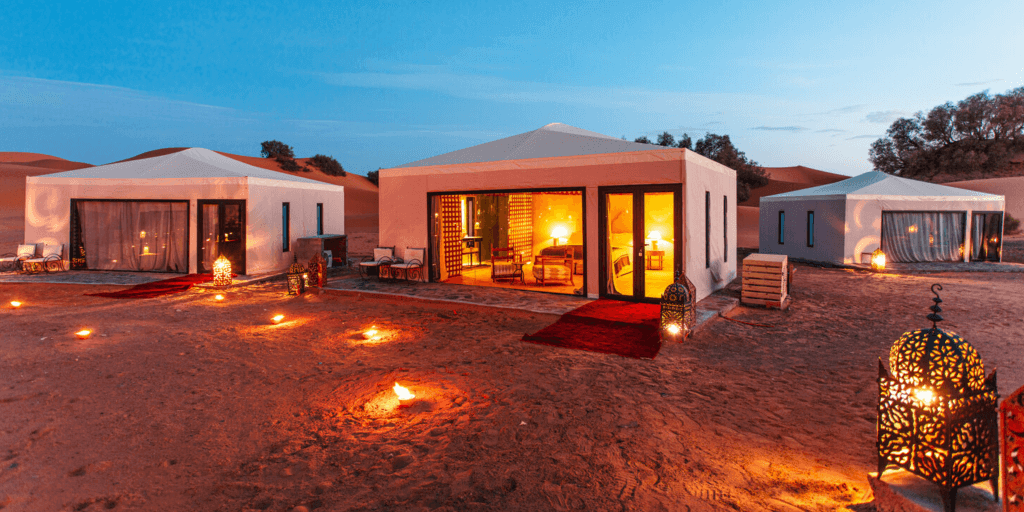
Comfort and Desert Atmosphere Can Coexist
Today’s camps range from simple bivouacs to comfortable tented stays with proper beds and private facilities.
Best for travelers who prioritize the setting and experience over hotel-style facilities.
Often includes upgraded bedding, private bathroom facilities and more elaborate dining arrangements.
What Is a Camel Trek Really Like?
Camel trekking is one of the iconic images of Morocco, but it helps to know what to expect. Riding a camel is not the same as sitting in a car seat. The motion is slow and rhythmic, and some travelers find it comfortable while others feel it in their hips or legs after a while.
Wear trousers or clothing that allows easy movement, closed or secure shoes, sunglasses and a scarf. Keep a small bottle of water accessible and leave large luggage to be transferred separately.
You also do not have to prove anything. If you have mobility limitations, joint problems or simply do not enjoy riding, many camps can be reached by 4×4 instead. Experience It Tours likewise notes 4×4 transport as an alternative for travelers who prefer not to ride a camel.
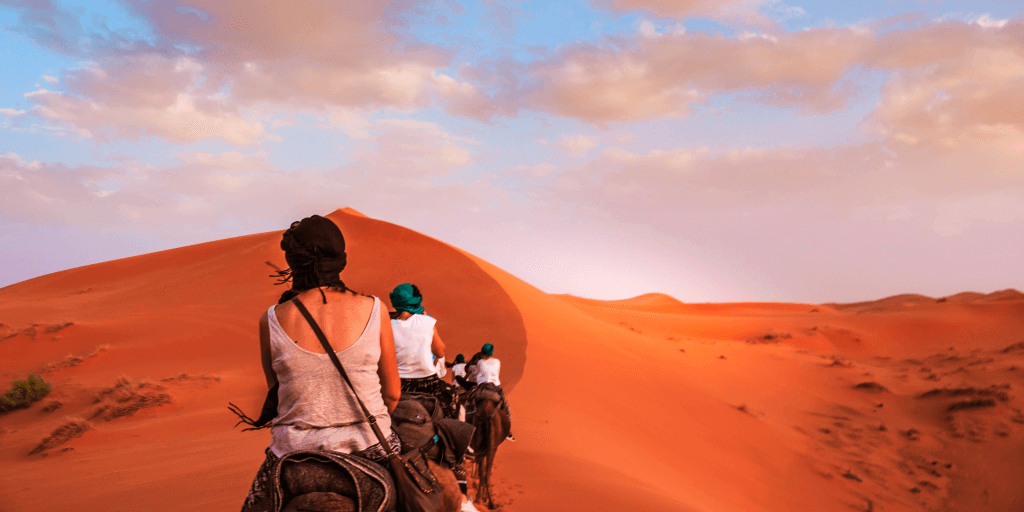
Sunset Is Often the Sweet Spot
Late-afternoon light softens the dunes and creates the classic camel silhouettes that make Erg Chebbi so photogenic.
Best Things to Do Around Merzouga & Erg Chebbi
The Sahara becomes more interesting when you stop treating the camel ride as the entire experience. Morocco’s tourism office highlights hiking, camel riding, sand skiing, 4×4 routes and other outdoor activities around the Merzouga region.
Give yourself enough time to stop moving and watch the colors change rather than treating sunset only as a photo stop.
The early alarm is easier to forgive once the first light begins revealing the dune shapes.
A fun, simple activity when boards are available and conditions are suitable.
Useful for exploring beyond the immediate camp and reaching varied desert landscapes.
Add local market life and the historical Tafilalet context to a trip otherwise dominated by dunes.
The palm-filled valley provides one of the strongest visual contrasts on the road between mountains and desert.
Move away from the main camp lights, give your eyes time to adjust and simply look up.
Sit on a dune. Drink tea. Listen. The Sahara does not need to be filled with scheduled activities every hour.
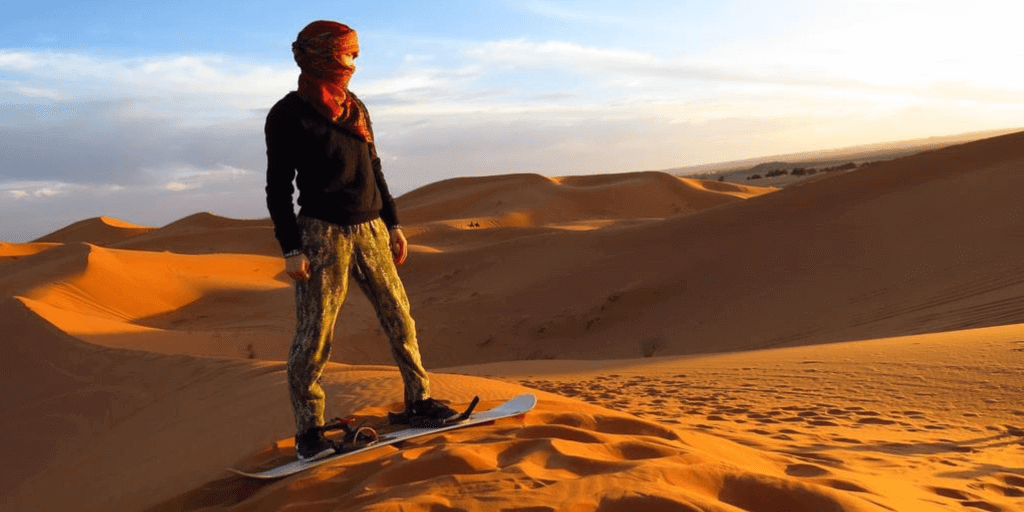
Sandboarding Adds a Little Adrenaline
It is one of the easiest activities to add without turning a quiet desert trip into an adventure-sports itinerary.
Rissani, Tafilalet & the Human Side of the Desert
A Sahara trip becomes richer when you understand that southeastern Morocco is not empty space surrounding a tourist camp. Communities, markets, oases and historic travel routes existed here long before desert tourism.
Rissani is especially useful for adding that perspective. The town sits within the Tafilalet region and works naturally as part of a Merzouga stay. A market visit can give you a very different image of desert life from the one created by luxury tents and camel silhouettes.
The wider corridor through Errachidia and the Ziz Valley also connects the Sahara with historic caravan movement. Morocco’s tourism office notes that caravans once traveled from this broader region toward Timbuktu and returned with goods.
This does not mean every desert visit needs to become an academic history tour. It simply means one local market, village visit or conversation can keep the Sahara experience grounded in a real region with living communities.
When Is the Best Time to Visit the Moroccan Sahara?
There is no single perfect month because travelers value different things. The most comfortable periods for broad sightseeing are generally the cooler parts of the year, while summer requires much more careful timing because daytime desert heat can be intense.
Spring and autumn are popular because they balance daytime warmth with easier outdoor activity. Winter can be excellent for long days in the dunes, but evenings and early mornings may become genuinely cold. This is exactly why Experience It Tours emphasizes warm layers for winter desert nights.
Summer does not mean the region disappears from the map, but a summer itinerary should be designed differently. Activities are better placed earlier or later in the day, shade and hydration become more important and the pace should reflect the conditions rather than forcing a winter-style program into July or August.
Good balance for desert activity, road travel and multi-region Morocco trips.
Plan activities around cooler hours and take heat seriously.
A strong season for combining cities, mountains and Sahara.
Excellent outdoor conditions with warm evening layers essential.
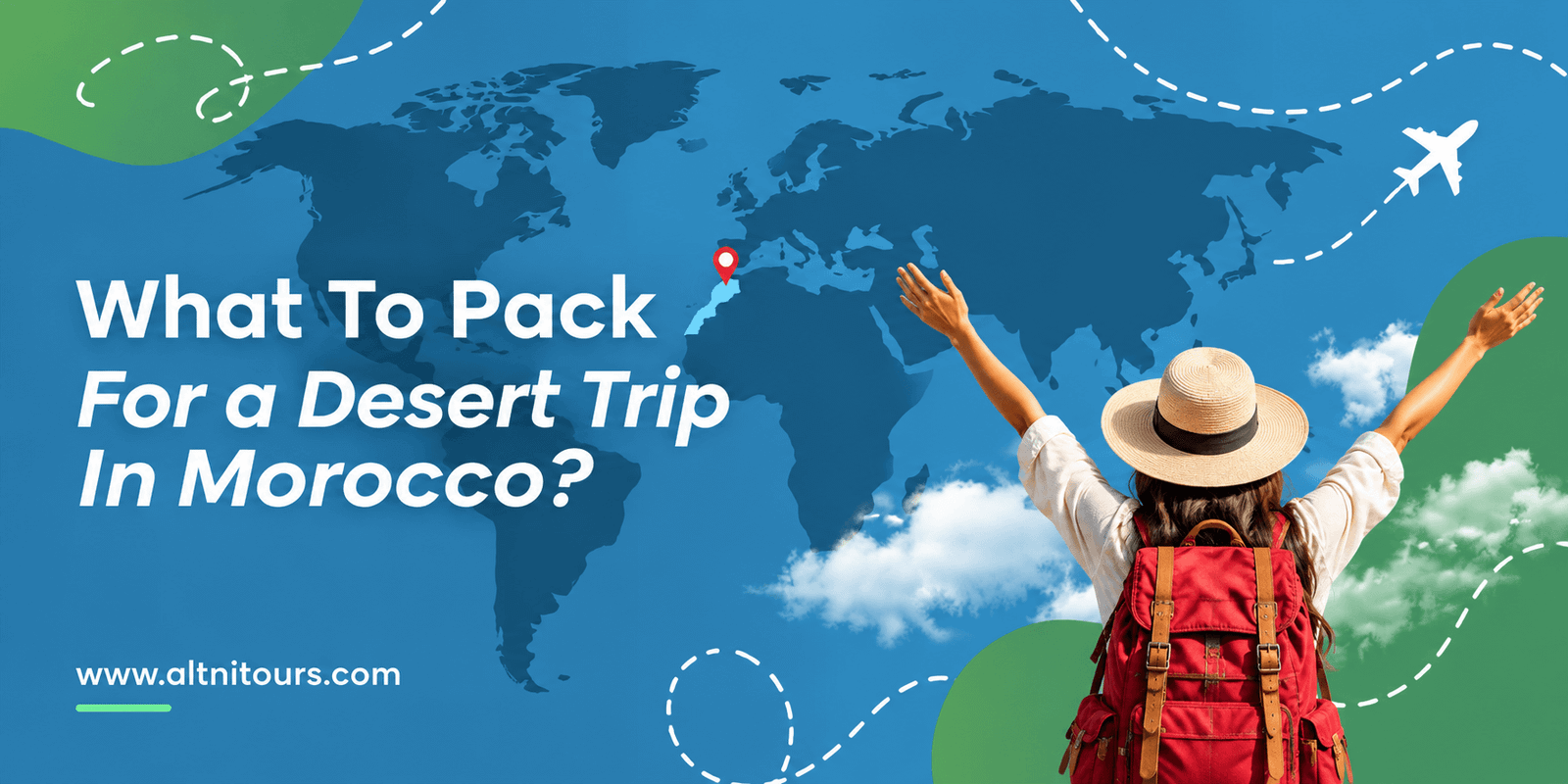
What to Pack for a Morocco Desert Trip
Desert packing is less complicated than many lists make it sound. The goal is to protect yourself from sun, wind, dry air and temperature changes without filling your luggage with specialist equipment you will never use again.
Start with comfortable clothing that layers easily. Add sunglasses, sun protection, a hat, a light scarf, secure walking shoes, lip balm and a small day bag. A reusable water bottle is useful, as is a power bank if you expect to use your phone heavily for photography.
For winter, add a proper warm layer for evenings and sunrise. For summer, lightweight long sleeves can be more useful than exposing more skin to the sun.
The Essentials Fit in a Small Day Bag
Sunglasses, scarf, water, sunscreen, phone or camera, lip balm and a light layer cover most everyday desert needs.
Sahara Travel for Families, Couples & Different Mobility Levels
The desert is not only for young adventure travelers. The itinerary simply needs to match the people taking it.
Dunes are naturally fun for children. Keep driving days realistic, carry snacks and water and choose a camp setup that makes bedtime easy.
A private camp transfer, quiet dinner and unhurried sunrise can make the Sahara one of the most memorable parts of a Morocco honeymoon or anniversary trip.
Choose a comfortable camp, sensible driving pace and 4×4 access when a long camel ride does not sound enjoyable.
Extra time gives you more than one sunset or sunrise and reduces the pressure to get every image during a single short window.
Simple Sahara Photography Tips
The dunes rarely look the same for long. As the sun moves, ridges become sharper, shadows deepen and orange sand can shift toward gold, red or soft brown.
Experience It Tours makes a good photography point: sunrise and sunset give you changing shades, long shadows and the classic silhouettes that are difficult to reproduce in harsh midday light.
You do not need professional equipment. A phone can capture excellent desert photographs. What matters more is timing and composition. Use people or camels to show the scale of the dunes, look for clean ridgelines and do not spend the entire camel trek watching the experience through a screen.
If you bring a dedicated camera, keep sand in mind. Change lenses carefully, carry a protective bag and avoid placing equipment directly on the ground.
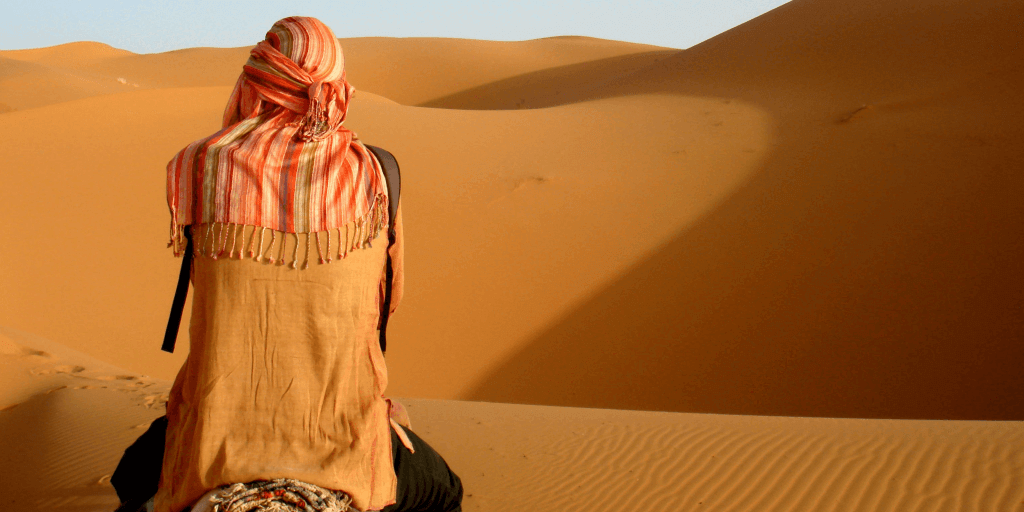
Some Moments Are Better Without the Camera
Take the photograph, then put the device away for a few minutes and watch the dunes change with your own eyes.
Practical Desert Planning: Comfort, Weather & Expectations
The easiest desert trips are the ones where the practical details are settled before you reach the dunes. Confirm how you will travel into camp, what luggage goes with you, what the tent includes, when meals are served and what happens if you prefer a 4×4 instead of a camel.
Keep prescription medication, valuables, glasses, chargers and essential toiletries in the bag that stays with you rather than inside luggage transferred separately.
Weather can also change how the day feels. Wind, cold mornings or intense heat can all affect timing. A private itinerary gives you more flexibility to adjust when needed instead of forcing every activity to happen at a fixed hour.
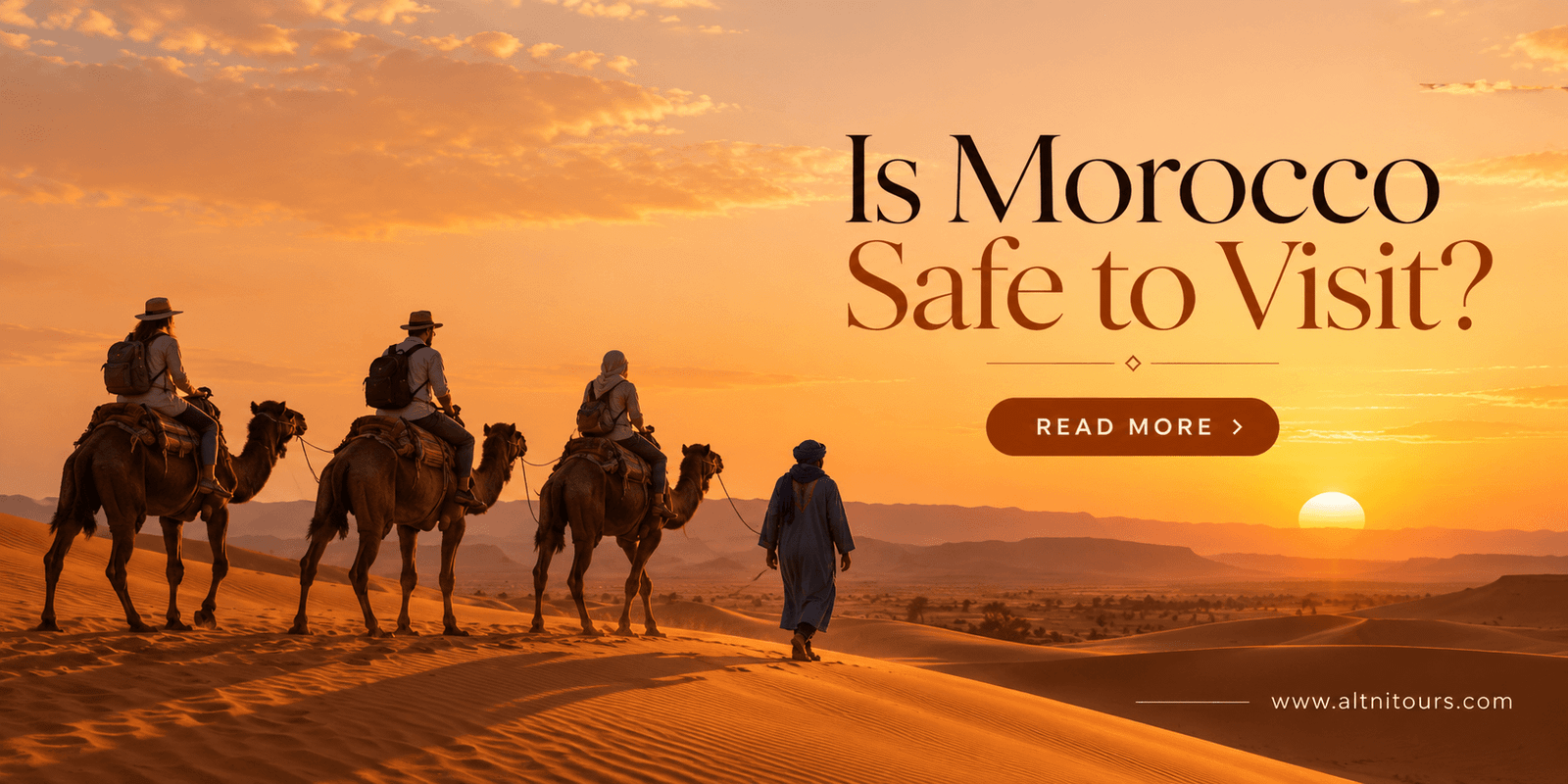
Good Planning Makes the Desert Feel Simple
Know your route, accommodation, transport and daily pace before leaving the city, then enjoy the Sahara without constantly thinking about logistics.
For broader Morocco travel planning, see our Safe Travel to Morocco guide →
7, 10 & 14-Day Morocco Trips With the Sahara
The desert should fit the overall journey rather than forcing the rest of Morocco into whatever days remain.
A focused route can work, but keep expectations realistic. Prioritize Marrakech, southern landscapes and one desert night rather than trying to add Fes and northern Morocco as well.
One of the strongest first-trip structures. Travel south from Fes through the Middle Atlas, spend meaningful time around Merzouga, then continue through Todra, Dades and Aït Ben Haddou toward Marrakech.
Add Rabat, Chefchaouen or Essaouira while keeping enough time for Fes, Marrakech and a slower Sahara experience without turning every day into a transfer.
Explore our Morocco itineraries → or ask us to build a route around your preferred number of desert nights.
Morocco Sahara Desert Travel Guide FAQ
Is the Sahara Desert in Morocco worth visiting?
For travelers who enjoy landscapes, photography, quiet outdoor experiences or simply seeing a dramatically different part of Morocco, the Sahara can be one of the highlights of the trip. The journey works best when enough time is allowed for both the road and the desert itself.
Where should I go for the Sahara in Morocco?
Merzouga and the Erg Chebbi dunes are the classic choice for many first-time visitors. Southern routes through Zagora and Erg Chigaga provide another style of desert experience and work especially well in itineraries focused on the Drâa Valley and southern Morocco.
How many nights should I spend in Merzouga?
One night gives you the core desert experience, but two nights provides a more relaxed pace and time for additional activities, nearby villages, Rissani or simply enjoying the dunes without arriving and leaving immediately.
Can I reach a desert camp without riding a camel?
Yes. Many camps can arrange 4×4 transportation for travelers who prefer not to ride or who have mobility concerns. Ask about transfer options when choosing your camp or tour.
What should I wear for a camel ride?
Wear comfortable trousers or other flexible clothing, secure footwear, sunglasses and sun protection. A scarf is useful for sun, wind and dust, and a warm layer may be necessary in cooler seasons.
Does it get cold in the Sahara at night?
Yes, particularly during winter. The temperature can feel very different after sunset and around sunrise, so bring layers even if the daytime feels warm.
Is Merzouga the same as the Sahara Desert?
Merzouga is a village at the edge of Erg Chebbi and serves as a major gateway to Morocco’s Sahara experience. Erg Chebbi is the nearby dune field where many camel treks and desert camps operate.
Is Agafay the Sahara Desert?
No. Agafay is a rocky desert landscape near Marrakech and is excellent for short excursions, dinners and camps, but it does not offer the large Saharan dune environment of Erg Chebbi or Erg Chigaga.
Should I visit the Sahara from Marrakech or Fes?
Both work well. The Marrakech route naturally includes the High Atlas, Aït Ben Haddou, Ouarzazate, Dades and Todra. The Fes route travels through the Middle Atlas, Midelt, Ziz Valley, Erfoud and Rissani.
Can children visit the Sahara Desert in Morocco?
Yes. Many families enjoy the dunes, camel rides and desert camps. Choose realistic driving days, appropriate weather conditions and accommodation that suits your family’s comfort needs.
What activities can I do in Merzouga?
Popular experiences include camel trekking, sunrise and sunset walks, sandboarding, 4×4 desert excursions, photography, visiting Rissani and exploring the wider desert region.
What is the best way to include the Sahara in a Morocco itinerary?
For many first-time travelers, a Fes-to-Merzouga-to-Marrakech route works especially well because it creates a natural journey through the Middle Atlas, Sahara, Todra, Dades, Aït Ben Haddou and High Atlas without backtracking.
Build the Sahara Into Your Morocco Journey
Altni Tours can connect the Sahara with Fes, Marrakech, the Atlas Mountains, historic kasbahs and Morocco’s valleys in a private route designed around your dates and preferred pace. Tell us whether you want one desert night, two nights or a deeper southern journey and we will shape the rest of the itinerary around it.
PLAN MY MOROCCO DESERT TRIP
[…] Read our complete Morocco Sahara Desert Travel Guide → […]
[…] Read the Morocco Sahara Desert Travel Guide → […]
[…] FROM THE SOUKS TO THE SAHARA […]