
Moroccan Spices are one of the defining elements of Moroccan cooking, adding warmth, aroma, color and complexity to everything from slow-cooked tagines to soups, grilled meats and traditional pastries.
This Moroccan Spice Guide explains the traditional Moroccan spices travelers are most likely to see in markets and taste in local cooking, from everyday cumin and ginger to saffron and Ras El Hanout.
The secret of Moroccan seasoning is not simply using many spices. It is knowing which flavors complement each other, how strongly they should be used and which ingredients belong in a particular dish.
Cumin, ginger, turmeric, paprika, cinnamon, black pepper, saffron and coriander are among the most recognizable flavors. Ras El Hanout adds complexity through a blend of spices, while harissa is used when stronger chili heat is wanted.
Moroccan Spices: Quick Guide to 12 Essential Flavors
Traditional Moroccan spices are normally chosen according to the dish rather than used as one universal seasoning mix. A chicken tagine may need a different balance from grilled lamb, couscous or pastilla.
| Spice or Flavor | Flavor Profile | Common Uses |
|---|---|---|
| Cumin | Earthy & warm | Tagines, meat, vegetables and soups |
| Ginger | Warm & aromatic | Chicken, meat, tagines and soups |
| Turmeric | Mild & earthy | Tagines, sauces and color |
| Paprika | Sweet & warm | Meat, fish, marinades and vegetables |
| Cinnamon | Sweet & woody | Pastilla, meat, desserts and pastries |
| Black Pepper | Sharp & warm | Everyday seasoning and meat dishes |
| Saffron | Delicate & floral | Special tagines and selected sauces |
| Coriander | Citrusy & aromatic | Meat, vegetables and marinades |
| Anise | Sweet & fragrant | Breads, biscuits and pastries |
| Nutmeg | Warm & sweet | Selected savory dishes and pastries |
| Ras El Hanout | Complex & aromatic | Tagines, meat and couscous |
| Harissa | Hot & savory | Condiment, marinades and sauces |
What Makes Moroccan Spices Different?
The character of Moroccan cooking comes from balance rather than simply intensity. Many dishes have several spices working together, but none needs to overpower the food.
Cumin brings earthiness. Ginger contributes warm aroma. Turmeric adds golden color. Cinnamon creates sweetness and depth. Saffron provides a more delicate floral note, while black pepper adds a sharper warmth.
This layering explains why Moroccan food can taste richly seasoned without being excessively hot.

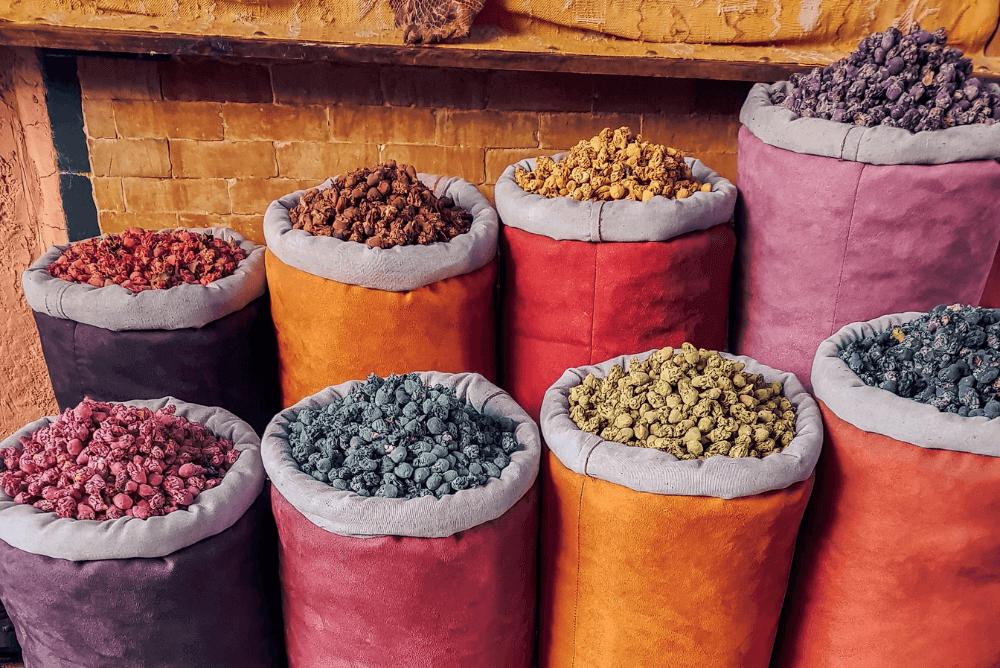
Colorful spice displays are common in Moroccan markets, but aroma, freshness and culinary purpose matter more than appearance alone.
Cumin — Earthy & Essential
Cumin is one of the most recognizable spices in Morocco. Its earthy, slightly bitter warmth works naturally with meats, vegetables, legumes and soups.
It is frequently combined with paprika, coriander, ginger or pepper, which makes it useful both as an everyday seasoning and as part of more complex mixtures.
Whole cumin seeds retain their aroma well, while ground cumin is convenient for mixing directly into marinades and sauces.

Cumin provides the warm, earthy character found in many savory Moroccan preparations.
Ginger — Warm & Aromatic
Ginger contributes warmth without necessarily adding chili-like heat. Ground ginger is particularly common because it blends smoothly into sauces and slow-cooked dishes.
It is especially compatible with poultry, lamb and other meat dishes, often appearing alongside turmeric, black pepper or saffron.
When used carefully, ginger supports the other spices rather than announcing itself as a separate dominant flavor.

Ground ginger is an important warm seasoning in many traditional Moroccan meat and poultry dishes.
Turmeric — Golden Color & Gentle Earthiness
Turmeric is easily recognized by its intense yellow-gold color. Its flavor is comparatively mild, allowing it to work as a supporting spice alongside ginger, pepper and other seasonings.
It is commonly used in tagines, sauces and savory preparations where cooks want both color and a subtle earthy background.

Turmeric contributes one of the characteristic golden tones seen in Moroccan spice displays and cooked dishes.
Paprika — Warm Red Color & Gentle Pepper Flavor
Paprika gives many savory dishes a rich red color while adding a mild pepper character.
It can be used with meat, fish, vegetables and marinades and often pairs naturally with cumin, garlic and coriander.
Travelers shopping in Moroccan markets should not automatically assume every red powder is hot. Ask whether the paprika is sweet, hot or part of a prepared blend.
Cinnamon — Sweet, Warm & Surprisingly Savory
Cinnamon illustrates the sweet-savory balance found in Moroccan cooking. It can flavor pastries and desserts, but it can also appear in meat dishes and pastilla.
When combined with almonds, dried fruit or savory meat, cinnamon creates a depth that is very different from its familiar role in Western desserts.
The spice should usually support the dish rather than overpower it, especially in savory cooking.

Cinnamon helps connect Morocco’s savory and sweet culinary traditions.
Black Pepper — Everyday Warmth
Black pepper may be less visually dramatic than saffron or turmeric, but it is an important everyday seasoning.
Its sharp warmth strengthens sauces, meat dishes and spice combinations. It works particularly well with ginger, turmeric and cumin.
Good seasoning is often about balance, and pepper is one of the spices that helps connect several other flavors without becoming the main attraction.
Saffron — Morocco’s Most Precious Spice
Saffron is prized because of its aroma, color and labor-intensive production. The usable threads come from the stigma of the saffron crocus and are collected in very small quantities.
In Morocco, the area around Taliouine is especially associated with saffron production. This connection between ingredient and place makes saffron particularly interesting for travelers who want to understand Moroccan food beyond restaurant menus.
Only a small amount is normally required in cooking. Saffron may appear in special tagines, sauces and dishes where a more delicate aroma is wanted.

Moroccan saffron is strongly associated with the Taliouine region and is best purchased in small, carefully inspected quantities.
Coriander — Citrusy & Aromatic
Coriander seed has a warm, slightly citrus-like aroma and works naturally with cumin, paprika and other savory spices.
Ground coriander can appear in marinades, meat dishes and vegetable preparations.
Fresh coriander leaves are also important in Moroccan cooking, but they provide a brighter herbal quality that is different from the dried seed.
Anise — Sweet & Distinctively Fragrant
Anise has a recognizable licorice-like fragrance. Because the flavor is distinctive, only a modest amount is normally needed.
It is particularly suited to Moroccan breads, biscuits and selected pastries rather than being treated as an everyday tagine seasoning.
Anise is a good example of why Moroccan spices should not all be mixed together automatically. Each spice has its own role.
Nutmeg — Concentrated Warmth
Nutmeg has an intense warm and slightly sweet aroma, which means it is normally used sparingly.
It can appear in selected savory dishes, spice blends and pastries. Whole nutmeg can be grated when needed, helping preserve its aroma until use.

Nutmeg is usually used in small quantities because its warm aromatic flavor is highly concentrated.
Ras El Hanout — Morocco’s Famous Spice Blend
Ras El Hanout is one of the best-known Moroccan spice blends and varies from one spice shop to another.
There is no single mandatory recipe. Depending on the seller or household, a blend may include cumin, coriander, cinnamon, ginger, turmeric, pepper, nutmeg and other aromatic spices.
That variation is part of the appeal. Two packages labeled Ras El Hanout can have noticeably different aromas and flavor profiles.
It is commonly used when a cook wants a more complex seasoning profile for meat, tagines, couscous or other savory dishes.

No two Ras El Hanout blends need to be exactly alike, so ask which ingredients are included before buying.
Harissa — The Hotter Side of North African Flavor
Harissa is technically a chili paste rather than a dry spice, but it belongs in this guide because it represents a much hotter flavor profile than most of the spices above.
Chili peppers are combined with seasonings, garlic and oil to make a concentrated condiment or cooking ingredient.
Harissa can accompany food or be added to marinades and sauces. Because the heat level varies, start with a small amount before adding more.

Harissa adds stronger chili heat when a Moroccan or North African dish needs a more intense spicy accent.
Where Do Bay Leaves Fit?
Bay leaves are not included in the twelve-feature list because they function as aromatic leaves rather than a ground spice, but they may still appear in Moroccan kitchens and spice shops.
They can be added whole to soups, sauces and slow-cooked dishes, allowing the aroma to infuse the food before the leaves are removed.

Moroccan spice shops may sell aromatic leaves alongside seeds, powders and prepared spice blends.
How Moroccan Spices Are Used in Traditional Dishes
Understanding spices individually is useful, but Moroccan cooking becomes much easier to understand when you see how several seasonings work together in a finished dish.
Depending on the recipe, ginger, turmeric, cumin, paprika, pepper, saffron or cinnamon may be used in different combinations.
Spices season the vegetables, meat and broth that accompany the steamed semolina rather than functioning as a topping alone.
Ginger, black pepper and other aromatics help support the tomato, lentil, chickpea and herb base.
Cinnamon is part of the dish’s distinctive balance between savory filling, almonds and sweet finishing notes.
Cumin, paprika, coriander and pepper can be used in seasoning or marinades.
Cumin, turmeric, paprika and coriander add depth without requiring strong chili heat.
If you want to explore the dishes themselves, continue with our Moroccan Cuisine Guide →
How to Buy Moroccan Spices in a Souk
Shopping for spices in Morocco is most useful when you know what each spice smells like, how it is used and whether you are buying a single spice or a prepared blend.
Market displays can be visually impressive, but color alone is not a reliable way to judge what you are buying. Ask questions, smell the spice and buy an amount you can realistically use.

Traditional markets are a good place to compare spices, ask how blends are used and learn about ingredients before buying.
Do not rely only on the appearance of a powder. Confirm exactly what spice or blend you are looking at.
A good seller should be able to explain whether a spice is commonly used with meat, fish, vegetables, bread or another dish.
Aroma is part of the experience and can help you compare similar products.
Ground spices gradually lose aroma, so a small amount that you actually use can be better than a large souvenir package.
If you are buying Ras El Hanout, ask which individual spices are included.
Inspect the threads, ask about origin and buy small quantities rather than relying on a sales description alone.
How to Recognize Fresh Moroccan Spices
Spices gradually lose aromatic intensity after grinding and exposure to air. When comparing products, pay attention to smell, texture and how the spice is being stored.
A spice should usually have a clear characteristic smell rather than almost no aroma at all.
Excessive heat, moisture and prolonged exposure to air can reduce quality.
Whole seeds and spices generally hold their aroma longer than already-ground versions.
Buy enough to enjoy at home, but not so much that the spice sits unused for years.
Whole Spices vs Ground Spices
| Type | Main Advantage | Best Approach |
|---|---|---|
| Whole Seeds | Retain aroma longer | Grind small amounts when needed |
| Ground Spices | Convenient and ready to use | Buy modest quantities |
| Saffron Threads | Can be inspected visually | Buy carefully in small amounts |
| Ras El Hanout | Ready-made complex blend | Ask what the mixture contains |
Not Everything in a Spice Shop Is a Cooking Spice
Moroccan spice shops can contain more than culinary ingredients. Dried herbs, petals, incense, aromatic products and traditional household items may sit beside cumin, saffron and Ras El Hanout.
This is another reason to ask the seller to identify a product before assuming it belongs in food.
Ask which products are culinary spices and which are herbs, fragrances or other traditional market goods.
How to Store Moroccan Spices at Home
The best Moroccan spices will not stay aromatic forever. Once you return home, good storage helps protect them from heat, moisture, air and strong light.
Close jars or containers properly after every use.
Avoid storing spices directly above the stove or beside another heat source.
Moisture can affect both aroma and texture.
If you buy several mixtures, write down their names and suggested uses while you still remember them.
Moroccan Spices Work With More Than Other Spices
Good Moroccan cooking also depends on ingredients such as preserved lemons, olives, fresh herbs, olive oil, onions, garlic, dried fruit and nuts.
This is why the same cumin or cinnamon can taste completely different depending on the recipe. The final flavor comes from the relationship between spice, ingredient and cooking technique.
Moroccan Spices FAQ
What are the most common Moroccan spices?
Common Moroccan spices include cumin, ginger, turmeric, paprika, cinnamon, black pepper, saffron and coriander. Ras El Hanout is also one of Morocco’s most recognizable spice blends.
Are Moroccan spices hot?
Not necessarily. Moroccan cooking is often aromatic and warmly seasoned rather than intensely hot. Chili-based ingredients such as harissa can add stronger heat when desired.
What is Ras El Hanout?
Ras El Hanout is a spice blend associated with Moroccan and North African cooking. Its ingredients vary and may include cumin, coriander, cinnamon, ginger, turmeric, pepper, nutmeg and other aromatic spices.
What spices are used in Moroccan tagine?
The combination depends on the recipe, but ginger, turmeric, cumin, paprika, black pepper, saffron and cinnamon may all appear in different Moroccan tagines.
What spice gives Moroccan food a yellow color?
Turmeric commonly contributes a yellow-gold color, while saffron can also provide golden coloring together with its distinctive aroma.
Is saffron grown in Morocco?
Yes. The area around Taliouine in southern Morocco is particularly associated with Moroccan saffron production.
What does cumin taste like?
Cumin has an earthy, warm and slightly bitter flavor. It is commonly used in savory Moroccan dishes involving meat, vegetables, legumes and soups.
Is cinnamon used in savory Moroccan food?
Yes. Cinnamon can appear in savory and sweet-savory dishes, including pastilla and selected meat dishes with dried fruit.
Is harissa a Moroccan spice?
Harissa is a North African chili paste rather than a dry spice. It can be used as a condiment or cooking ingredient when stronger chili heat is wanted.
How should I buy spices in Morocco?
Ask exactly what the spice is, smell it, buy realistic quantities and ask how it is traditionally used. For blends such as Ras El Hanout, ask which ingredients are included.
Should I buy whole or ground Moroccan spices?
Whole spices generally retain their aroma longer, while ground spices are more convenient. If buying ground spices, choose quantities you are likely to use while they are still aromatic.
How should Moroccan spices be stored?
Keep spices in airtight containers in a cool, dry and dark location away from heat, moisture and direct sunlight.
What Moroccan spices make good souvenirs?
Cumin, paprika, saffron and Ras El Hanout can make practical culinary souvenirs, especially when you know how you plan to use them after returning home.
Explore Moroccan Spices Where They Come to Life
Discover Morocco’s medinas, traditional markets and regional cuisine on a private journey designed around the places and experiences that interest you most.
PLAN MY MOROCCO TRIP VIEW MOROCCO ITINERARIES