Moroccan Street Foods offer one of the easiest ways to understand the country beyond monuments, hotels and formal restaurants. Walk through a medina in the morning and you may smell msemen browning on a hot griddle. Return in the evening and the same neighborhood can be filled with smoke from grills, bowls of harira, sizzling potato cakes, fresh bread, seafood and glasses of orange juice being squeezed to order.
Some of the most memorable things to eat in Morocco are remarkably simple. They are foods designed for everyday life: bread that can become breakfast or a sandwich, soup that feels comforting after a long day, sardines cooked quickly near the coast, olives sold in colorful market displays, or a warm piece of layered msemen eaten with honey and mint tea.
This updated guide takes a deeper approach than a basic list. We will explore 12 Moroccan street foods, what they taste like, who is most likely to enjoy them, when Moroccans often eat them, and where travelers are most likely to encounter them. You will also find a quick food picker, city recommendations, practical street-food tips, vegetarian ideas and a FAQ for first-time visitors.
Think of it as your edible introduction to Morocco: part market guide, part tasting checklist and part invitation to slow down and notice what locals are eating around you.

Which Moroccan Street Food Should You Try First?
If twelve foods feel like a lot to choose from, start with the category that sounds most like you.
12 Moroccan Street Foods Travelers Should Try
There is no rule saying you need to try everything. A better approach is to treat Moroccan street food as part of the journey: taste a little in each city, follow the crowds, notice regional differences and leave room for something you had never planned to order.

Msemen — Morocco’s Layered Griddle Bread
Msemen is one of the easiest introductions to Moroccan Street Foods. The dough is folded repeatedly into thin layers, flattened and cooked on a hot griddle until the outside develops golden patches while the inside stays soft and pleasantly chewy.
You may encounter it early in the morning, during afternoon tea or at small neighborhood stands where the vendor cooks each piece directly in front of you. It can be served simply, spread with butter and honey, paired with cheese, or prepared with savory fillings. The experience is less about an elaborate recipe and more about texture: crisp edges, tender layers and the unmistakable aroma of dough hitting a hot cooking surface.
For a first-time visitor, msemen is especially useful because it feels familiar enough to be approachable while still being distinctly Moroccan. Pair it with mint tea or coffee and you have a simple breakfast that fits naturally into a morning exploring the medina.

Watch It Being Cooked
Part of the appeal is seeing msemen prepared in real time. At a busy stall, several squares may cook at once while fresh dough waits nearby. Watching the folding, stretching and flipping turns an ordinary snack into one of those small travel moments that helps you remember a place.

Maakouda — Crispy Potato Cakes
Maakouda proves that some of the best street foods are also the simplest. These potato patties are typically seasoned with ingredients such as cumin, herbs, garlic or onion before being cooked until the outside becomes golden and the center remains soft.
They are frequently eaten alone as a snack, but one of the most satisfying ways to try them is inside bread with sauce, salad or other fillings. That combination turns an inexpensive potato cake into a substantial street sandwich.
Maakouda is especially useful for travelers looking for a meat-free option. Ingredient preparation varies from stall to stall, so travelers with strict dietary needs should still ask what has been used, but the basic idea is wonderfully straightforward: seasoned potatoes, crisp exterior and a soft interior.

Harira — The Bowl That Feels Like a Meal
Harira is one of Morocco’s most recognizable soups and an important part of the food culture surrounding Ramadan, although travelers can encounter it throughout the year. Recipes vary, but tomato, lentils, chickpeas, herbs, spices and a thickened broth commonly form the foundation.
What makes harira particularly appealing to a traveler is how different it feels from eating in a formal restaurant. Sit down at a simple local eatery, order a bowl and you are experiencing food that belongs to everyday Moroccan life rather than a dish created specifically for tourists.
It is filling without feeling overly heavy, making it an excellent option after hours of walking through a medina. During Ramadan, the association becomes even more meaningful because harira is closely linked with the meal that breaks the daily fast.

Brochettes & Merguez — Follow the Smoke
Sometimes the easiest way to find dinner is simply to follow the smell of a grill. Small skewers of seasoned meat—often described as brochettes—and spicy North African merguez-style sausages are among the most satisfying options for travelers who prefer savory, smoky street food.
The appeal is immediacy. Meat goes onto the grill, smoke rises into the market air, bread is cut open and within minutes you have something hot and substantial in your hands. Depending on the vendor, grilled meat may be served on a plate or tucked inside khobz with vegetables, sauce or seasoning.
This is also where the atmosphere matters. A grill surrounded by local customers feels very different from sitting in a quiet restaurant. You hear orders being called, watch food being prepared and see what other people choose before deciding for yourself.

Babbouche — Snails in Fragrant Broth
Babbouche is for the traveler who wants at least one story to take home. Snails are simmered in an aromatic broth and served from street carts, particularly in busy medina areas. The broth can be as much a part of the experience as the snails themselves.
For someone unfamiliar with eating snails, the appearance can be more challenging than the flavor. The seasoning and hot broth create an aromatic, warming snack, and part of the fun is simply taking part in something you may never order in your normal routine at home.
This is not the dish to force yourself to try merely because it appears on a checklist. But if the idea intrigues you, a small bowl is enough to understand why babbouche has become one of the most recognizable adventurous foods associated with Moroccan market life.

Sardines — A Moroccan Seafood Essential
Sardines deserve a prominent place on any Moroccan food itinerary. You may encounter them grilled, fried or prepared with a flavorful chermoula-style mixture of herbs and spices. They can be eaten as a simple plate, tucked into bread or paired with other small dishes.
They make particular sense on a coastal route. In places such as Essaouira, eating seafood close to the Atlantic becomes part of the destination itself. The food feels connected to where you are rather than simply being another item on a menu.
If you usually avoid sardines because you only know the canned version, Morocco may completely change your impression. Freshly cooked fish with lemon, herbs and seasoning is a very different experience. Take your time while eating, as small bones can still be present.

Khobz — The Bread Behind Everyday Moroccan Eating
Khobz is not merely something served beside the meal. Moroccan bread is part of how many dishes are actually eaten. Pieces can be torn off and used to scoop salads, tagines or sauces, while street vendors and small cafés turn bread into quick sandwiches filled with eggs, grilled meat, cheese, vegetables or fried potato patties.
Fresh bread is a recurring feature of neighborhood life. Bakeries, shared ovens and bread stalls help make it one of the foods visitors see repeatedly rather than only once during a special dinner.
This is why khobz belongs in a guide to Moroccan Street Foods. It connects multiple foods on this list. Brochettes become a sandwich with bread. Maakouda becomes more filling. Olives, cheese or honey become a simple snack. Something as ordinary as bread helps explain how Moroccans eat.

Street Sandwiches: Morocco’s Flexible Fast Food
Sandwich stalls let you combine several flavors in one inexpensive meal. Fillings can vary widely, which is part of the appeal. Rather than searching for one supposedly “authentic” sandwich, look at what is being prepared fresh and choose a combination that sounds good to you.
Loubia & Lentils — Humble, Filling and Full of Flavor
Not every memorable Moroccan meal needs to be photogenic. Loubia—white beans cooked in a seasoned tomato-based sauce—and simple lentil dishes are exactly the kind of everyday foods that travelers can overlook while chasing famous tagines and elaborate restaurant meals.
That would be a mistake. Beans and lentils offer warmth, flavor and excellent value, especially when eaten with fresh bread. They are also useful for travelers trying to add more meat-free meals to a Morocco itinerary.
Seasoning varies by cook, so one bowl may lean heavily into cumin and tomato while another feels more herbal or spicy. That variation is part of why local eating stays interesting. If you notice a small establishment filled with people eating bowls of beans, lentils or soup at lunchtime, it can be worth taking a closer look.

Olives — Taste Before You Choose
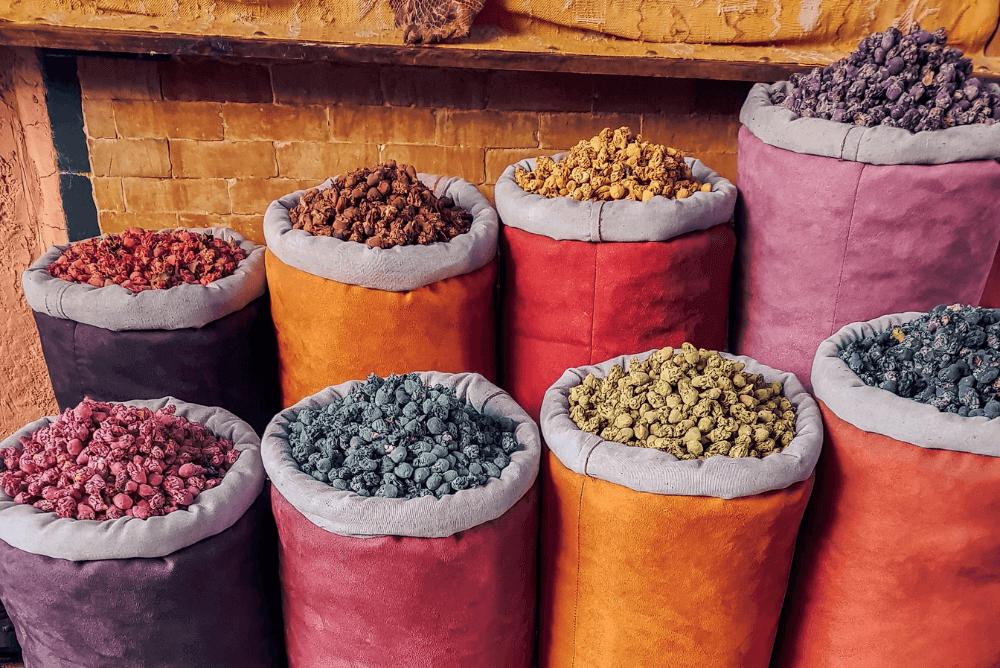
Few market displays are as colorful as a Moroccan olive stall. Green, purple, black and seasoned varieties may be arranged beside preserved lemons, peppers and spice mixtures. Some taste mild and salty, others lemony, herby or surprisingly spicy.
Unlike a full street-food meal, olives work beautifully as a tasting experience. Buy a small quantity for a snack, add them to a picnic-style lunch or simply try a few varieties before deciding what you like.
The visual side of the experience matters too. Food markets are part taste and part theater, and olive displays are one of the best examples. They show how ingredients used in Moroccan homes become part of the atmosphere travelers associate with medinas and souks.

Sweet Snacks — Peanuts, Nougat, Chebakia & More
Moroccan street eating is not exclusively savory. Markets and neighborhood vendors may offer nuts, nougat, pastries and other small sweets that work perfectly when you want something portable rather than a full dessert.
Sugared or caramelized nuts are especially easy to snack on while walking. In some areas, travelers may encounter colorful nougat, while during Ramadan and around certain celebrations, honeyed pastries such as chebakia become particularly visible.
Chebakia is recognizable by its folded flower-like shape, sesame seeds and glossy honey coating. It is rich, so a small amount goes a long way, especially when paired with tea. The broader lesson is not to search only for one specific dessert. Look at the sweets people are buying around you and try a small portion.
Sfenj — Morocco’s Hot, Airy Doughnut
Sfenj is another street snack worth watching for, especially in the morning. These ring-shaped pieces of dough are fried until the exterior develops a deep golden color while the center stays light and chewy.
Compared with a heavily glazed Western-style doughnut, sfenj is often much simpler. That simplicity makes it excellent with tea or coffee and allows you to notice the contrast between the crisp fried exterior and airy center.
The best experience is usually when it is eaten fresh and hot. If you see a vendor actively frying sfenj and people waiting for a batch, that is a much more tempting proposition than one that has been sitting around.

Fresh Orange Juice — Simple but Memorable
A glass of orange juice may sound too ordinary to deserve a place beside harira, sardines and babbouche, but fresh juice has become part of the classic Morocco market experience for good reason.
Stalls stacked with oranges are especially recognizable in busy visitor areas. Watching the fruit being squeezed in front of you is part of the appeal, particularly on a warm afternoon after hours of walking.
This is one of the easiest items on the list for almost any traveler to try. It requires no explanation, no adventurous ingredients and no commitment to a full meal. Yet the combination of freshness, setting and simplicity often makes it surprisingly memorable.
If you are exploring Marrakech, a fresh juice stop can also provide a natural break before continuing through the market or returning to the medina.
Moroccan Street Foods at a Glance
| Food | Style | Best For | Typical Moment |
|---|---|---|---|
| Msemen | Layered griddle bread | First-time tasters | Breakfast / tea |
| Maakouda | Potato cake | Vegetarian snack | Lunch / snack |
| Harira | Hearty soup | Comfort food | Lunch / dinner |
| Brochettes & Merguez | Grilled meat | Meat lovers | Lunch / evening |
| Babbouche | Snails & broth | Adventurous eaters | Market snack |
| Sardines | Grilled or fried fish | Seafood lovers | Lunch |
| Khobz | Moroccan bread | Everyone | Any time |
| Loubia | Seasoned beans | Vegetarian comfort food | Lunch |
| Olives | Market snack | Light tasting | Any time |
| Sweet Snacks | Nuts & pastries | Sweet tooth | Afternoon |
| Sfenj | Fried dough | Breakfast snack | Morning |
| Orange Juice | Fresh drink | Quick refreshment | Daytime |
Best Places to Explore Moroccan Street Food
You can find street and casual food throughout Morocco, but the character changes from city to city. Rather than trying to declare one place the absolute “best,” use each destination to taste something that fits the local setting.
The evening food scene is part of the spectacle. Grills, soup, juice and busy food stalls make this one of Morocco’s most recognizable places for casual eating.
Fes rewards travelers who look beyond formal dining. Bread, msemen, soups, sandwiches and small local eateries fit naturally into a day exploring the medina.
The Atlantic setting makes fish especially appealing. Sardines and other seafood choices feel connected to the city rather than added simply for visitors.
Larger cities provide plenty of bakeries, sandwich shops, grills and neighborhood restaurants where travelers can experience everyday Moroccan eating away from major tourist squares.
How to Choose a Street Food Stall
Trying Moroccan Street Foods should feel adventurous in a good way. A few practical habits can make the experience easier, especially when you are unfamiliar with a market.
Vegetarian Moroccan Street Food Options
Vegetarian travelers do not need to sit out the street-food experience. Maakouda, msemen, olives, beans, lentils, fresh bread and many sweet snacks can provide plenty of variety. Some sandwiches may also be made with eggs, potatoes, cheese or vegetables.
The important point is to ask rather than assume. A vegetable-looking soup or bean dish can still be prepared with meat stock or animal fat depending on the cook. If your diet is strict, communicating clearly is more reliable than judging ingredients by appearance alone.
Simple foods where the main ingredients are usually easy to recognize.
Excellent options, but preparation can vary and may include ingredients not immediately visible.
Moroccan Street Food During Ramadan
Ramadan changes the daily rhythm of food in Morocco. During daylight hours, some food businesses operate differently, while the period around sunset becomes especially important as families and communities prepare to break the fast.
Harira is closely associated with this moment, and travelers may also notice increased availability of dates, breads, pastries and sweets such as chebakia. Rather than treating Ramadan simply as a limitation, it can offer valuable cultural context for understanding how food, family and tradition connect.
Be patient with changed schedules and allow your hotel, riad or local guide to advise you about what is open and when. Evening streets can become particularly lively after the fast has been broken.
Moroccan National Tourist Office — Gastronomy →
Continue Exploring Morocco
Moroccan Street Foods FAQ
What are the best Moroccan street foods to try?
Good first choices include msemen, maakouda, harira, grilled brochettes, khobz, sardines, olives and fresh orange juice. More adventurous travelers may also want to try babbouche, while those with a sweet tooth can explore sfenj, chebakia, nougat and sugared nuts.
Where can I find Moroccan street food?
Street and casual food can be found throughout Morocco. Marrakech, Fes, Essaouira, Casablanca and Rabat all offer different experiences. Jemaa el-Fna in Marrakech is particularly famous for its evening food stalls, while coastal cities are excellent places to explore seafood.
Is Moroccan street food suitable for first-time visitors?
Yes. Start with familiar foods such as msemen, potato maakouda, bread, grilled meats or fresh orange juice. You can gradually move toward more unfamiliar dishes as you become comfortable with the local food scene.
What Moroccan street foods are vegetarian?
Potential vegetarian options include msemen, maakouda, olives, bread, loubia, lentils, sfenj and many sweets. Recipes vary, so travelers following a strict vegetarian diet should ask how soups, beans and other dishes were prepared.
Is harira only eaten during Ramadan?
No. Harira has an especially important connection with Ramadan and breaking the fast, but it can also be found at other times of the year in restaurants and casual eateries.
What Moroccan street food should I try for breakfast?
Msemen and sfenj are excellent choices. Msemen can be served with honey, butter, cheese or savory fillings, while freshly fried sfenj pairs well with tea or coffee.
What should seafood lovers try in Morocco?
Sardines are an excellent starting point and may be grilled, fried or prepared with herbs and spices. Coastal destinations such as Essaouira are especially appealing for travelers who enjoy fresh fish.
How do I choose a good street-food stall?
Look for busy stalls with steady turnover, observe cleanliness, choose foods cooked fresh when possible and notice where local customers are eating. If you have a serious allergy or dietary restriction, ask about ingredients before ordering.
What is babbouche?
Babbouche is a Moroccan street-food dish of snails served in a fragrant hot broth. It is one of the more adventurous items travelers may encounter in medinas and market areas.
What is the easiest Moroccan street food for children?
Preferences vary, but simple foods such as bread, msemen, potato maakouda, fresh juice and some pastries are often more approachable than spicy or unfamiliar dishes.
Can Moroccan street food be part of a private tour?
Yes. Street-food stops can fit naturally into city tours and private itineraries. A local guide can also help explain unfamiliar foods, identify regional specialties and recommend places that match your preferences.
Build Food Experiences Into Your Morocco Journey
Great Morocco trips are not only about what you see. They are also about what you taste along the way. Altni Tours can help create a private itinerary that combines Morocco’s cities, landscapes and cultural experiences with time to explore local markets, traditional restaurants and everyday flavors.
PLAN MY MOROCCO TRIP