
Moroccan Orange Cake Recipe: Traditional Meskouta
Make a moist Moroccan Meskouta with fresh orange juice, fragrant zest, olive oil and yogurt using this easy step-by-step Moroccan orange cake recipe.
This Moroccan Orange Cake Recipe makes a soft, citrusy Meskouta with fresh orange juice, orange zest, olive oil and yogurt.
Moroccan home baking is often straightforward and practical, and Meskouta fits that tradition well. The ingredients are familiar, the batter comes together without complicated equipment, and the orange provides both aroma and bright citrus flavor.
In this version, Greek-style yogurt adds moisture while olive oil gives the cake a tender crumb. Fresh orange zest and juice are used directly in the batter—there is no need to boil the oranges.
Follow the eight main steps below and you will have a Moroccan Orange Cake Recipe suitable for dessert, an afternoon sweet or serving alongside Moroccan mint tea.
Mix only until the visible streaks of flour disappear. A few small lumps are fine. Overworking the batter can make the finished Meskouta denser than intended.
Moroccan Orange Cake Recipe: What Is Meskouta?
Meskouta is a style of Moroccan cake commonly prepared at home using simple pantry ingredients. Orange is one of the best-known variations because fresh citrus works naturally with the cake’s light, tender texture.
Unlike heavily decorated celebration cakes, Meskouta is often enjoyed simply. Its appeal comes from its aroma, texture and everyday versatility rather than elaborate frosting.
This version uses both the zest and juice of fresh oranges. The zest provides concentrated citrus fragrance while the juice contributes flavor and moisture.
Why Orange Works So Well in Moroccan Meskouta
Orange gives the cake flavor in two different ways. The zest carries fragrant citrus oils, while freshly squeezed juice adds brightness and liquid to the batter.
Adds concentrated aroma without adding excess liquid.
Adds natural citrus flavor and helps create a moist crumb.
Work with the citrus to give the cake a soft and tender texture.
Moroccan Orange Cake Recipe Ingredients
Measure everything before beginning so the batter can be mixed quickly without unnecessary overworking.
Ingredient Notes for This Moroccan Orange Cake Recipe
The ingredient list is straightforward, but several small details help produce a better Moroccan Orange Cake Recipe.
Use fresh oranges because the recipe relies on both zest and juice for its citrus character.
Grate only the orange-colored outer layer. Avoid excessive white pith because it can taste bitter.
Olive oil replaces solid butter in this version and helps keep the crumb moist.
Yogurt adds moisture and richness while working with the baking soda in the batter.
Once the wet and dry ingredients meet, mix gently rather than beating the batter aggressively.
Vanilla supports the orange aroma without overpowering the fresh citrus flavor.
Moroccan Orange Cake Recipe in 8 Easy Steps
Preheat the Oven
Heat the oven to 350°F / 175°C so it is fully heated before the cake batter goes into the oven.
Prepare the Loaf Pan
Grease an 8 1/2-by-4 1/2-inch loaf pan with olive oil. Line the pan with parchment paper and leave enough overhang on the sides to lift the cooled cake out easily.
Mix the Dry Ingredients
In a large bowl, whisk together the all-purpose flour, baking powder, baking soda and salt until evenly combined.
Whisk the Sugar and Eggs
In a separate large bowl, whisk the granulated sugar and eggs until the mixture is well combined.
Add Yogurt, Olive Oil and Orange
Add the Greek-style yogurt, olive oil, orange zest, fresh orange juice and vanilla extract to the sugar-and-egg mixture. Whisk until evenly incorporated.
Combine Wet and Dry Ingredients
Pour the wet ingredients into the dry ingredients. Fold gently with a spatula until you no longer see visible streaks of flour. The batter can remain slightly lumpy.
Transfer the Batter
Pour the batter into the prepared loaf pan and use a spatula to spread it into an even layer.
Bake and Cool
Bake for approximately 40 to 45 minutes. Allow the cake to cool completely on a wire rack before using the parchment overhang to lift it from the pan.
How the Finished Moroccan Meskouta Should Look
A properly baked Meskouta should develop an evenly golden exterior while the interior remains soft and moist.

Fresh orange juice, zest, yogurt and olive oil give this Moroccan orange cake its moist crumb and citrus flavor.
How Do You Know When Moroccan Orange Cake Is Done?
Begin checking the cake near the end of the recommended 40-to-45-minute baking window.
How to Serve Moroccan Meskouta
Let the cake cool completely before removing it from the pan. The parchment-paper overhang makes lifting easier and helps protect the loaf from breaking.
Cut the cooled Meskouta into approximately eight generous slices. The orange aroma and moist texture make it suitable for serving without heavy frosting.
It pairs naturally with Moroccan mint tea, coffee or another warm drink.
Moroccan Orange Cake Recipe Problems & Fixes
| Problem | What to Check | What to Do |
|---|---|---|
| Cake feels dense | Batter may have been overmixed | Fold only until the visible flour disappears |
| Center remains wet | Cake may need additional baking time | Continue baking briefly and test the center again |
| Top browns too quickly | Top heat may be strong | Tent the cake loosely with foil while the center finishes |
| Cake tastes bitter | Too much orange pith may have entered the zest | Grate only the colored outer peel |
| Cake sticks to pan | Pan may not have been prepared sufficiently | Grease with olive oil and use parchment paper with overhang |
| Orange flavor is weak | Zest or juice may be mild | Use fresh, aromatic oranges and zest immediately before mixing |
How to Store Moroccan Orange Cake
Allow the cake to cool completely before placing it in an airtight container. Trapping heat can create unwanted condensation.
Without additional cream toppings, this Meskouta can be kept covered at room temperature for several days.
For longer storage, wrap individual slices carefully before refrigerating or freezing so they are protected from drying out and absorbing other food aromas.
Discover More Moroccan Desserts
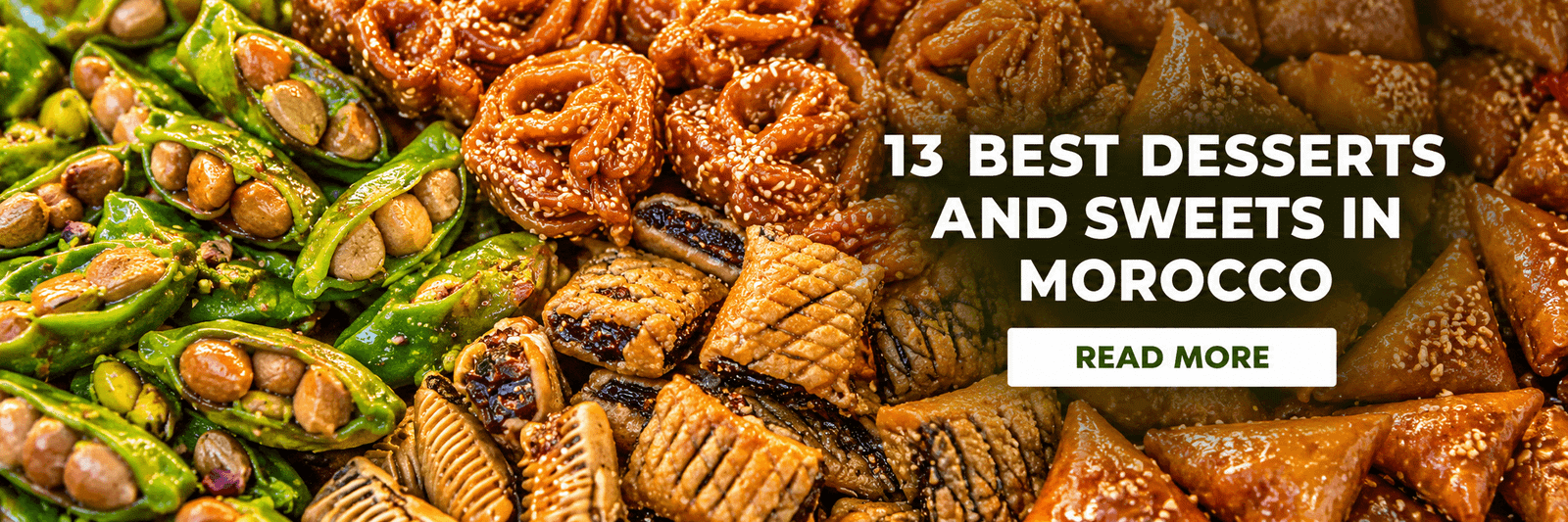
Moroccan Meskouta is only one of the country’s traditional sweets. Continue with our dessert guide to explore Chebakia, Ghoriba, Sellou and other Moroccan favorites.
Moroccan Meskouta Beyond the Recipe
A Moroccan Orange Cake Recipe is one small part of Morocco’s wider food tradition, which includes breads, pastries, sweets, tea, regional dishes and ingredients shaped by local agriculture and family cooking.
For additional information about Morocco’s culinary traditions, visit the Moroccan National Tourist Office gastronomy guide →
You can also read our Moroccan Cuisine Guide → for more ideas about what to taste during a Morocco journey.
From Moroccan Recipes to a Private Morocco Journey
Discover the places behind Morocco’s food culture while exploring medinas, markets, mountain landscapes and Sahara scenery on a private journey designed around your interests.

More Moroccan Recipes
Moroccan Orange Cake Recipe: Frequently Asked Questions
What is Moroccan Meskouta?
Meskouta is a Moroccan-style cake commonly prepared at home. Orange Meskouta is flavored with fresh orange zest and juice and is often served simply with tea or coffee.
Does this Moroccan Orange Cake Recipe use fresh oranges?
Yes. The recipe uses the zest of two oranges and approximately 1/3 cup of fresh orange juice.
Do I need to boil the oranges?
No. This version does not require boiled oranges. Fresh orange zest and freshly squeezed orange juice are mixed directly into the batter.
What temperature should I bake Meskouta at?
Bake this Moroccan orange cake at 350°F / approximately 175°C.
How long does Moroccan orange cake bake?
Bake the cake for approximately 40 to 45 minutes, checking the center toward the end of the baking time.
How do I know when Meskouta is done?
Insert a toothpick into the center. It should come out with only a few small moist crumbs rather than wet batter.
Why does this recipe use olive oil?
Olive oil supplies fat and moisture to the cake and helps produce a tender crumb without requiring solid butter.
Why is yogurt used in Moroccan orange cake?
Greek-style yogurt adds moisture and richness and contributes to the soft texture of the finished cake.
Should the batter be completely smooth?
No. After combining the wet and dry ingredients, mix only until the visible flour disappears. A slightly lumpy batter is acceptable.
How many servings does this recipe make?
This Moroccan Orange Cake Recipe makes approximately eight generous slices.
Can I serve Meskouta without frosting?
Yes. Meskouta can be served simply without frosting so the orange aroma and tender cake remain the focus.
What can I serve with Moroccan orange cake?
Moroccan orange cake pairs well with Moroccan mint tea, coffee or another warm drink.
Why did my Meskouta become dense?
Overmixing after the flour is added can contribute to a denser cake. Fold gently and stop once the flour is incorporated.
Can Moroccan orange cake be frozen?
Yes. Cool the cake completely, wrap slices carefully and freeze them in suitable airtight packaging to protect the cake from drying out.
Make This Moroccan Orange Cake Recipe at Home
A good Moroccan Orange Cake Recipe does not need complicated techniques. Fresh citrus, olive oil, yogurt and careful mixing are enough to create a flavorful Meskouta with a soft crumb.
Prepare the pan before mixing, keep the wet and dry ingredients separate until the final stage and avoid overmixing once the flour is incorporated.
After 40 to 45 minutes in the oven, cool the cake completely, slice it and enjoy it simply with tea or coffee.
Discover Morocco Beyond the Recipe
Explore Morocco’s medinas, cuisine, mountain landscapes and Sahara experiences on a private journey designed around your dates, interests and preferred travel pace.
PLAN MY MOROCCO TRIP VIEW MOROCCO ITINERARIES