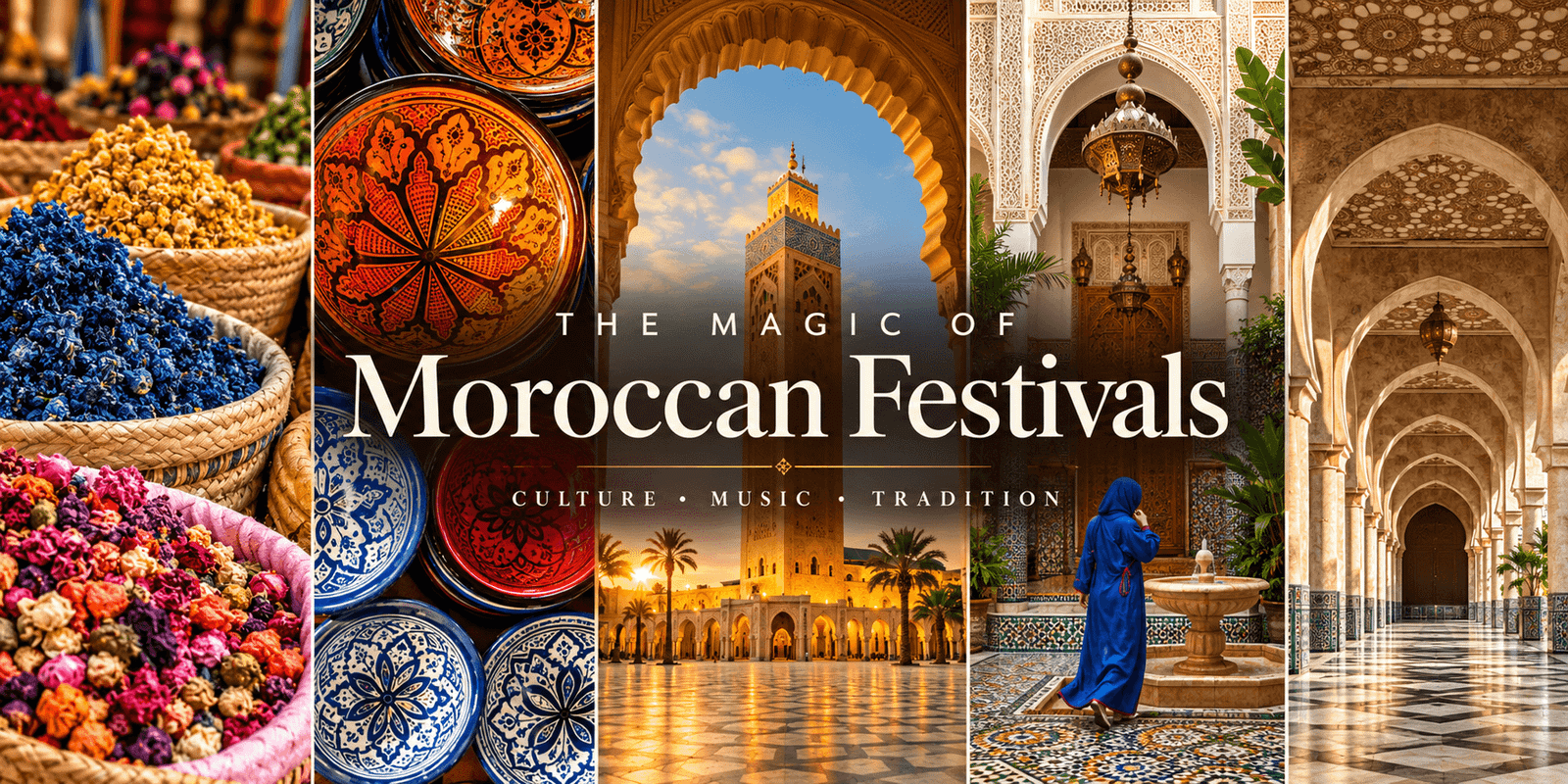
Moroccan Festivals: 12 Best Cultural Events & Celebrations
Moroccan festivals bring a different rhythm to a journey: music beside the Atlantic, roses in southern valleys, harvest celebrations in oasis towns, and cinema beneath the lights of Marrakech.
Discover where to go, which seasons to consider, and how to make a celebration part of a thoughtfully planned private Morocco journey.
Why Moroccan festivals belong in your itinerary
A city looks different when people gather to celebrate. A square becomes a stage; a familiar ingredient becomes the focus of a regional gathering; a traditional melody introduces you to a place more personally than a monument can.
Festivals in Morocco range from large international productions to community occasions shaped by agriculture, faith and local identity. A moussem is a traditional gathering that may combine religious observance, trade and cultural activities. Its character depends on the community, so it should not automatically be treated as a concert or tourist show.
The most rewarding approach is to choose an event that genuinely interests you and give its surroundings time, too. Listen in Fes, then explore its workshops. Enjoy Essaouira’s music, then spend a quiet morning by the harbor. Browse our private Morocco itineraries for a starting point.
Moroccan festivals at a glance
Use this overview to shortlist experiences before choosing travel dates. The seasons below are planning windows, not confirmed dates for an upcoming edition.
| Festival or celebration | Location | Typical timing | Main appeal |
|---|---|---|---|
| Fes Sacred Music | Fes | Often May–June; varies | Global musical traditions |
| Gnaoua & World Music | Essaouira | Usually June | Gnaoua and musical collaborations |
| Mawazine | Rabat & Salé | Often June | Major international performances |
| Timitar | Agadir | Check the edition | Amazigh and world music |
| Rose Festival | Kelaat M’Gouna | Usually May | Rose harvest and local culture |
| Almond Blossom Festival | Tafraoute area | Late winter–early spring; varies | Almond-growing heritage |
| Saffron Festival | Taliouine | Autumn, often November | Saffron and rural traditions |
| Imilchil Moussem | Imilchil / Bouzmou area | Often September | High Atlas community heritage |
| Date harvest celebrations | Erfoud / Tafilalet | Autumn; confirm local events | Dates and oasis agriculture |
| Marrakech Film Festival | Marrakech | Usually November–December | International cinema |
| Popular Arts Festival | Marrakech | Usually summer; varies | Traditional music and dance |
| Moussems & Tbourida | Various regions | Local calendars | Community gatherings and horsemanship |
Fes Festival of World Sacred Music
The Fes Festival of World Sacred Music invites you to listen across cultures. Its appeal lies in the meeting of different musical traditions and the setting of a city whose architecture, scholarship and craftsmanship reward a longer stay.
Choose performances from the actual program rather than assuming that every edition uses the same venues. A headline evening and a smaller daytime performance can offer very different experiences. Leave space between them for a meal and the journey across town.

Make it part of your trip: Allow several nights for music and the medina, then consider Meknes or another imperial city. Check the official Fes festival program before arranging your stay.
Gnaoua & World Music Festival, Essaouira
For travelers drawn to rhythm and collaboration, Essaouira is an excellent place to begin. The Gnaoua & World Music Festival brings Gnaoua masters and visiting musicians together, creating encounters between a deeply rooted Moroccan tradition and other musical worlds.
Plan your evenings around a few performances rather than trying to see everything. Keep daytime hours for the medina, galleries and waterfront. A coastal layer is useful when the evening breeze arrives, even after a bright afternoon.

Booking tip: Admission depends on the performance and access category. Review the official Gnaoua festival website and reserve accommodation once your dates are settled.
Mawazine: Rhythms of the World
Mawazine suits visitors who enjoy the scale and variety of a major music festival. Its programming spans Moroccan and international performers, with concerts across different stages rather than one single venue.
Choose your must-see artist first, then plan your hotel and evening transport around that stage. Two performances may look close together on a timetable but require a journey across the city. A relaxed daytime visit to Rabat balances a late concert night.
Best approach: Check the official Mawazine schedule for the lineup and ticket categories; do not assume one pass covers every concert.
Timitar Festival, Agadir
Timitar puts Amazigh music into conversation with artists from beyond the region. It offers a useful introduction to the musical identity of southern Morocco, especially for travelers spending time in Agadir and the Souss area.
Do not rely on older calendars that always place Timitar in summer: the 2025 edition took place in December. Confirm the edition you intend to attend before making the festival the centerpiece of your holiday.
Travel pairing: Combine concert evenings with quieter coastal time, or build a longer route toward Taroudant and the Anti-Atlas. Keep the morning after a late performance free.
Rose Festival, Kelaat M’Gouna
The Rose Festival connects celebration with the harvest around Kelaat M’Gouna. Roses are part of the region’s working landscape, and the festivities offer a reason to look beyond the scenery to the growers, products and traditions associated with them.
Browse rose products, enjoy the announced cultural program, and arrange a valley visit separately if you want to understand cultivation or distillation. Festival dates do not guarantee peak flowers in every field, and working farms are not automatically open to visitors.
Travel pairing: Add the valley to a route through Ouarzazate and the Dades area. A nearby overnight stay gives you more flexibility than a brief stop between long drives.
Almond Blossom Festival, Tafraoute
Tafraoute’s almond-growing landscape gives this celebration its identity. When blossom appears, pale flowers create a striking contrast with the rocky surroundings, making the area appealing to travelers who enjoy landscape photography and unhurried rural visits.
Separate two questions when planning: when the trees are likely to flower, and when an organized festival is confirmed. Weather affects blossom, while event schedules can change independently. Ask locally about both before committing to a date.
Best approach: Give Tafraoute time as a destination in its own right. Walks, village visits and the surrounding scenery can make the stay rewarding even if flowering is earlier or later than expected.
Saffron Festival, Taliouine
Taliouine is closely associated with saffron, a crop whose value becomes easier to understand when you learn about the labor behind it. The local festival brings attention to the growers and the regional economy around this distinctive ingredient.
A producer or cooperative visit can complement the event, but arrange it in advance. Harvest demonstrations and field access depend on the season and the host; they are not automatically included in a festival visit.
For food lovers: Ask about origin, storage and how to cook with saffron. Buying a small, clearly labeled quantity from a traceable producer is more meaningful than choosing on appearance alone.
Imilchil Marriage Festival & Moussem
Often called the Imilchil Marriage Festival, this gathering is better understood within its wider social and cultural setting. It is associated with local betrothal traditions, community exchange and the heritage of the High Atlas.
Visit with curiosity and respect rather than an expectation of staged weddings. Personal ceremonies are not visitor attractions. Ask before photographing people, and let a knowledgeable local guide explain which public activities are appropriate to attend.
Planning tip: Confirm the exact location and dates, reserve suitable lodging, and allow generous driving time. Mountain travel deserves its own place in the itinerary instead of being squeezed between distant cities.
Erfoud Date Festival & Harvest Season
Erfoud’s date-growing surroundings offer a delicious introduction to oasis life. During harvest season, dates provide a way to explore the relationship between local agriculture, markets and regional food traditions.
Travel guides often use “Erfoud Date Festival” loosely. Confirm whether your dates overlap a local celebration, a public market event or the separately organized international date exhibition. Their programs and access arrangements should not be treated as interchangeable.

Travel pairing: Continue toward Merzouga and Erg Chebbi after exploring the area. Allow time to enjoy the transition from palm groves and markets to the desert landscape.
Marrakech International Film Festival
The Marrakech International Film Festival gives film lovers another reason to spend time in the city. Its program brings together cinema, conversations and tributes, with the opportunity to discover work beyond familiar mainstream releases.
Build your visit around screenings you can actually access. A red-carpet appearance, an industry activity and a public screening may have different entry arrangements. Check languages and subtitles as well as the venue before choosing a film.

Best approach: Read the official Marrakech Film Festival website , then balance screenings with gardens, architecture and relaxed meals in the city.
Marrakech Popular Arts Festival
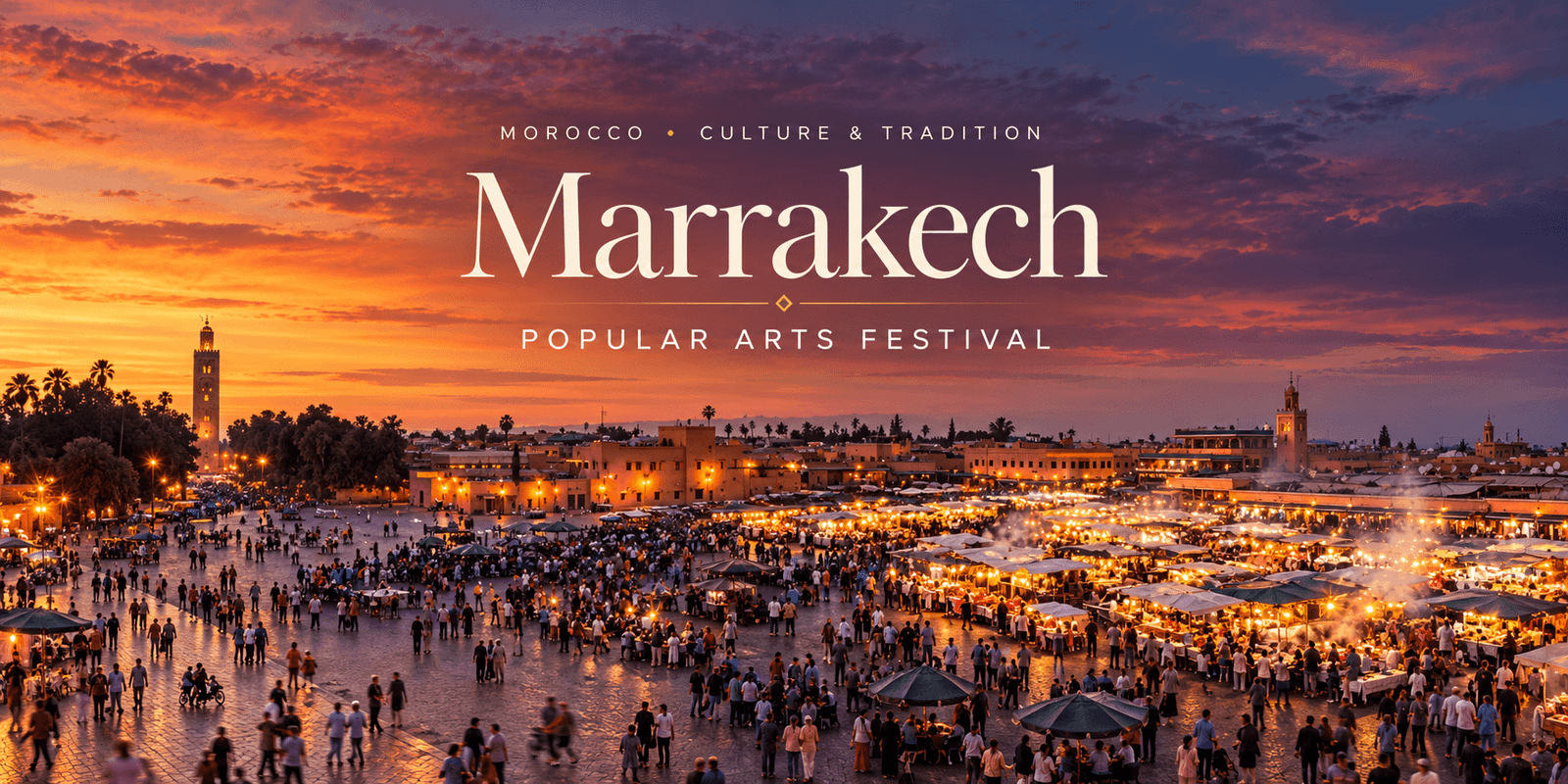
The Popular Arts Festival highlights traditional music, dance and regional performance. It is a strong choice if you want your visit to Marrakech to include an introduction to Morocco’s varied cultural expressions.
Use the announced program to choose a performance and confirm its venue. The everyday atmosphere of Jemaa el-Fna is a separate experience; an evening in the square does not necessarily mean you have attended an official festival event.
Planning tip: Leave a restful interval between daytime sightseeing and evening performances. During warmer periods, shade, water and a slower afternoon make the evening much more enjoyable.
Traditional Moussems & Tbourida Celebrations
This final entry is a category of celebrations rather than one festival. Regional moussems reflect the communities that host them. Some have a strong religious character; others also feature markets, music and equestrian displays.
Tbourida, sometimes called fantasia, is a coordinated equestrian performance involving teams of riders. It is recognized on UNESCO’s Representative List of Intangible Cultural Heritage . It should not be assumed to appear at every moussem.
Visit thoughtfully: Ask your guide about the gathering’s meaning, public access and photography. At riding displays, follow the designated viewing areas and expect loud ceremonial gunfire.
Moroccan festivals calendar by season
Spring
Look toward southern valleys for roses, and check Fes for its announced music dates. Earlier blossom around Tafraoute depends on local conditions.
Summer
Explore the calendars for Essaouira, Rabat and Marrakech. Pair evening music with gentle mornings rather than full days of sightseeing.
Autumn
Consider Imilchil, date-growing oases and saffron country. Confirm each gathering independently before connecting them in one route.
Winter
Check Marrakech’s late-year cinema schedule and other announced cultural events. Timitar also illustrates why some festivals cannot be assigned a permanent season.
Religious celebrations follow a different calendar. Ramadan and the Eids move through the solar year and influence daily rhythms, family gatherings and opening hours. They are not fixed-date substitutes for the public festivals listed here.
Which Moroccan festivals suit your travel style?
For music lovers
Choose Fes for encounters between sacred musical traditions, Essaouira for Gnaoua collaborations, Mawazine for a large international lineup, or Timitar for its Amazigh focus. Your favorite type of performance matters more than a festival’s size.
For culture and food
Roses, saffron and dates connect celebration to regional livelihoods. Imilchil and local moussems can add community context, while Marrakech’s Popular Arts Festival offers a more performance-centered introduction.
For photography
Think about the whole setting: architecture in Fes, coastal light in Essaouira and landscapes around Tafraoute. Ask before taking close portraits. Concert photography rules vary, and a ticket does not automatically permit professional equipment.
How to plan a trip around Moroccan festivals
- Choose one main event. Make it the anchor of your route, with other experiences added only if the geography and dates work comfortably.
- Confirm before committing. Verify the edition, performance and admission category before booking travel around a particular evening.
- Arrive with breathing room. An earlier arrival gives you time to settle in, understand the venue location and collect tickets if required.
- Book a practical base. Compare walking distance, vehicle access and noise as carefully as room photographs.
- Protect your downtime. Avoid scheduling a long road journey immediately after a late concert. A free morning is often more useful than another stop.
What to wear
Choose comfortable shoes and breathable clothing, with a light layer for coastal evenings. Mountain stays may need warmer layers. Modest clothing is considerate at community and religious gatherings; ask about any specific venue requirements.
Transport and accommodation
Agree on a pickup point outside the busiest streets and save your accommodation location offline. In a medina, vehicle access may stop before your door. For rural events, confirm the road journey and available lodging before assuming a short excursion is practical.
Tickets, food and daily spending
Budget separately for accommodation, transport, meals and ticketed performances. Carry some dirhams for small purchases, and check whether your chosen venue allows bags or refreshments. Discuss dietary needs with your host or restaurant in advance.
From festival evenings to Sahara landscapes
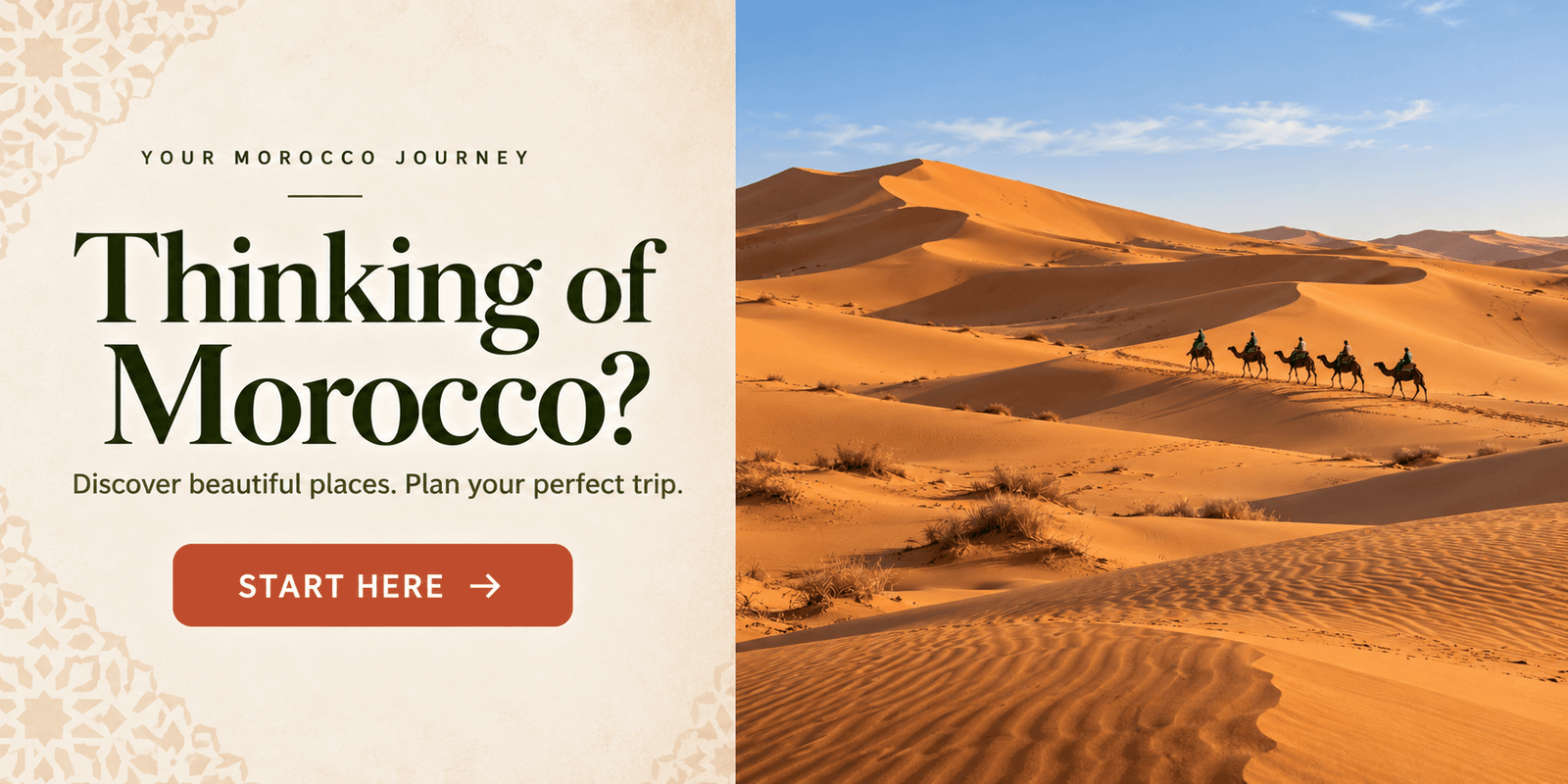
A festival can be the beginning of a broader trip. An Erfoud visit pairs naturally with nearby desert country, while Fes, Marrakech and Essaouira open up different route possibilities. The key is to respect distances instead of treating every destination as a day trip.
For a longer journey, explore our 14-day Morocco itinerary as inspiration. Ask us to adapt the route around a confirmed festival, your preferred pace and the landscapes you most want to experience.
Moroccan festivals FAQ
What are the best Moroccan festivals for a first visit?
Fes Sacred Music, Essaouira’s Gnaoua festival and Marrakech’s Popular Arts Festival are useful starting points for music and culture. The best choice depends on your interests, confirmed dates and travel route.
When is the best time to attend festivals in Morocco?
There is no single best month. Several major music festivals often take place in late spring or summer, while harvest celebrations favor spring or autumn. Check the specific edition before booking.
Are Moroccan festivals free to attend?
Some public events are free, while other performances require tickets, passes or registration. Admission may differ between venues within the same festival, so check the official program.
Are these festivals suitable for children?
Some activities suit families, but late hours, crowds, sound levels and venue age rules matter. Choose manageable performances and verify the arrangements for children before purchasing tickets.
Can visitors attend a traditional moussem?
Visitors may be welcome at public parts of a moussem, but access depends on the event. Respect religious observances, private ceremonies and photography preferences, and ask a local guide for advice.
Can I combine a festival with a Sahara desert trip?
Yes, with enough time and a sensible route. Erfoud is particularly convenient for continuing toward Merzouga and Erg Chebbi. Other festival cities require additional travel days.
Does Altni Tours help plan travel around Moroccan festivals?
Altni Tours can help tailor a private itinerary around your interests and a confirmed event. Ask about accommodation, transport and the specific ticket or admission arrangements needed for your chosen festival.
Let a celebration shape your next journey
Tell us which Moroccan festivals inspire you, when you would like to travel, and what else you hope to see. We will help you connect the event with a private itinerary that gives each place time.
Create my private Morocco journey →Planning reference: Moroccan National Tourist Office: festivals and moussems . Seasonal information is indicative; the organizer’s confirmed program should guide your booking.